
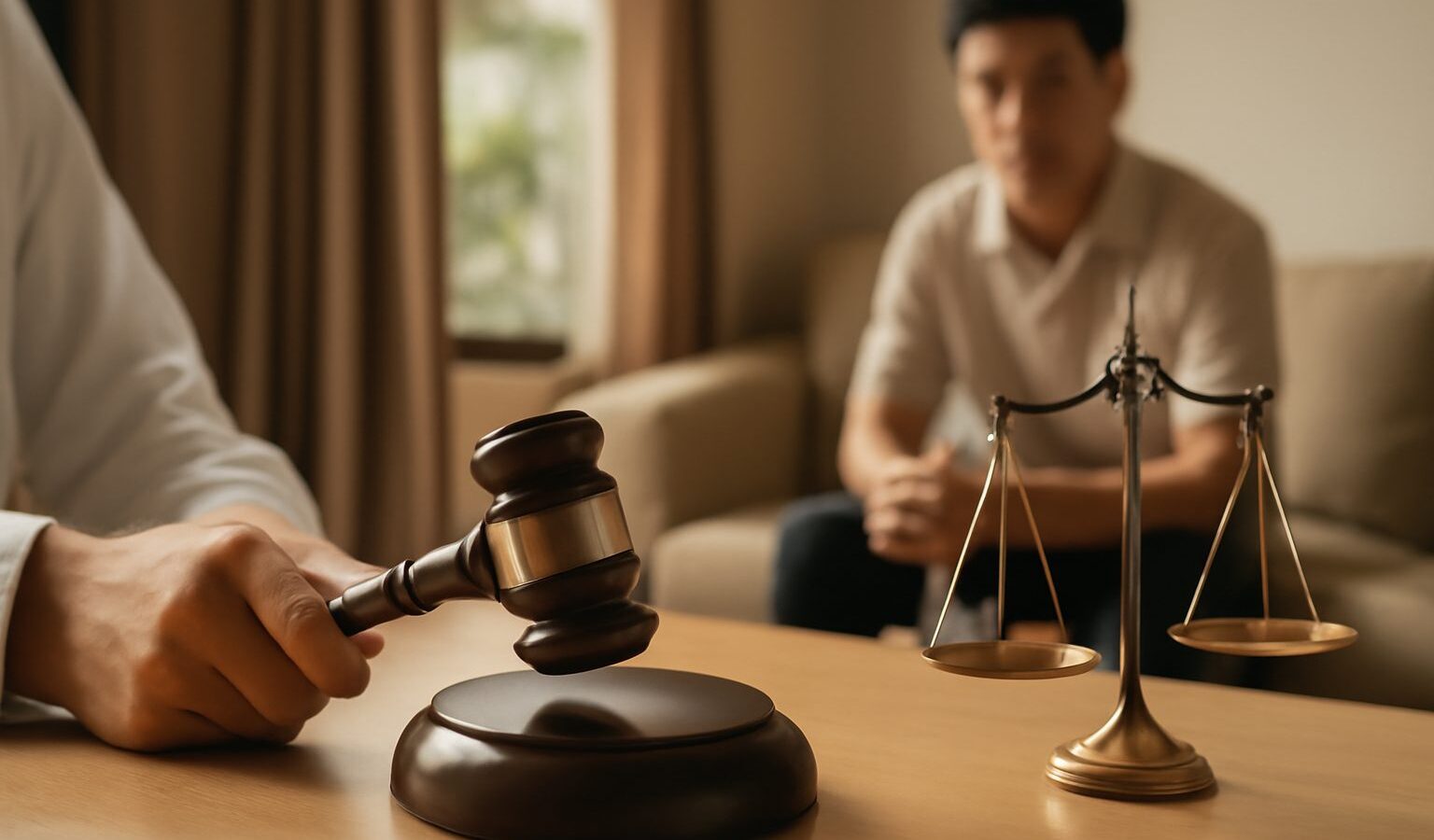
Anyone who has watched a courtroom drama expects a jury of ordinary citizens to decide guilt or innocence. In Singapore, that scene never happens. Criminal cases here are decided by professional judges, not juries. The fact of Singapore having no jury trial often surprises newcomers, and it raises a fair question: how did the system end up this way, and what takes the place of a jury?
This guide explains the history, the official rationale that was given, and how judge-led trials work today. It is general information about the legal system, not legal advice. For the binding rules, refer to the Criminal Procedure Code and related legislation on Singapore Statutes Online, and for any specific matter seek qualified legal advice.
A Colonial Inheritance
Singapore did once have jury trials. Under British rule, the courts followed English practice, and juries were part of the criminal process. So the current position is not a system that never knew juries; it is one that deliberately moved away from them over time.
The shift happened in stages during the decades around independence. Rather than abolishing juries all at once, the law progressively narrowed their use. First, jury trials were confined to the most serious cases, and later they were removed entirely, so that by around 1970 no criminal case in Singapore was tried by a jury. Since then, guilt or innocence has been determined by judges. The exact statutory history is recorded in the amendments to the criminal procedure legislation, which is the reliable source for dates and wording.
The Reasons Given At The Time
The move away from juries was explained publicly at the time, and the stated reasons are a matter of historical record rather than of opinion. Officials and lawmakers involved in the reforms pointed to several concerns about how juries were functioning in the local context.
Among the reasons put forward historically were:
- Concern that verdicts could turn on sympathy or persuasion rather than a careful weighing of the evidence.
- A view that professional judges, trained in the law and the rules of evidence, would apply the law more consistently.
- The value of reasoned, written decisions that explain exactly why a court reached its conclusion.
- Practical considerations about running jury trials in a small jurisdiction.
It is important to present these as the rationale that was offered, neutrally. Different people hold different views on trial by jury as a matter of principle. The point here is simply to record why Singapore’s system developed as it did, not to argue that one model is superior to the other.
How Trials Work Without A Jury
In place of a jury, Singapore uses judge-led trials, sometimes called bench trials. The judge, or in the most serious cases a judge of the higher court, hears the evidence, decides questions of fact and law, determines guilt or innocence, and, on conviction, decides the sentence within the limits the law allows.
The courts are organised into the State Courts, which handle a large volume of less serious matters through Magistrates and District Judges, and the Supreme Court, whose High Court hears the most serious cases. The prosecution is conducted by the Attorney-General’s Chambers, which decides what charges to bring in the public interest.
A defining feature of this model is the reasoned judgment. Because there is no jury delivering a bare verdict, a judge who convicts or acquits generally sets out the grounds of the decision, explaining how the evidence was assessed and how the law was applied. This written reasoning is central to how the system holds itself accountable.
The Safeguards That Replace The Jury
A common question is what protects a defendant if there is no jury. The answer is that several safeguards operate together, whether or not a jury is involved.
| Element | Role in a judge-led trial |
|---|---|
| Presumption of innocence | The accused is treated as innocent until proven guilty |
| Burden of proof | The prosecution must prove guilt beyond reasonable doubt |
| Reasoned judgment | The judge explains the basis for the verdict in writing |
| Right of appeal | Convictions and sentences can be appealed to a higher court |
| Legal representation | The accused may be represented by defence counsel |
These features are designed to ensure that a decision rests on the evidence and the law, and that a person who believes an error was made has a route to challenge it. The right of appeal is especially significant, because a higher court can review both the facts and the law, and can correct a decision that went wrong below.
Judge-Led And Jury Systems In Perspective
It helps to see judge-led and jury systems as two different ways of answering the same question: who should decide the facts in a criminal case. In a jury system, that responsibility rests with a panel of citizens; in Singapore’s system, it rests with a trained judge who must give reasons. Each approach has its own logic. A jury reflects community judgment, while a judicial decision offers consistency and a documented chain of reasoning that can be examined on appeal.
Singapore’s choice reflects the historical path described above and the reasons given for it. It is not unique in relying on judges; a number of legal systems around the world decide criminal cases without juries, using professional or mixed panels instead. The key point for readers is that the absence of a jury does not mean the absence of process. It means the safeguards are structured around reasoned decisions and appeals rather than a citizen panel.
Where To Read The Rules
Because this touches on criminal law and procedure, the authoritative sources are the statutes themselves, chiefly the Criminal Procedure Code, together with the Constitution and the legislation governing the courts, all available on Singapore Statutes Online. Court judgments also explain how the law is applied in practice. Anyone facing an actual legal matter should not rely on a general explainer like this one, but should consult the legislation directly or seek advice from a qualified lawyer.
Explore More
Understanding the courts is one piece of how Singapore’s institutions are designed. To see how the country chooses its head of state, read our guide to the Presidential Election explained. For another law that often prompts questions, see POFMA and the online falsehoods law explained.