

The weeks and months after a baby arrives can feel like a blur of feeds, naps and nappy changes, so it is easy to forget that your own body is quietly recovering too. One question that catches many new parents by surprise is what happens to your cycle, and how soon your fertility after birth actually returns. The honest answer is that it varies a lot from person to person, and the timing is not always what you expect. This is general information only, not medical advice, so please raise anything specific with your own doctor or O&G.
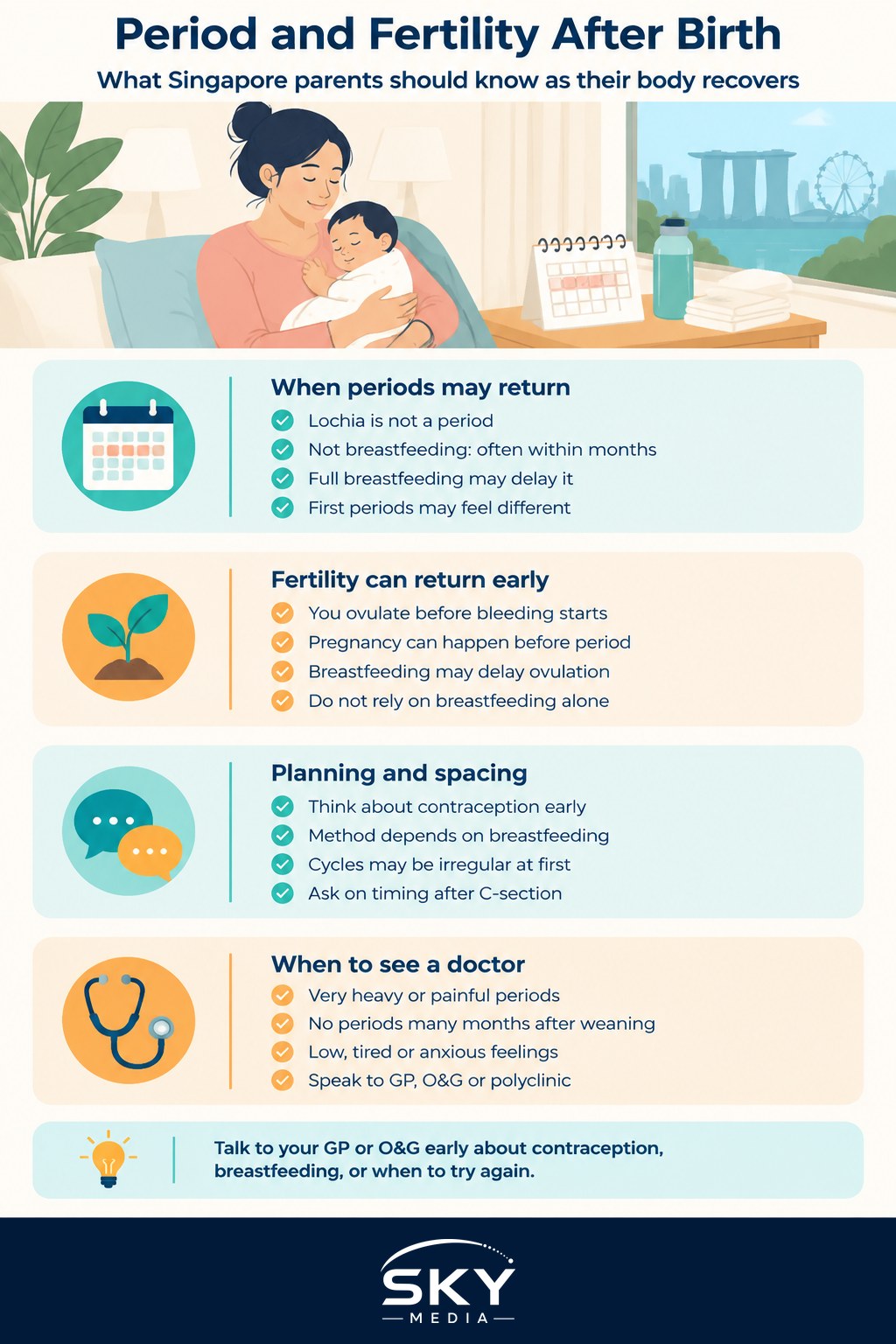
When Your Period May Return
After delivery, most people have a few weeks of bleeding called lochia. This is not a period. It is your body clearing the lining of the womb, and it usually eases off over several weeks. Your first true period is a separate event that comes later.
If you are not breastfeeding, your period often returns within the first couple of months. If you are fully breastfeeding around the clock, it may stay away for many months, sometimes until you start weaning or your baby begins sleeping longer and feeding less at night. Both patterns are normal. Every body and every recovery is different, and there is no single “correct” timeline.
Your first few periods may also feel different from before pregnancy. They can be heavier or lighter, more or less crampy, or slightly irregular for a while before they settle. If you soak through pads very quickly, pass large clots, or feel unwell, contact your GP or O&G. For more on the wider physical recovery your body is going through, see our guide on recovering your body after birth.
Why Fertility Can Return Before Your First Period
Here is the part that surprises many parents. You ovulate before you see any bleeding, which means it is entirely possible to become pregnant again before your first period arrives. In other words, waiting for a period to appear is not a reliable way to know whether you can conceive. Your fertility after birth can quietly switch back on while you are still assuming you are “safe”.
Breastfeeding can delay the return of ovulation, and some people rely on this as a form of natural spacing. It only offers meaningful protection under quite specific conditions, and that protection weakens as your baby feeds less, takes longer stretches at night, or starts solids. It is not something to lean on without understanding the details.
Because of all this, it is wise to think about contraception early, ideally before you resume sex, rather than waiting to see what your cycle does. Your options may be shaped by whether you are breastfeeding, since some methods suit nursing parents better than others. Have this conversation with your doctor, who can talk you through what fits your situation. Our overview of contraception after having a baby is a useful starting point for that chat.
Fertility, Spacing and Trying Again
If you are hoping for another baby, you may be wondering how soon your fertility after birth is back to full strength. For many people it returns steadily once regular cycles resume, but doctors often suggest giving your body time to recover between pregnancies. Your O&G can advise on sensible spacing based on your delivery, your health, and your age.
A few practical points to keep in mind:
- Irregular early cycles can make it harder to predict ovulation, so tracking may take a few months to become useful.
- Breastfeeding can affect both your cycle and how you feel, so factor that in when you plan.
- If you had a caesarean or a difficult birth, ask your doctor how long to wait before trying again.
- If you are over 35 or had any fertility support before, mention this early so you can plan realistically.
If you would like to think ahead about timing and siblings, our guide on planning a second child and age gaps walks through the trade-offs many Singapore families weigh up.
When to Speak to Your Doctor
Reach out to your GP, O&G or a polyclinic if your periods are very heavy or painful, if they have not returned many months after you stopped breastfeeding, or if you feel low, exhausted or anxious in a way that is not lifting. These check-ins are routine and worth doing. If you had support with feeding, your lactation team or a breastfeeding support service can also help you understand how nursing is affecting your cycle.
The key takeaway is simple and reassuring. Your body will find its rhythm again in its own time, but your fertility can quietly return before any period appears, so plan contraception or conception with your doctor rather than by guesswork. Be patient with yourself, ask questions freely, and remember that every recovery is different.
Frequently Asked Questions
Is postnatal bleeding the same as my first period? No. The bleeding after delivery is called lochia, which is your body clearing the womb lining and usually eases over several weeks. Your first true period is a separate event that comes later. Contact your doctor if you soak pads quickly or pass large clots.
Why is my first period after baby heavier than before? First periods can feel different, heavier or lighter, more or less crampy, or irregular for a while before settling. That is common. If you soak through pads very quickly, pass large clots or feel unwell, contact your GP or O&G.
How long should I wait before trying for another baby? Doctors often suggest giving your body time to recover between pregnancies, but the right gap depends on your delivery, health and age. Ask your O&G for advice, particularly after a caesarean or a difficult birth. Planning together beats guessing.
Will my period come back if I am fully breastfeeding? It may stay away for many months, sometimes until you start weaning or your baby sleeps longer and feeds less at night. Both patterns are normal. Remember that ovulation can still return before any bleeding, so do not treat the absence of periods as protection.
Why is it hard to track ovulation in the first few months? Irregular early cycles make ovulation harder to predict, so tracking can take a few months to become useful. Breastfeeding also affects your cycle. If you are over 35 or had fertility support before, mention it to your doctor early.
Further reading: Fertility and IVF in Singapore