
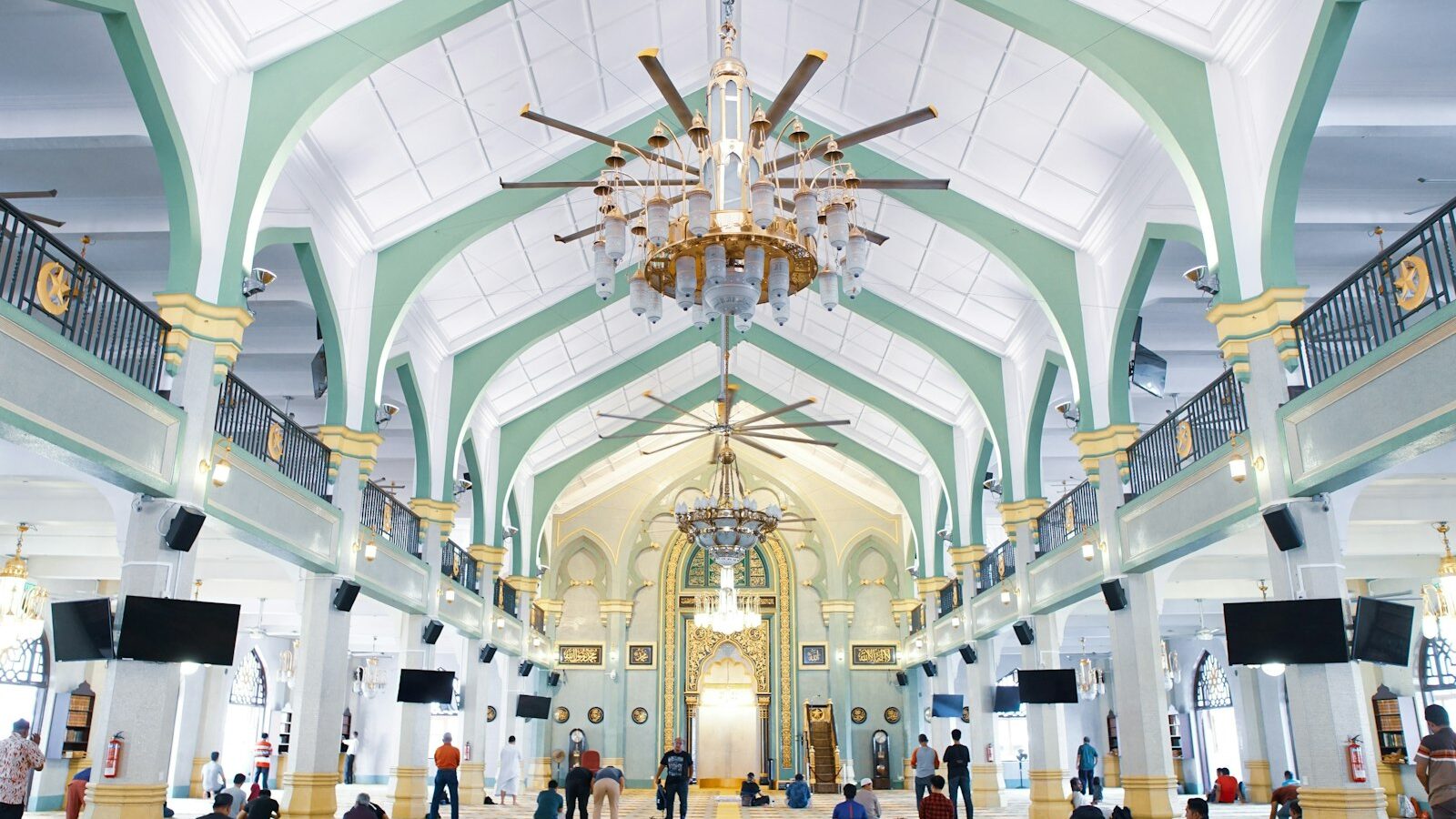
Set among the shophouses of Little India, the Abdul Gaffoor Mosque is admired for its exuberant decoration and its place in Singapore’s Muslim heritage. This guide introduces its history, its remarkable architecture and the etiquette that allows visitors to explore this living place of worship with respect.
Significance and history
The mosque serves the Muslim community in the Little India district and stands as one of the area’s most distinctive heritage buildings. It has been gazetted as a national monument, a recognition of its architectural richness and its historical importance to Singapore.
Developed to meet the needs of worshippers in a busy immigrant quarter, the mosque grew from earlier prayer facilities into the ornate structure admired today. Because exact dates and personal histories differ between sources, treat any precise figures with care and confirm them with the mosque. What endures is its role as a daily centre of prayer and community, sustained across generations and carefully restored to preserve its intricate detail.
Restoration has been important to the building’s story, returning colour and clarity to its elaborate decoration while keeping it in active use. The mosque therefore offers a rare combination: a genuinely historic monument that remains a functioning house of worship at the heart of one of Singapore’s most vibrant neighbourhoods.
The setting adds to its interest. Little India is a district shaped by migration, trade and a mingling of cultures, and the mosque sits amid temples, shops and eating houses that together tell the story of the quarter. For the Muslim community here, the mosque has long been an anchor, a fixed point of prayer and gathering within a busy and constantly changing streetscape. Reading the building in this context makes its survival and its detail all the more meaningful.
What to see
From the street, the facade immediately draws the eye with its colour, patterning and finely worked detail. The main prayer hall is reserved primarily for worshippers, but visitors are often able to appreciate the exterior and designated areas, subject to the mosque’s guidance and prayer schedules.
Among the most celebrated features is the decorative treatment around the main entrance, where an ornamented arch is set with a series of small panels bearing inscriptions. Slender decorative elements, delicate plasterwork and a confident palette give the mosque a jewel like quality that repays close looking. The interplay of light and shade across its surfaces changes through the day, so the building rewards more than a passing glance.
Signage and, where available, community volunteers can help visitors understand what they are seeing. As always, remember that the primary purpose of every space here is prayer, and that access to particular areas depends on the time of day and on ongoing worship.
Architecture
The mosque is known for a rich, eclectic style that blends influences into a highly decorative whole. Ornamental plasterwork, patterned surfaces, slender columns and small towers combine with a lively use of colour to create one of the most elaborately finished mosques in the city.
The decoration is not merely surface deep; it works with the structure to frame entrances, define the prayer hall and draw attention upward. Geometric and floral motifs, common in Islamic decorative tradition, are handled here with particular exuberance. For visitors interested in heritage architecture, the mosque is a masterclass in ornament, and its monument status reflects how highly this craftsmanship is valued.
Observances and community life
As an active mosque, the building follows the daily rhythm of Islamic prayer, with the five daily prayers structuring its use. Friday congregational prayers draw larger numbers, and the mosque is at its busiest and most focused during these times.
The Islamic calendar shapes the year, and the month of Ramadan is especially significant, bringing changes to the pattern of daily life, additional evening prayers and a heightened sense of community. Festivals such as Hari Raya are joyful occasions marked by prayer and gathering. During Ramadan, Friday prayers and festival periods, visitor access may be limited out of respect for worship. Because timings follow the Islamic calendar and vary through the year, always check current prayer times and visiting arrangements with the mosque before you plan a visit.
| Feature | Abdul Gaffoor Mosque |
|---|---|
| Tradition | Islamic |
| Location | Little India, Singapore |
| Heritage status | Gazetted national monument |
| Architectural style | Ornate and eclectic |
| Best known for | Elaborate decoration and entrance detailing |
| Dress code | Modest; cover shoulders, arms and legs |
Visiting etiquette
A mosque is first and foremost a house of prayer, so visit with quiet respect and follow the guidance given on site.
- Dress modestly. Cover your shoulders, arms and legs; some visitors carry a scarf, and women may be asked to cover their hair.
- Remove your shoes before entering prayer areas, as directed, and observe signs about where visitors may and may not go.
- Time your visit to avoid the busiest prayer periods unless you have been welcomed to observe.
- Keep your voice low, silence your phone and never walk in front of anyone who is praying.
- Do not touch furnishings, copies of scripture or fittings unless invited to.
- Switch off your camera flash, respect any no photography notices, and always ask before photographing worshippers.
- Be especially considerate during Ramadan, Friday prayers and festivals.
- If you wish to give, do so quietly; donations are welcome but never expected of visitors.
Because visiting hours, dress requirements and access can change, confirm the mosque’s current rules when you arrive.
A respectful close
The Abdul Gaffoor Mosque is a reminder that heritage and living faith can share the same walls. Admire its craftsmanship, but do so as a considerate guest in a place of daily prayer. Enter quietly, follow the guidance offered, and you will leave with a deeper appreciation of both the artistry and the devotion that keep this monument alive.
Explore more: Mosques of Singapore · National monuments of Singapore · Religious harmony and festivals in Singapore