
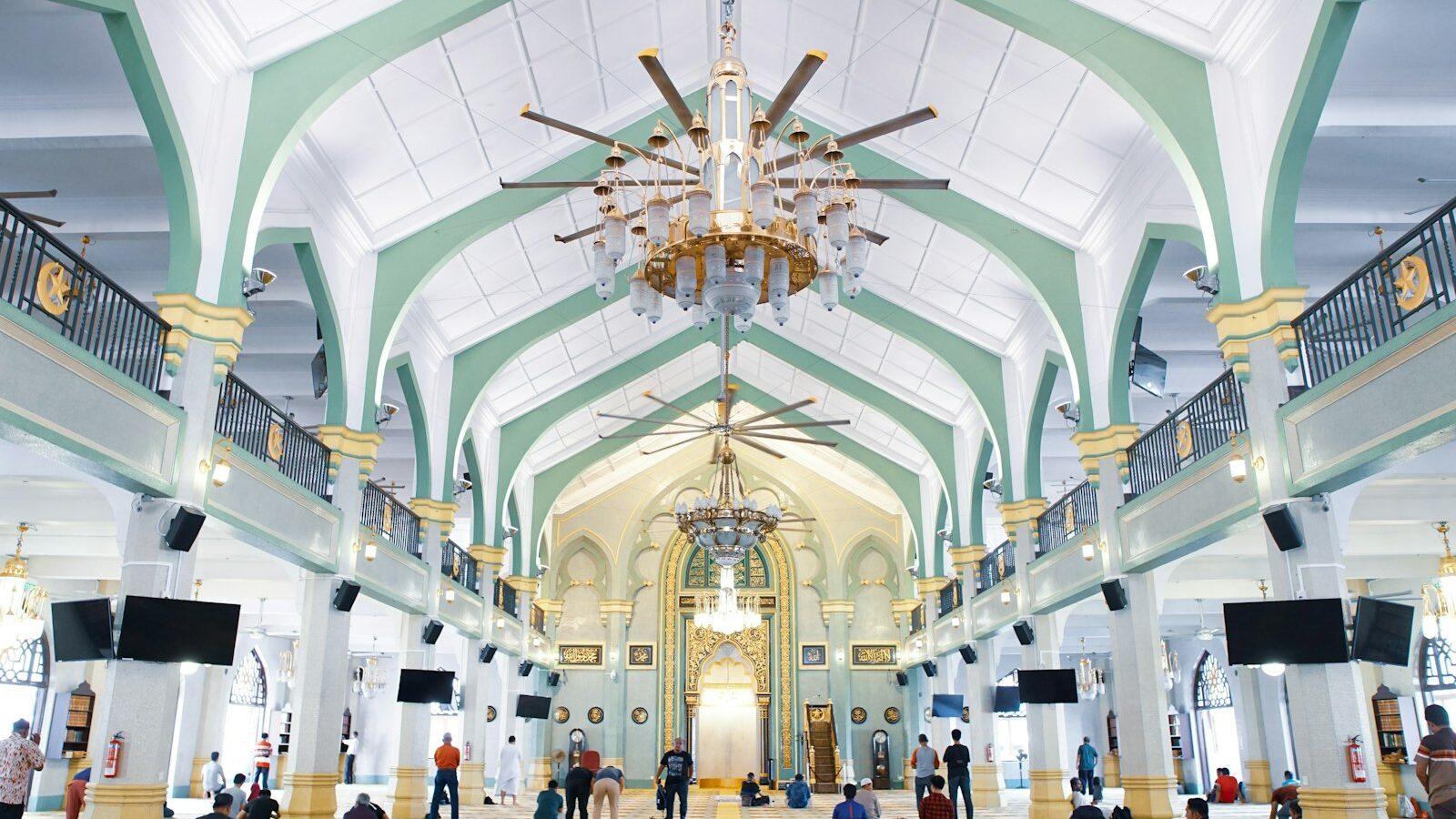
Near the Kampong Glam and Beach Road area stands the Hajjah Fatimah Mosque, a graceful heritage building named after a respected benefactress. This guide introduces its history, its unusual leaning minaret and the etiquette that helps visitors explore this living place of worship with respect.
Significance and history
The mosque is notable for being named in honour of a woman remembered for her generosity and her role in supporting the local Muslim community. This dedication gives the building a distinctive place in Singapore’s heritage, and it has been gazetted as a national monument in recognition of its historical and architectural value.
The mosque was established to serve worshippers in its part of the city and has remained an active centre of prayer ever since. Because specific dates and biographical details vary between accounts, treat any exact figures with care and verify them with the mosque itself. What matters for a respectful visit is the continuity of devotion here and the affection with which the founder’s memory and the building’s history are held.
Over the years the mosque has been maintained and conserved to protect its character, including its most famous and unusual feature. Today it stands as both a working mosque and a cherished landmark, quietly holding its story within a rapidly changing city.
The dedication to a woman benefactress is itself worth pausing on. It is a reminder that the growth of Singapore’s religious institutions owed much to individuals who gave generously of their means to serve their communities. That her name endures on a national monument speaks to how such contributions were valued and remembered. For visitors, this personal story gives the mosque a warmth that goes beyond its stone and mortar, grounding the building in an act of human generosity.
What to see
The mosque’s best known feature is its minaret, which leans slightly and has earned comparisons with a certain famous European tower. This gentle tilt gives the building a memorable silhouette and is often the first thing visitors notice.
Beyond the minaret, the mosque presents an elegant composition of tower, dome and prayer hall, set within a compound that offers a measure of calm away from the surrounding streets. The main prayer hall is reserved chiefly for worshippers, but the exterior, the compound and designated areas can usually be appreciated in keeping with the mosque’s guidance and prayer schedules.
The grounds also include spaces associated with remembrance, reflecting the mosque’s long history and its ties to the community it serves. As with any active mosque, access to particular areas depends on the time of day and on ongoing worship, so let the building’s rhythm guide your visit.
Architecture
The mosque is known for a blend of influences that brings together elements from different traditions into a harmonious whole. A tapering minaret, a dome and classically inspired detailing sit alongside features drawn from local and regional building practice, producing a style that is elegant and a little unexpected.
The leaning minaret is the signature element, but the wider composition is equally worth attention: the balance of tower and hall, the treatment of windows and arches, and the way the compound frames the building. For visitors interested in heritage architecture, the mosque is an appealing example of how varied influences were combined in Singapore’s places of worship, and its monument status reflects the importance of preserving that legacy.
Observances and community life
As an active mosque, the building follows the daily pattern of Islamic prayer, with the five daily prayers shaping its use. Friday congregational prayers bring larger gatherings, and these are among the busiest and most focused times at the mosque.
The Islamic calendar guides the year, and Ramadan is especially significant, with additional evening prayers and a strong sense of community. Festivals such as Hari Raya are marked with prayer and celebration. During Ramadan, Friday prayers and festival periods, visitor access may be more limited out of respect for worship. Because timings follow the Islamic calendar and change through the year, always check current prayer times and visiting arrangements with the mosque before you go.
| Feature | Hajjah Fatimah Mosque |
|---|---|
| Tradition | Islamic |
| Location | Kampong Glam and Beach Road area, Singapore |
| Heritage status | Gazetted national monument |
| Named after | A respected community benefactress |
| Best known for | Its gently leaning minaret |
| Dress code | Modest; cover shoulders, arms and legs |
Visiting etiquette
A mosque is above all a house of prayer, so visit quietly and follow the guidance offered on site.
- Dress modestly. Cover your shoulders, arms and legs; carrying a scarf is wise, and women may be asked to cover their hair.
- Remove your shoes before entering prayer areas as directed, and observe signs showing where visitors may go.
- Where possible, avoid the busiest prayer periods unless you have been welcomed to observe.
- Keep your voice low, silence your phone, and never walk in front of anyone who is praying.
- Do not touch furnishings, copies of scripture or fittings unless you are invited to.
- Switch off your camera flash, respect any no photography notices, and ask before photographing worshippers.
- Be especially considerate during Ramadan, Friday prayers and festivals.
- Give quietly if you wish; donations are welcome but never expected of visitors.
Since visiting hours, dress requirements and access can change, always confirm the mosque’s current rules when you arrive.
A respectful close
The Hajjah Fatimah Mosque endures as a tribute to generosity and faith, its leaning minaret a quiet emblem of character within Singapore’s heritage. Admire its architecture, but remember you are a guest in a place of living prayer. Enter with humility, respect its rhythm of worship, and you will carry away a richer sense of the devotion and history it holds.
Explore more: Mosques of Singapore · National monuments of Singapore · Interfaith harmony in Singapore