

Finding an accessible nature trail in Singapore is easier than many people expect. Alongside the steep forest climbs that hikers love, the island has plenty of flatter, paved and well-shaded green routes where older walkers can enjoy trees, water and birdlife without tackling stairs or rough ground. This guide focuses on those gentler options: what makes a route senior-friendly, the types of places that usually fit the bill, and how to plan a comfortable outing.
If you are after challenging hikes instead, our overview of Hiking and Nature Trails in Singapore covers the tougher end of the spectrum.
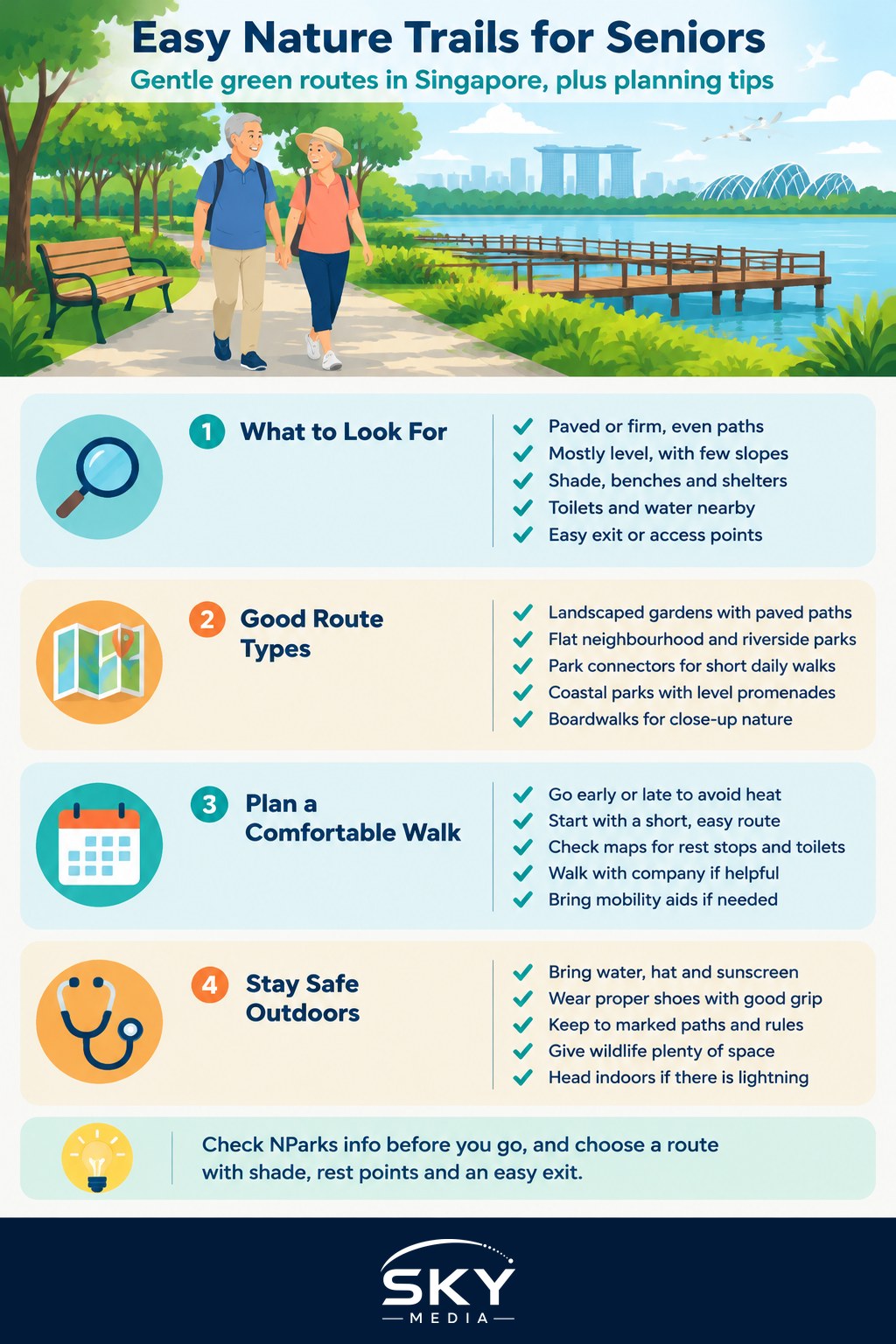
What Makes a Nature Trail Senior-Friendly
Not every “easy” trail suits every older walker. Before choosing a route, think about the person walking it and check for these features:
- Surface. Paved or firm, even paths are kinder on knees and safer for walking sticks, rollators and wheelchairs than gravel, roots or soil that turns muddy after rain.
- Gradient. Look for routes that stay mostly level. Short ramps are manageable for many people; long slopes and staircases are not.
- Shade. Tree cover or shelters make a big difference in Singapore’s heat.
- Rest points. Benches, pavilions and shelters at regular intervals let walkers pace themselves.
- Toilets and water. Knowing where the nearest accessible toilet is removes a common worry for older adults.
- Exit options. Loops or routes with several access points let you cut a walk short without retracing a long way.
- Transport access. Nearby bus stops, MRT stations, sheltered drop-off points and car parks reduce the walking needed just to reach the start.
NParks (the National Parks Board) publishes information about its parks, including facilities and, for some parks, accessibility details. Since paths, facilities and closures can change, check the NParks website before setting out.
Types of Green Routes That Usually Work Well
Rather than one “best” trail, it helps to know the kinds of places that tend to be gentle. Many are close to housing estates, which makes short regular walks realistic.
Landscaped gardens. Large public gardens such as the Singapore Botanic Gardens, Gardens by the Bay and Jurong Lake Gardens have extensive paved paths, plenty of seating and facilities. Some areas still have slopes, so pick sections that stay level.
Neighbourhood and riverside parks. Parks built around waterways and reservoirs, such as Bishan-Ang Mo Kio Park, often have broad, flat paths, open lawns and shelters. They feel natural without being remote.
Park connectors. The Park Connector Network links parks across the island with mostly paved routes. Short stretches near home make excellent daily walks, but remember cyclists and personal mobility device users share many sections.
Coastal parks. Seafront parks such as East Coast Park offer level promenades with sea breezes, although shade can be patchy at certain times of day.
Boardwalks. Wetland and mangrove boardwalks, such as those at Sungei Buloh Wetland Reserve or Pasir Ris Park, let seniors get close to nature on a raised, even surface. Check whether there are steps at viewing points or hides, and note that boardwalks can be slippery after rain.
Nature parks with paved sections. Some nature parks, including areas around the central reservoirs, mix accessible paved paths with rougher forest trails. Stick to the paved or boardwalk parts and turn back when the surface changes.
For visitors using wheelchairs, our guide to Wheelchair-Accessible Attractions in Singapore covers additional places beyond green spaces.
Comparing Route Types at a Glance
| Route type | Typical surface | Shade and rest points | Best for |
|---|---|---|---|
| Landscaped gardens | Paved paths, some slopes | Good seating and shelters in most areas | Leisurely strolls, wheelchair users on level sections |
| Neighbourhood and riverside parks | Broad paved paths, mostly flat | Shelters common, shade varies | Regular short walks close to home |
| Park connectors | Paved, shared with cyclists | Shade varies by stretch | Daily exercise near home in quieter hours |
| Coastal parks | Flat promenades | Sea breeze, shade can be patchy | Early morning or late afternoon walks |
| Boardwalks | Raised timber, even | Some shelters, can be exposed | Close-up nature and birdwatching |
| Nature park paved sections | Paved or boardwalk, mixed with rough trails | Good tree cover | Fitter seniors who want a forest feel |
Planning a Comfortable Walk
A little planning turns a tiring outing into a pleasant one.
- Go early or late. Mornings and late afternoons are cooler and usually less crowded. Avoid the midday sun and check the weather forecast for thunderstorms.
- Start short. Begin with a modest walk and build up gradually. It is better to finish wanting more than to struggle back.
- Plan around rest stops and toilets. Look at the park map in advance and note where shelters and facilities are.
- Walk with company. A friend or family member can help if someone feels unwell. Our guide to Getting Around Singapore with Elderly Parents has tips on transport and outings together.
- Use mobility aids if helpful. A walking stick, rollator or wheelchair can extend how far someone can comfortably go. Check that wheels and tips are in good condition.
- Know your exit. Identify the nearest road, car park or taxi stand in case you need to end the walk early.
Staying Safe in the Heat and Outdoors
Heat is the main risk for older walkers in Singapore. Bring water and drink regularly, wear a hat and light, breathable clothing, and use sunscreen. Stop and rest in the shade if anyone feels dizzy, unusually tired or confused, and seek medical help if symptoms do not ease quickly. Anyone with a heart, lung or joint condition should ask their doctor about suitable levels of activity before starting a new walking routine.
Other sensible habits:
- Wear proper shoes with good grip, since paths and boardwalks can be slippery after rain.
- Carry a phone, identification and any regular medication.
- Stay on marked paths and follow NParks signs and rules.
- Leave wildlife alone. Do not feed or touch monkeys, monitor lizards, otters or birds. Keep food out of sight and give animals space.
- Watch for cyclists and PMDs on shared paths, and keep to one side.
- Shelter during lightning. Head indoors or to a proper shelter when there is lightning in the area, and avoid open lawns and waterside areas.
Making Nature Walks a Regular Habit
The real benefit comes from walking regularly rather than taking one big outing. A gentle route near home, visited a few times a week, can lift mood, keep joints moving and provide a chance to meet neighbours. Some community centres, senior activity centres and residents’ groups organise group walks, which add a social element and some company for people who prefer not to walk alone.
Try rotating between two or three favourite places so walks stay interesting: a riverside park on weekdays, a garden for a longer weekend stroll, and a boardwalk when the family wants to spot birds or fish together. With the right route and a bit of preparation, an accessible nature trail in Singapore can become one of the simplest and most rewarding parts of the week.