

An adjustable bed lets you raise the head, the knees or both at the press of a button. For many older adults that small change makes a big difference: sitting up to read becomes easier, getting out of bed takes less effort, and a family member helping at night does not have to strain their back. If you are searching for an adjustable bed in Singapore for a senior, this guide explains when one genuinely helps, how it differs from a hospital bed, and what to check before you buy.
This is general information, not medical advice. If a parent has a specific condition, such as breathing difficulty when lying flat, reflux, swelling in the legs or a recent operation, ask their doctor, physiotherapist or occupational therapist what position and features they need before choosing a bed.
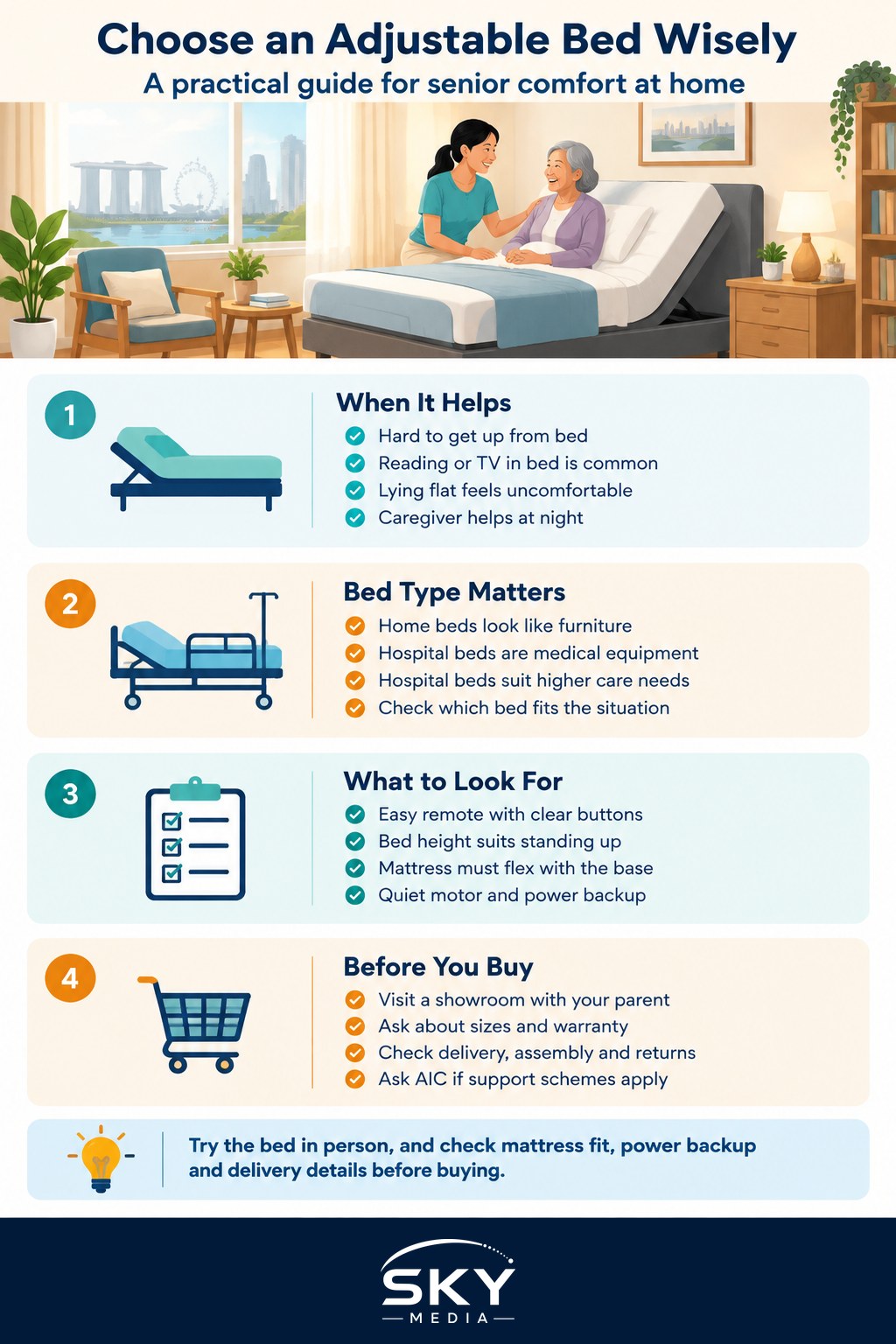
When an Adjustable Bed Actually Helps a Senior
Not every older person needs one. An adjustable bed earns its place when it solves a daily problem. Common situations include:
- Getting up is a struggle. Raising the backrest brings a person closer to sitting before they swing their legs out, which reduces the effort needed from the stomach and arms.
- Sitting up in bed is part of the routine. Reading, watching TV, taking medicine or having a drink is more comfortable with proper back support than with a pile of pillows that slides down.
- Lying flat is uncomfortable. Some people simply sleep better slightly propped up. Whether that is advisable for a particular condition is a question for their doctor.
- A family member or helper assists at night. A bed that lifts the upper body makes repositioning, changing clothes and helping with meals in bed easier on the caregiver.
- Legs feel heavy by evening. A gentle leg raise can feel more comfortable, though again, check with a doctor if swelling is new or worsening.
If the senior is mostly independent and sleeps well, a good mattress and a sturdy bed frame may be all they need. Our guide on how to choose a bed frame covers height, slats and stability, which matter just as much for older sleepers.
Adjustable Bed vs Hospital Bed: Know the Difference
Families sometimes treat these as the same thing. They are not, and buying the wrong one wastes money and bedroom space.
A home adjustable bed usually looks like ordinary furniture. It has a motorised base that tilts the head and foot sections, often fitted inside a normal bed frame, and comes in sizes like single, super single or queen. It is designed for comfort.
A hospital or nursing bed is medical equipment. It typically adds height adjustment for the whole bed, side rails, lockable castors and features meant for people who spend much of the day in bed or need hands-on nursing care. If a parent is largely bedbound, has frequent falls from bed or needs regular turning, speak to their care team about medical equipment instead.
| Need | Home adjustable bed | Hospital or nursing bed |
|---|---|---|
| Sitting up to read or watch TV | Designed for this | Can do it, looks clinical |
| Getting in and out independently | Helps if bed height suits the person | Whole bed can be raised or lowered |
| Caregiver doing daily hands-on care | Some help from the backrest | Built for it, with height lift and rails |
| Fits a shared double bed setup | Split queen or king options exist | Usually single width only |
| Looks like normal bedroom furniture | Yes | Usually not |
Features That Matter Most for Older Users
Skip the gimmicks and focus on what makes daily life easier and safer.
Simple controls
Choose a remote with large, clearly labelled buttons and a backlight if your parent gets up at night. Preset positions such as “flat” and “sit up” save fiddling. If the remote is easily misplaced, a holder clipped to the side of the bed helps. Some seniors find app control confusing, so treat it as a bonus, not the main control.
The right bed height
The top of the mattress should let the person sit on the edge with feet flat on the floor and knees roughly level with hips. Too low and standing up is hard, too high and their feet dangle. Adjustable bases add height to a frame, so measure the final height with the mattress you plan to use.
A compatible mattress
The mattress must flex with the base. Many foam and some latex mattresses work well, while thick traditional spring mattresses often do not. Ask the retailer which mattresses are approved for the base so the warranty stays valid.
Backup and power safety
Ask what happens in a power cut. Some bases have a battery backup that lowers the bed to flat. Keep the power cable tidy and away from walking paths, and use a proper wall socket rather than a crowded extension.
Motor noise and speed
If a spouse shares the bed, a quiet motor and a split design (two halves that move independently) let each person choose their own position.
Planning the Bedroom Around the Bed
In a typical HDB flat bedroom, space is limited, so think about the whole room, not just the bed.
- Clear a path. Leave enough space on at least one side for a walking frame or wheelchair if one is used, and for a caregiver to stand.
- Light the way. Place a lamp or switch within reach of the bed, and consider a low night light along the route to the toilet. Good reading light also matters for older eyes; see our guide on dry eyes and eye comfort in older age for tips on reducing strain.
- Add a grab point. A sturdy bedside table or a properly installed grab bar gives something stable to hold when standing. Do not rely on a light side table that can tip.
- Check delivery access. Adjustable bases are heavy. Confirm lift access, corridor width and whether the delivery team will assemble and remove packaging.
What to Ask Before You Buy
Visit a showroom with your parent if possible. Let them lie on the bed, use the remote and try getting up from different positions. Then ask:
- Which sizes are available, and will it fit inside our existing frame?
- Which mattresses are compatible, and does using another one void the warranty?
- How long is the warranty on the motor and on the frame, and who handles repairs?
- Is there a battery backup or manual lowering in a power cut?
- Is delivery, assembly and disposal of the old bed included?
- What is the return or exchange policy if the bed does not suit?
Prices vary widely between brands and features, so compare a few retailers and be clear about which features your parent will actually use. A head-and-foot base with a good remote often covers most needs.
If cost is a concern, ask a medical social worker at the hospital, or the Agency for Integrated Care (AIC), which coordinates eldercare services in Singapore, whether any assistive device support scheme applies to your parent’s situation. Eligibility and covered items change, so confirm current details directly with AIC rather than assuming a bed is covered.
Helping a Parent Adjust to the New Bed
Even a helpful change can feel strange at first. Show your parent how the remote works more than once and leave a simple written note with the key buttons. Start with small adjustments rather than steep angles. Ask after a week whether they are sleeping better and whether getting up feels easier, and tweak the positions together.
If you notice new difficulty getting out of bed, more falls, or pain that does not settle, speak to their doctor or a therapist. A bed can support comfort and independence, but it is not a substitute for proper assessment when needs change.
Frequently Asked Questions
Can I put an adjustable base under my parent’s existing mattress? Only if the mattress can bend with the base. Many foam and some latex mattresses flex well, but thick traditional spring mattresses often do not and may be damaged. Ask the retailer which mattresses are approved for the base, because using an incompatible one can void the warranty.
Is an adjustable bed better than propping my parent up with pillows? Usually, yes for comfort. A raised backrest supports the whole upper body, whereas pillows tend to slide down through the night and push the head forward. A bed is a bigger purchase, though, so a trial with a wedge or extra pillows can show whether sleeping propped up actually helps.
Can a parent with dementia or poor eyesight use an adjustable bed remote? It may be difficult. Choose a remote with large, labelled buttons and simple preset positions, and consider letting a caregiver control it or keep it out of reach if wrong presses are a risk. Ask your parent’s doctor or occupational therapist whether this bed type suits their condition.
Is it safe for my parent to sleep with their legs raised? A gentle leg raise can feel comfortable, but whether it is suitable depends on the reason for the swelling or heaviness. New or worsening swelling, especially in one leg, needs a doctor’s attention. Ask a doctor how high and how long before making it part of the nightly routine.
What should we do with the old bed when delivering an adjustable bed? Ask the retailer before you order whether delivery includes assembly and removal of your old bed and packaging, and whether lifts and corridors can handle the heavy base. If disposal is not included, arrange bulky item collection ahead so your parent is not left without a bed on the day.
Further reading: Senior Sleep Products That Can Improve Comfort at Home · How to Choose a Recliner Chair for an Elderly Parent