

Gritty, tired eyes that sting in air-conditioning or feel like there is sand in them are a familiar complaint as we get older. It sounds minor, and often it is, but dry, uncomfortable eyes can wear away at daily comfort, reading, and screen time. Understanding dry eyes in older age singapore helps you soothe your eyes sensibly at home and, just as importantly, know when comfort measures are not enough and it is time to see a doctor or eye specialist. This is general information to guide you, not medical advice for your own eyes.
Dry eye happens when the eyes do not make enough tears, or the tears they make evaporate too quickly, leaving the surface of the eye under-lubricated. It becomes more common with age for several reasons, and it can be nudged along by our local environment. Long hours in strong air-conditioning, plenty of screen use, certain medicines, and some health conditions can all play a part. Because the causes vary, a proper look by a professional is the way to be sure what is behind your own discomfort.
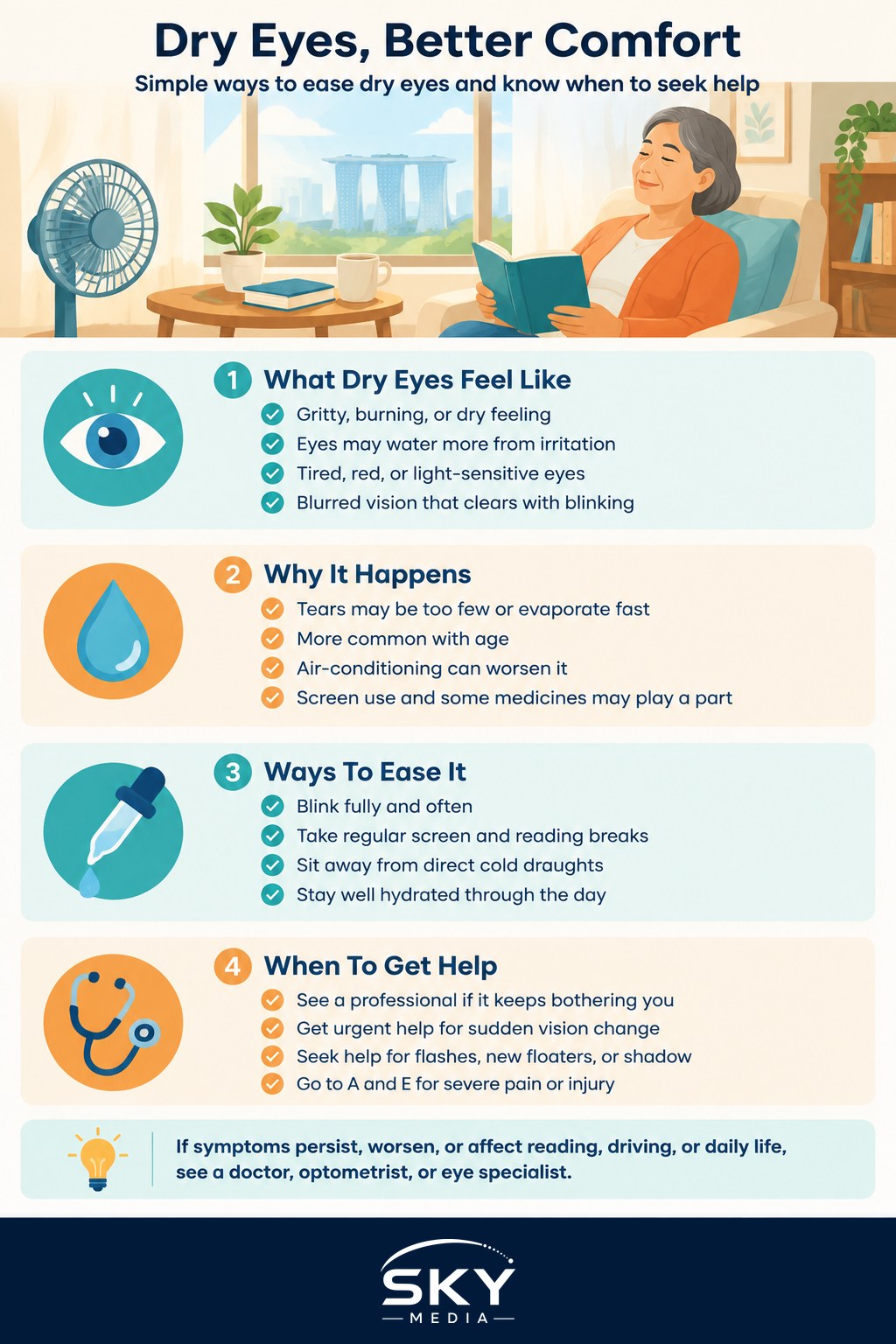
What dry eyes can feel like
The symptoms are not always what you would expect. Alongside a dry, gritty, or burning feeling, some people notice their eyes actually water more, because irritation triggers a flood of reflex tears. Eyes may feel tired, look a little red, become sensitive to light or wind, or feel worse by the end of the day. Vision can turn briefly blurry and then clear when you blink. Contact lenses may feel less comfortable than they used to.
These sensations are common and usually not dangerous, but they should not simply be endured if they keep bothering you. Comfort matters, and there are good solutions. See your doctor, an optometrist, or an eye specialist if symptoms persist, worsen, or interfere with reading, driving, or daily life.
Some eye symptoms are not about dryness and need prompt attention rather than eye drops. Sudden loss or change of vision, seeing flashes of light or a shower of new floaters, a curtain or shadow across your sight, severe eye pain, or an eye that is very red after an injury are all reasons to seek urgent care, and to go to A and E for anything that feels like an emergency. When in doubt, get your eyes checked rather than waiting to see if it passes.
Simple ways to keep your eyes comfortable
Many people find real relief from small, everyday habits. Blinking fully and often, especially during screen use or reading, helps spread tears across the eye, so take regular breaks to rest your eyes and look into the distance. In heavy air-conditioning, sitting away from a direct cold draught, or using a gentle source of humidity, can make a noticeable difference. Staying well hydrated across the day supports your whole body, eyes included, and our guide to staying hydrated in older age is worth a read.
Over-the-counter lubricating eye drops, sometimes called artificial tears, help many people, but which type suits you is best confirmed with a pharmacist, optometrist, or doctor, particularly if you use other eye medicines or wear contact lenses. Please do not start, stop, or change any prescription eye medication on your own. If you already take several medicines, some of which can affect the eyes, a review with your doctor is sensible, and our piece on managing multiple medicines safely explains how to raise it.
Looking after your general eye health helps too. Regular eye checks pick up other age-related conditions early, and comfort problems sometimes overlap with them. Our guides to cataracts and eye health in older age and macular degeneration explained for seniors give a fuller picture of keeping your sight in good shape as the years go by.
Caring for your sight over time
Dry eyes rarely need to steal your comfort. With gentle daily habits, sensible use of lubricating drops, and a professional to confirm what is going on, most seniors find their eyes feel much better. Keep up with routine eye checks, mention any nagging discomfort to your doctor or optometrist, and treat sudden vision changes as something to act on quickly.
Your eyes do quiet, constant work every waking hour, from reading the newspaper to recognising a grandchild across the room. A little attention to their comfort, and a timely visit when something feels off, helps keep that everyday joy clear and easy.
Frequently Asked Questions
Are artificial tears safe to use every day? Over-the-counter lubricating drops help many people, but how often and which type is best should be confirmed with a pharmacist, optometrist or doctor. This matters more if you wear contact lenses or use other eye medicines, so ask before settling into a daily routine.
Why do my eyes water so much if they are dry? Irritation from dryness can trigger a flood of reflex tears, so dry eyes sometimes feel watery. These tears do not lubricate the eye well. If it keeps happening, an optometrist or doctor can find out what is behind it.
Does air-conditioning make dry eyes worse? It can. Long hours in strong air-conditioning dry out the eye surface. Try sitting away from a direct cold draught, blinking fully and often, and taking breaks from screens to look into the distance. If discomfort persists, get your eyes checked.
Which eye symptoms are not dry eye and need urgent care? Sudden loss or change of vision, flashes of light or a shower of new floaters, a curtain or shadow across your sight, or severe eye pain need prompt attention rather than eye drops. Go to A and E for anything that feels like an emergency.
Should I see an optometrist or an eye doctor for dry eyes? Either is a sensible start for ongoing discomfort. An optometrist can assess your eyes and advise on comfort, while a doctor or eye specialist can look for underlying causes or medicines involved. See someone sooner if symptoms worsen or affect reading or driving.
Further reading: Droopy Eyelids in Older Age: When Surgery Is Covered · Dealing With Dry Eyes · Glaucoma and Age Related Eye Conditions