
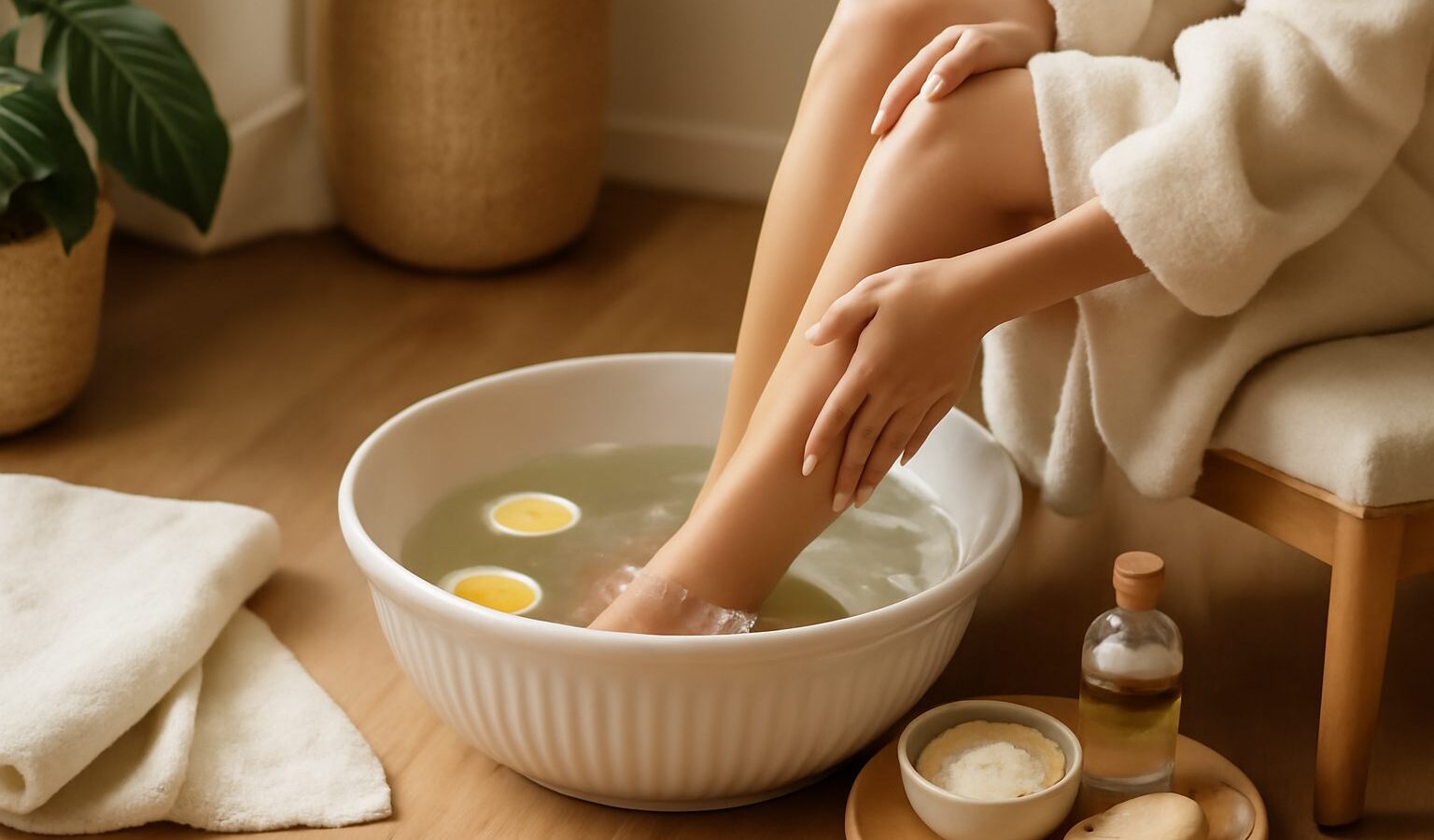
Our feet do a huge amount of quiet work and rarely get much thanks for it. After a long day of walking, standing, commuting, and squeezing into shoes in the heat, sinking them into a bowl of warm water is one of the simplest pleasures going. A foot spa at home in Singapore needs nothing fancy, just a basin, some warm water, and a few minutes to yourself. This guide walks through how to set up a soak that actually feels lovely, some add-ins worth trying, and the safety points that genuinely matter, because a warm soak is a self-care ritual rather than a medical treatment.
Setting Up a Simple Soak
You do not need an electric foot spa machine to enjoy this, though they are pleasant if you have one. A large basin or bucket deep enough to cover your ankles works perfectly well, and half the ritual is simply making the space feel calm.
A straightforward setup:
- Fill your basin with comfortably warm water, not hot. It should feel pleasant, never something you have to brace against.
- Add anything you fancy, from a handful of bath salts to a couple of drops of a scent you like.
- Find a comfortable chair, put a towel underneath to catch splashes, and settle in for ten to twenty minutes.
- Have a dry towel ready for afterwards, and take your time patting your feet fully dry, including between the toes.
Water temperature is the part to get right, and we will come back to it, because it matters more than people assume. As a rule, warm and comfortable is the target, and if in doubt, cooler is safer than hotter.
The atmosphere is worth a little thought too. Dim the lights, put on some quiet music, and treat it as a small pocket of calm rather than a chore. In that sense a foot soak sits nicely within a broader self-care routine, a low-effort way to mark the end of a busy day.
Add-Ins and Little Extras
Part of the fun is customising your soak, and a few gentle add-ins can make it feel more of a treat. None of these are miracle ingredients, but they make the experience more enjoyable.
- Bath or Epsom salts dissolve into the water and feel soothing, and many people simply like the ritual of them. Our notes on epsom salt baths and magnesium take an honest look at what they can and cannot do.
- A drop or two of a pleasant essential oil, well diluted, adds a calming aroma. Go easy, since a little goes a long way and some oils can irritate skin.
- Smooth pebbles or marbles at the bottom of the basin let you roll your feet over them for a gentle, pleasant sensation.
- After drying, a rich moisturiser or foot cream seals in the comfort, which is especially welcome if you deal with dry skin or cracked heels.
A soak also makes a nice moment to give your feet a little attention afterwards, gently tending to skin and nails once they are soft and clean. If your feet tend to get hot and sweaty in our climate, a soak plus thorough drying can feel refreshing. For a more hands-on ritual, you might also enjoy the ideas in foot care and reflexology.
Safety Points That Really Matter
This is the section to take seriously, because a warm foot soak, relaxing as it is, needs a few sensible precautions.
The most important point concerns temperature and sensation. People with diabetes or poor circulation should be especially careful with hot foot soaks. Reduced sensation in the feet means you may not feel that the water is too hot, which risks a burn, so always check the water temperature carefully, ideally with your elbow or a thermometer rather than relying on how your feet feel, and keep it warm rather than hot. If you have any numbness in your feet, it is safer to avoid hot soaks altogether. Anyone with diabetes, circulation problems, or a foot issue such as a wound, sore, or infection should see a doctor about foot care rather than treating it at home.
A few more general points:
- Do not soak broken skin, cuts, or blisters, since warm water and add-ins can irritate them.
- Keep soaks to a sensible length, as very long soaks can leave skin overly soft and prone to irritation.
- Dry thoroughly afterwards, especially between the toes, because trapped moisture in our humidity can encourage fungal issues.
- Keep your basin clean between uses.
- If a foot problem is painful, persistent, spreading, or simply worrying you, please see a doctor, since a soak is for relaxation, not for treating a medical condition.
A gentle wrap-up. An at-home foot spa is one of the easiest and most affordable ways to unwind, and your hardworking feet will thank you for it. Keep the water comfortably warm rather than hot, dry off well afterwards, and enjoy it as the small, calming ritual it is. If you have diabetes, poor circulation, numbness, or any ongoing foot trouble, be extra cautious and let a doctor guide your foot care.