
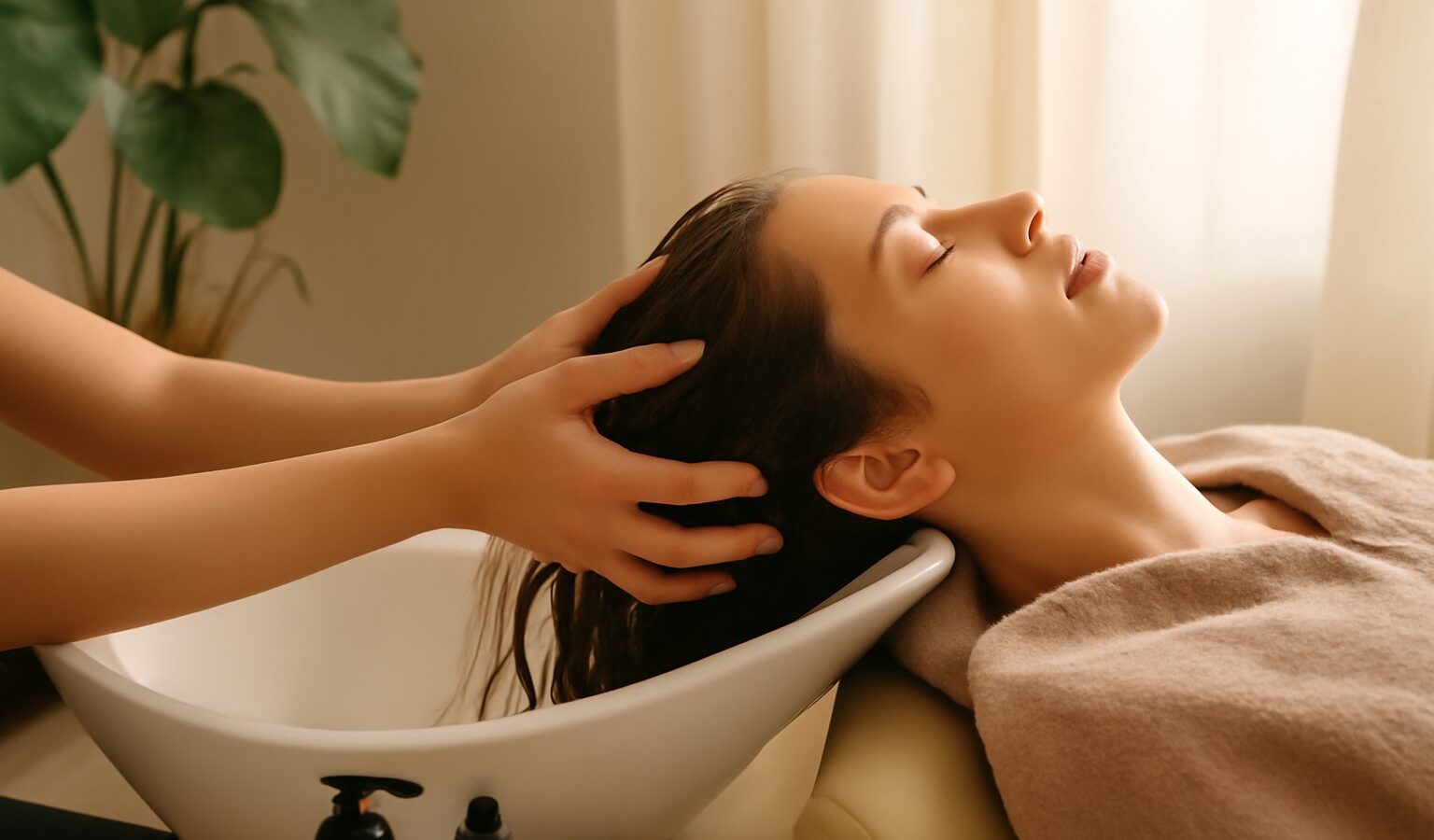
A head spa is not just a longer shampoo. It is a dedicated treatment focused on the scalp, combining cleansing, massage and often a quiet, dim room designed for deep relaxation. Head spa in Singapore has become popular with office workers and busy parents who want a break that leaves their hair feeling fresh at the same time. Much of the trend comes from Japan, where head spas are a familiar part of self-care.
This guide explains what a Japanese-style head spa usually involves, the types of sessions you will see, how they differ from a normal salon wash or a dandruff treatment, and how to choose a place that suits you. It is general information, not medical advice. If you have a scalp condition, see a doctor or dermatologist first.

What a Japanese-Style Head Spa Usually Involves
Every outlet does things its own way, but many sessions follow a similar flow.
- Consultation. A therapist asks about your scalp, hair and any concerns. Some use a small camera, often called a scalp scope, to show you a close-up of your scalp on a screen.
- Pre-cleanse. An oil or pre-treatment is applied to loosen build-up from products, sweat and sebum.
- Deep cleansing. The scalp is washed carefully, sometimes with a carbonated or foam treatment intended to lift residue.
- Massage. This is the heart of a head spa. Slow, rhythmic pressure on the scalp, temples and sometimes neck and shoulders helps you unwind. Many people fall asleep.
- Treatment and finishing. A tonic, serum or mask may be applied, followed by a rinse, gentle blow-dry and sometimes a short shoulder massage.
The room is usually quiet, with soft lighting, a reclining bed or chair and warm towels. The aim is rest as much as clean hair.
Types of Head Spa Treatments
Menus can look confusing. This comparison shows common styles and what each is designed for.
| Type of session | Main focus | What you will feel | Good for |
|---|---|---|---|
| Relaxation head spa | Long massage, calm setting | Slow pressure, warmth, quiet | Stress relief and better rest |
| Scalp cleansing or “detox” | Removing product build-up and oil | Foams, scrubs, thorough rinsing | Heavy product users, humid climate |
| Hydrating or soothing | Moisture for dry or tight scalp | Cool serums, gentle massage | Dry or easily irritated scalps |
| Hair and scalp care combo | Scalp plus a hair mask | Massage plus conditioning | Damaged or coloured hair |
| Express head spa | Shorter cleanse and massage | Quick refresh | Lunch breaks, first-timers |
Some places use terms like “scalp detox” for marketing. These are cosmetic treatments that clean the scalp surface, not medical detoxification. If a salon claims a treatment can cure hair loss or a skin disease, be cautious and check with a doctor.
Head Spa vs Hair Salon Wash vs Dandruff Treatment
People often mix these up, so it helps to know the difference.
- A salon wash is a quick shampoo before a cut or colour. It is about clean hair, not relaxation.
- A dandruff or scalp clinic treatment targets a specific problem like flakes or itch. Our guide to scalp care and dandruff in Singapore explains everyday care and when to see a doctor.
- A head spa focuses on relaxation and scalp comfort, with a longer, slower massage and calmer setting.
You can combine them. For example, a head spa every so often can complement a regular home routine of gentle washing and occasional exfoliation. Our guide to scalp exfoliation and scalp scrubs explains how to do this safely at home.
Why People in Singapore Try Head Spas
Singapore’s climate plays a part. Heat and humidity mean sweat, oil and sunscreen residue can build up on the scalp. Many people also spend long hours at screens, which can lead to tension in the head, neck and shoulders.
Common reasons people book a head spa include:
- Wanting a quiet hour away from work and devices.
- Enjoying the feeling of a thoroughly clean, refreshed scalp.
- Easing the tight feeling that comes with stress and long screen time.
- Treating themselves or gifting a session to a partner or parent.
A head spa can feel very relaxing, but it is not a treatment for anxiety, insomnia or medical hair loss. If stress is affecting your daily life, simple habits like breathing exercises for stress relief can help, and a doctor or counsellor can offer proper support.
How to Choose a Head Spa in Singapore
Head spas range from small specialist studios to services within larger salons and spas. Here is what to check before booking.
- Therapist training. Ask whether therapists are trained in head spa techniques specifically, not just general hair washing.
- Products used. Ask for ingredient lists if you have sensitive skin or allergies. Request fragrance-free options if needed.
- Hygiene. Towels, combs and tools should be clean. The basin and bed should look well-kept.
- Clear pricing. Check what is included, such as blow-drying or add-on masks, and whether there are package sales. Do not feel pressured to buy a package on your first visit.
- Session length. Compare how much of the time is massage versus cleansing and drying.
- Reviews and trial sessions. Many places offer a first-visit or trial option. Recent reviews can tell you about atmosphere and service.
- Cancellation terms. Check the policy before paying for packages.
Prices and promotions vary widely, so compare a few places before deciding.
Who Should Check Before Booking
A head spa is gentle, but it is not right for everyone at every time.
- People with scalp wounds, infections, active rashes or a diagnosed scalp condition should see a doctor first.
- Anyone who is pregnant, recovering from surgery, or managing high blood pressure or neck problems should check with their doctor and tell the therapist.
- If you have recently coloured, permed or chemically treated your hair, ask whether certain products are suitable.
- Tell the therapist about allergies, and speak up if the pressure is too strong.
Making the Most of Your Session
Arrive a little early, switch your phone to silent and let the therapist know if you prefer quiet or light conversation. Drink some water afterwards. Ask what you can do at home to keep your scalp comfortable between visits. With realistic expectations, a head spa can be a lovely way to slow down and care for yourself.
Explore more: Scalp Massage for Hair Growth.
Frequently Asked Questions
How often should I get a head spa? There is no fixed schedule, and it depends on your goals, scalp type and budget. Some people go occasionally as a treat, others more regularly when stress or product build-up is high. Pay attention to how your scalp feels afterwards, and ask the therapist for a suggestion.
Can a head spa help with hair growth or hair loss? A head spa may leave your scalp feeling cleaner and relaxed, but claims that it grows hair or cures hair loss should be treated with caution. Hair loss has many medical causes. If you are losing hair noticeably, see a doctor or dermatologist rather than relying on a spa treatment.
Can I get the same effect from a scalp massage at home? You can get some of the relaxation by using gentle fingertip pressure while washing, and an occasional scrub may help with build-up. A professional session adds the setting, tools and time that are hard to match at home. Avoid pressing hard or scrubbing irritated skin.
Is a head spa suitable for men or people with short hair? Yes, since the focus is the scalp rather than hair length. Men and people with short or thinning hair can enjoy the cleansing and massage just as much. Tell the therapist about your hair type and any sensitivities so they can adjust products and pressure.
What should I do before and after a head spa? Arrive a little early and avoid heavy styling products so the therapist can see your scalp clearly. Afterwards, drink water and avoid harsh washing or strong treatments for a day. If you notice itching, redness or soreness, stop using any products from the session and see a doctor if it persists.
Further reading: Hair Spa in Singapore: What It Is and Who It Helps · Scalp Micropigmentation in Singapore and Who It Suits · Scalp Analysis in Singapore: Is It Worth It?