
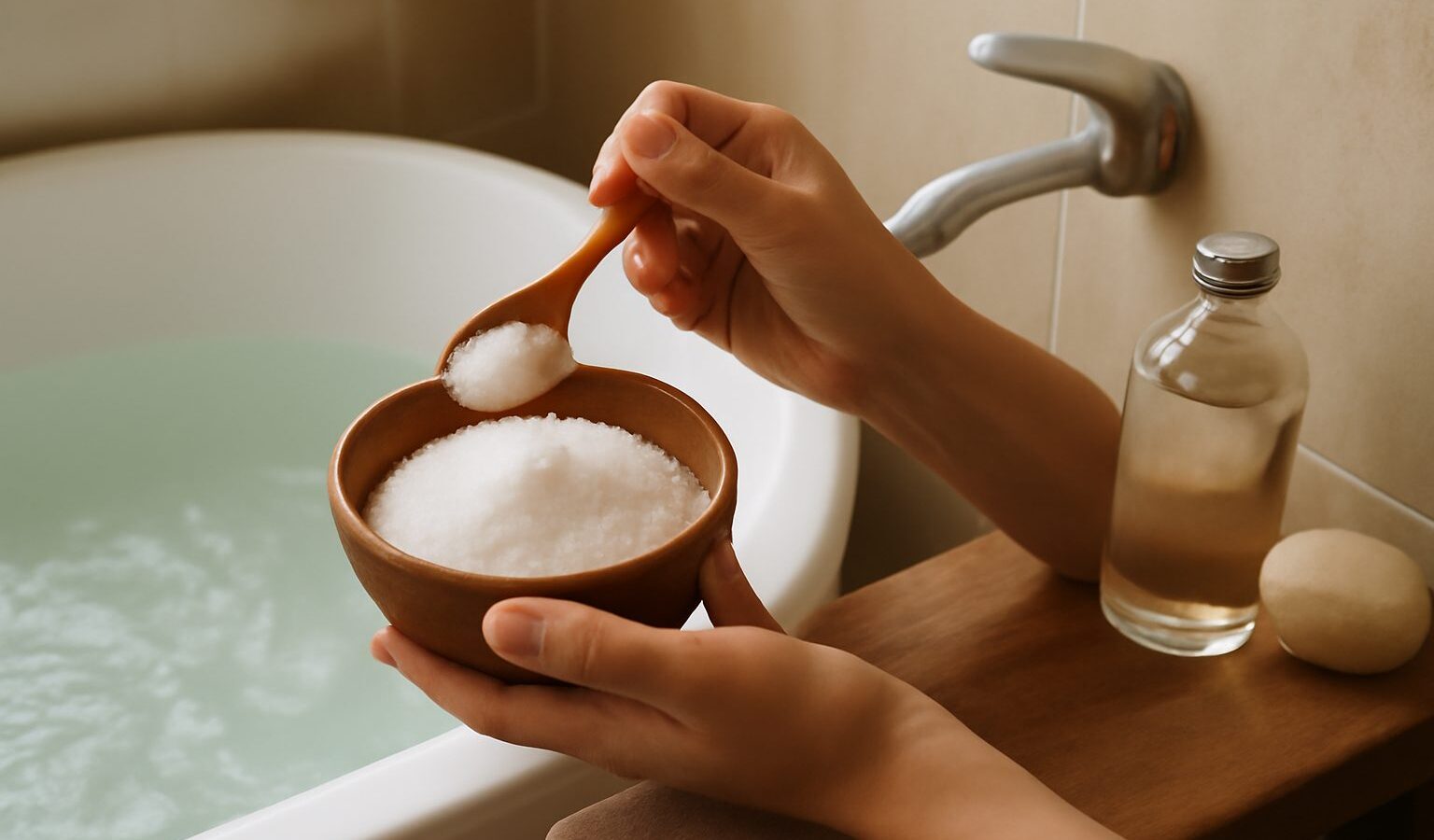
After a long week, sinking into a warm tub can feel like a small luxury, and adding a scoop of Epsom salt is a ritual many people swear by for winding down. An epsom salt bath singapore residents can enjoy at home is a genuinely lovely way to relax tired muscles and quiet a busy mind. Before you stock up, though, it is worth understanding what these baths actually do, what the science does and does not support, and how to enjoy one safely, so your expectations match reality.
This is general wellbeing information, not medical advice. An Epsom salt soak is a relaxation ritual, not a proven medical treatment. If you have muscle or joint pain that lingers, any health condition, or you are thinking about magnesium supplements, please speak to a doctor or pharmacist first.
What Epsom Salt Actually Is
Despite the name, Epsom salt is not the salt you cook with. It is magnesium sulphate, a compound of magnesium and sulphur that happens to form salt like crystals and dissolves easily in warm water. It has been used in baths for generations, and the appeal is easy to understand. You pour some into a warm tub, it dissolves, and you soak in water that feels silky and soothing. It is inexpensive, widely available, and asks nothing more of you than lying still for a while, which is a large part of its charm.
The popular claims go further than that, and this is where a little honesty helps. Many people believe that soaking in Epsom salt lets your body absorb magnesium through the skin, easing aches, calming the nerves and topping up a mineral many of us are short on. It is a lovely idea, and magnesium genuinely is an important mineral for the body. The catch is that the evidence for absorbing meaningful amounts of magnesium through the skin during a bath is limited and far from settled. Skin is a good barrier by design, and the research so far does not clearly show that a soak delivers a useful dose into the body.
So it is fairer to think of an Epsom salt bath as a relaxation ritual rather than a mineral treatment. That is not a criticism. A warm bath at the end of a hard day has real, well understood benefits for relaxation, and the salt makes the water feel pleasant and the whole ritual feel a little more indulgent. If you go in expecting a calming soak rather than a medical top up, you are far more likely to come away satisfied.
Why a Warm Soak Feels So Good
Even setting the magnesium question aside, there are solid reasons a warm bath helps you unwind. Warm water encourages muscles to relax and can ease that tight, tense feeling after a long day on your feet or hunched at a desk. The warmth and the gentle pressure of the water are soothing in themselves, and floating in a quiet tub gives your nervous system a rare break from noise, screens and demands. Much of the benefit people feel is this deep, simple relaxation, salt or no salt.
There is a wind down effect too. A warm bath in the evening, followed by stepping out into cooler air, nudges your body in the direction of rest, which is why many people find a soak before bed helps them feel drowsy and ready to sleep. Add the ritual of dimmed lights, no phone and a few quiet minutes, and you have a genuinely effective way to signal to your body that the day is done.
Here is a realistic look at what an Epsom salt bath can and cannot offer.
| Claim | The honest picture |
|---|---|
| Helps you relax and unwind | Yes, warm baths are genuinely soothing |
| Feels soothing on tired muscles | Yes, warmth eases tension and stiffness |
| Aids winding down before sleep | Often helps as part of a calming routine |
| Delivers magnesium through the skin | Evidence is limited and unproven |
| Cures aches or medical conditions | No, see a doctor for persistent problems |
Enjoy the bath for what it reliably gives you, which is comfort and calm, and hold the bigger health claims lightly.
How to Enjoy One Safely
Running a good Epsom salt bath is simple. Fill the tub with comfortably warm water, not scalding, and stir in a scoop of Epsom salt following the guidance on the packet until it dissolves. Soak for around fifteen to twenty minutes, which is plenty, since very long, hot baths can leave you feeling lightheaded or dry out your skin. Have a glass of water nearby, take it slowly when you stand up, and moisturise afterwards if your skin tends to feel tight.
A few sensible cautions are worth keeping in mind. Very hot water is not advisable if you feel unwell, faint easily, or are pregnant, and it is wise to check with a doctor first in those situations. If you have any cuts, broken skin or a skin condition, the salt may sting, so go gently and stop if it feels uncomfortable. Anyone with heart problems, low blood pressure, diabetes or other ongoing health conditions should have a quick word with their doctor before making hot baths a regular habit, since heat affects the body in ways that matter with certain conditions. And if your skin reacts with redness or irritation, rinse off and give it a miss next time.
One important line to draw is around eating or drinking Epsom salt, or taking magnesium supplements, to chase health benefits. That is a completely different matter from a relaxing soak, and it is not something to experiment with on your own. Magnesium supplements can interact with medicines and are not suitable for everyone, especially people with kidney issues or heart conditions, so if you are curious about your magnesium levels or supplements, that is a conversation for a doctor or pharmacist, not a decision to make from a wellness article. For most people, the salt belongs in the bath, full stop.
Taken for what it is, an Epsom salt bath is a small, affordable pleasure that helps you slow down and let the tension of the week drain away. Keep the water comfortably warm, keep the soak a reasonable length, enjoy the calm, and let any deeper health questions go to a professional who knows your history.
Explore more
Managing Stress and Relaxation
Building a Better Sleep Routine in Singapore
Self-Care Routines in Singapore
Wellness on a Budget in Singapore