
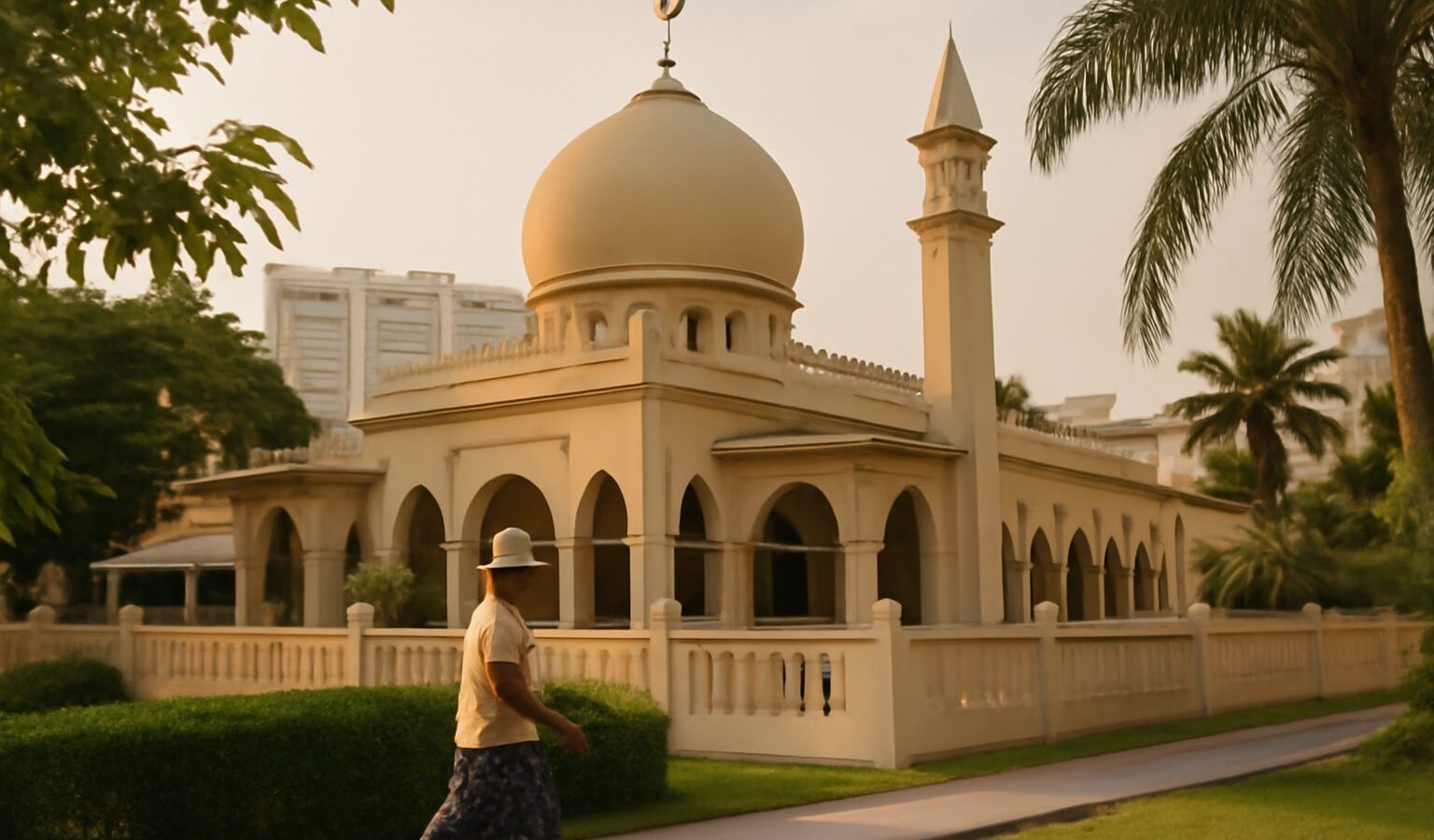
Along the lively stretch of Serangoon Road, in the heart of Little India, stands a mosque that has served the faithful for well over a century. The Angullia Mosque singapore worshippers know is a heritage house of prayer, its slender minaret and green accents marking it out among the shophouses and temples of the district. Though modest in scale compared with the grand mosques of Kampong Glam, it holds an important place in the community. This guide covers what the mosque is, its history, its features, and how to visit respectfully.

What It Is and Who It Serves
The Angullia Mosque, known in Malay as Masjid Angullia, is a Muslim place of worship serving the community around Serangoon Road and the wider Little India area. It takes its name from the Angullia family, prominent Muslim benefactors of Indian origin who were closely associated with its founding and support. The family were among the notable merchant philanthropists of early Singapore, and their patronage helped establish the mosque and sustain it over the years.
The mosque serves Muslims of many backgrounds who live, work, and pass through this busy part of the city. Its location in Little India, an area more often associated with Hindu temples, is a reminder that Singapore’s neighbourhoods have long been shared by different faiths. For a broader view of the island’s Islamic heritage, it is worth reading an overview of the mosques of Singapore.
History and Significance
The Angullia Mosque dates back to the late nineteenth century, making it one of the older mosques in Singapore. It was built to serve the Muslim residents and traders of the Serangoon Road area at a time when the community was growing and needed a dedicated place for daily and Friday prayers. The involvement of the Angullia family reflects a long tradition of Muslim philanthropy in Singapore, in which wealthy merchants endowed mosques, schools, and charitable trusts for the benefit of the community.
The significance of the mosque lies partly in its longevity and partly in its setting. Standing on Serangoon Road, amid Hindu temples, Chinese shops, and buildings of many faiths, the Angullia Mosque is a living example of how communities have coexisted here for generations. This everyday closeness of mosque, temple, and church is central to the story of interfaith harmony in Singapore, and the mosque has quietly played its part in that shared history.
Architecture and Features
The mosque presents a graceful face to Serangoon Road. A minaret rises above the street, from which the call to prayer has traditionally been given, and domes crown the structure in the manner familiar to mosques. Touches of green, a colour often associated with Islam, appear across the facade, while the overall form has been renewed and maintained over the years to keep the mosque in good order for its congregation.
Inside, the prayer hall is oriented towards Mecca, and in keeping with Islamic tradition the decoration relies on geometry and calligraphy rather than figurative images. The atmosphere is one of simplicity and focus, well suited to prayer. Though it does not have the vast scale of the largest mosques, its human proportions and its place among the street life of Little India give it a distinctive character.
Role Today
The Angullia Mosque remains an active place of worship. Muslims gather here for the five daily prayers and for the Friday congregational prayer, which draws worshippers from the surrounding area, including the many who work in Little India. During Ramadan the mosque comes alive with evening prayers and the breaking of the fast. It continues to serve as a spiritual anchor and a point of community for Muslims in this part of the city.
How to Get There
The mosque is located on Serangoon Road in Little India. The area is well served by MRT, with stations in the Little India and Farrer Park vicinity within walking distance, as well as by numerous buses. A visit fits naturally into a wider exploration of Little India’s streets, temples, and markets.
Respectful Visitor Etiquette
As a functioning mosque, Angullia Mosque asks visitors to be respectful. Dress modestly, with shoulders and knees covered. Women are usually asked to cover their hair with a scarf, and visitors should remove their shoes before entering the prayer areas. Be mindful of prayer times, when the mosque is reserved for worshippers, and keep quiet inside. Ask before photographing people at prayer, and follow any guidance from the mosque staff or posted signs. Please confirm visiting arrangements through the mosque’s official channels before you go, and remember that this remains first and foremost a house of prayer.
Frequently Asked Questions
Who was the Angullia family? They were prominent Muslim benefactors of Indian origin and notable merchant philanthropists of early Singapore. Their patronage helped establish the mosque and sustain it, reflecting a long tradition of wealthy merchants endowing mosques, schools and charitable trusts.
Why is there a mosque in the middle of Little India? Singapore’s neighbourhoods have long been shared by different faiths. The mosque was built for Muslim residents and traders around Serangoon Road, and it stands amid Hindu temples and Chinese shops as an example of everyday coexistence.
Is Angullia Mosque as large as the mosques in Kampong Glam? No, it is modest in scale compared with the grand mosques of Kampong Glam, but its human proportions and street-life setting give it a distinctive character. Its slender minaret and green accents mark it out among the shophouses.
Why is there green on the mosque facade? Green is a colour often associated with Islam, and touches of it appear across the mosque’s facade. The mosque has been renewed and maintained over the years to keep it in good order for its congregation.
What happens at Angullia Mosque during Ramadan? The mosque comes alive with evening prayers and the breaking of the fast. Friday congregational prayer also draws many worshippers, including those who work in Little India. Check official channels before visiting during Ramadan.
Further reading: Malabar Mosque