
Every year, graduating students from Singapore’s art schools open their studios, galleries and theatres to the public. An art school graduation show in Singapore is one of the best value cultural outings around: usually free or low cost, packed with fresh ideas, and a rare chance to meet artists at the very start of their careers. For students, it is also a preview of what you could be making in a few years.
This guide explains what these showcases are, how to plan a visit and how to buy emerging work with confidence. It is about visiting, not enrolling. If you are thinking about applying, our explainer on LASALLE and NAFA degrees under the University of the Arts Singapore covers the programmes.
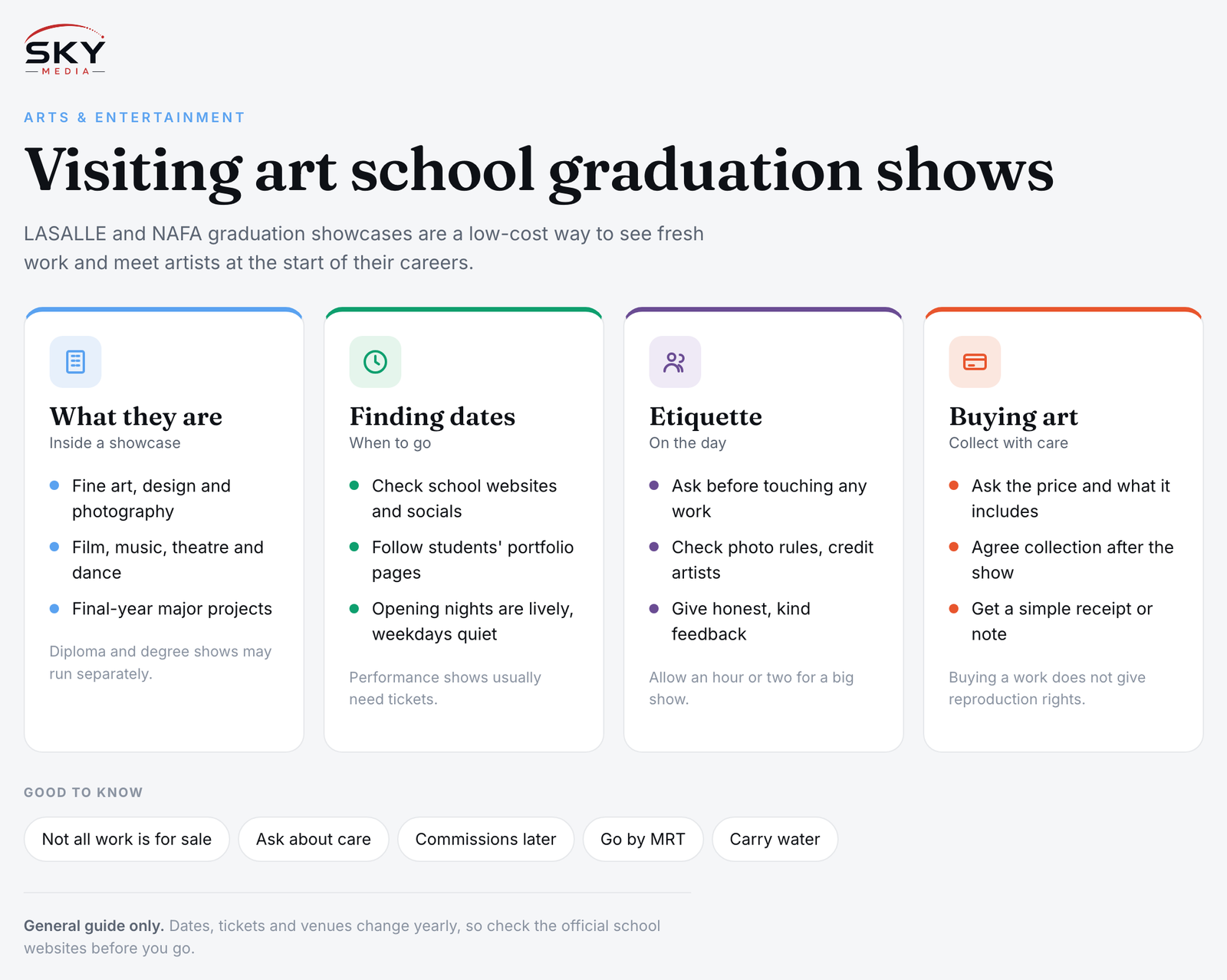
What Graduation Shows Are and Who Runs Them
LASALLE College of the Arts and the Nanyang Academy of Fine Arts (NAFA) are Singapore’s two main specialist arts institutions. They are now part of the University of the Arts Singapore (UAS), but each keeps its own campus and identity. Both hold end-of-year showcases where final-year students present their major projects.
Depending on the school and year, a graduation showcase can include:
- Fine art exhibitions of painting, sculpture, printmaking, installation and new media
- Design shows covering fashion, interior, product, communication and game design
- Photography and film screenings
- Music recitals and composition showcases
- Theatre, dance and musical theatre productions
- Arts management and writing projects
Diploma and degree students may present at different times, and some programmes run separate shows. Polytechnics and other institutions with design or media courses sometimes hold their own graduation exhibitions too, which are worth looking out for.
When to Go and How to Find Show Dates
Graduation showcases tend to cluster around the end of the academic year, but timing varies by school, programme and year, and performance seasons can run on a different schedule from visual arts exhibitions. Rather than relying on past dates, check:
- The official LASALLE and NAFA websites, under news, events or “what’s on”
- The schools’ social media accounts, which often post opening nights and floor plans
- Individual students’ Instagram or portfolio sites, as graduates promote their own work
- Arts listings and newsletters that cover Singapore galleries and performances
Opening nights are lively and crowded, with a chance to chat to artists. Weekday afternoons are quieter if you want time with the work. Performance shows usually need tickets, and some offer concession prices; see our guide to student and senior concession tickets for arts shows for how those generally work.
What to Expect on the Day
Visual arts and design shows are often spread across several floors, studios and corridors. Pick up a map or catalogue at the entrance if one is available, and allow at least an hour or two for a large showcase.
Expect a wide range. Some pieces are polished and ready for a gallery wall. Others are experimental, conceptual or deliberately unfinished. That mix is part of the appeal. Students are often present beside their work, especially at opening events and weekends, and many are happy to explain their process.
A few etiquette points help everyone enjoy the show:
- Ask before touching. Some installations invite interaction, but most work should not be handled.
- Check photo rules. Photography is usually welcome for personal use, but some pieces or performances may not allow it. Credit the artist if you post online.
- Give honest, kind feedback. A thoughtful question means a lot to a graduating student.
- Mind young children. Fragile works and sharp materials are common, so keep little ones close.
- Respect performance etiquette. Arrive on time, silence your phone and follow front-of-house instructions.
Buying Art From Graduating Students
Graduation shows are a good place to start collecting. Prices for student work are often lower than for established artists, and buying directly supports someone at a vulnerable point in their career. Not every piece is for sale, and policies differ by school and by student, so ask before assuming.
Here is how buying at a graduation show generally compares with other routes.
| Where you buy | What it is like | What to check |
|---|---|---|
| Graduation show, direct from student | Early-career work, often affordable, personal contact with the artist | Whether the school handles sales, payment method, collection date after the show closes |
| Commercial gallery | Curated, established or rising artists, gallery handles paperwork | Gallery commission is built into the price, provenance and certificates |
| Art fair | Many galleries in one place, wide price range | Exhibitor terms, shipping, booth staff knowledge of the work |
| Online or social media | Convenient, direct messaging with artists | Seller identity, condition of the actual work, return terms |
When buying from a graduation show:
- Ask the price and what it includes. Framing, installation and delivery may be extra.
- Agree on collection. Works usually stay on display until the show ends, so you collect afterwards.
- Get a simple receipt or note. Include the title, medium, size, date and artist’s name. A signed note or certificate is a good habit.
- Ask about care. Some materials fade in sunlight or react to humidity, which matters in Singapore’s climate.
- Discuss commissions separately. If you love a style but not the specific piece, ask whether the artist takes commissions after graduating.
- Respect copyright. Buying a work does not normally give you the right to reproduce it commercially.
Making the Most of a Visit as a Student
If you are a secondary, junior college or polytechnic student thinking about the arts, graduation shows are free research. Notice which programmes excite you, how final projects are presented and what level of skill students reach by the end of their courses. Take notes on how artists write their statements, as this is a useful skill when building a portfolio. Our guide on building an art portfolio for art school applications pairs well with a showcase visit.
Bring a notebook, ask students what they wish they had known in their first year, and pick up any free catalogues or postcards as references.
Planning Your Outing
Both main campuses are in central Singapore and are reachable by MRT and bus, so public transport is the easiest option, especially on busy opening nights. Many shows have air-conditioned galleries, but walking between buildings can be warm, so carry water. Food options are usually nearby.
Arts calendars, exhibition dates, ticket prices and venue arrangements change from year to year. Always confirm the latest details on the official school websites before you go, and enjoy discovering the artists who may become Singapore’s next big names.
Further reading: How to Use the SG Culture Pass on Shows, Museums and Classes · Studying the Arts in Singapore: Diplomas and Degrees Compared