
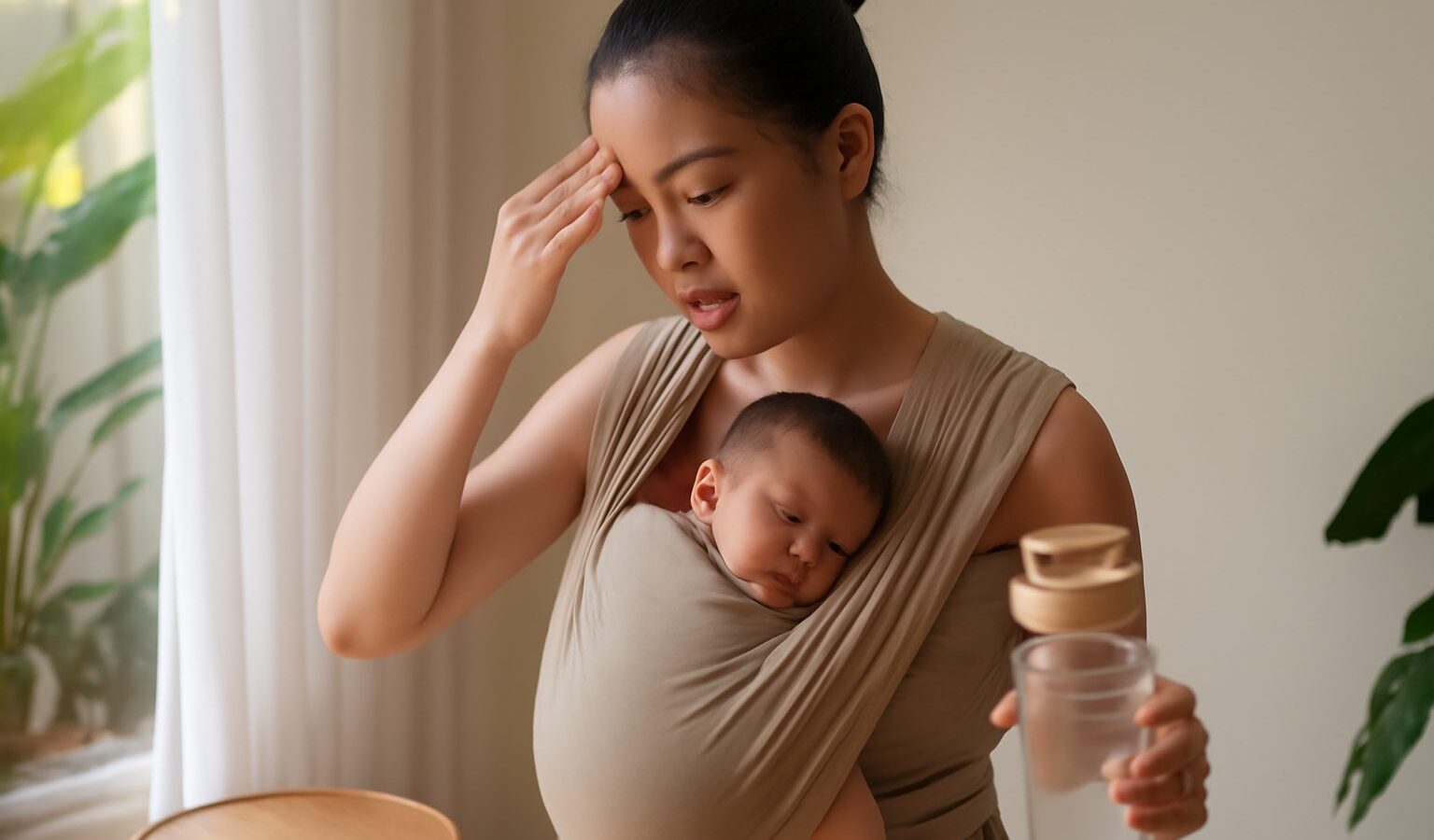
Babywearing in Singapore heat is a different job from babywearing in a cool climate. A carrier keeps your baby close, frees your hands and makes MRT rides and hawker centre trips easier, but it also puts two warm bodies together in a humid, tropical environment. Babies cannot regulate their temperature as well as adults, so the main risk to manage here is overheating. This babywearing Singapore heat guide focuses on that climate-specific side: how to dress, what to carry, when to go out and what warning signs to watch for.
This is general information, not medical advice. If you are worried about your baby’s health, speak to your doctor, a polyclinic or check guidance on HealthHub.
Why Heat Changes the Rules
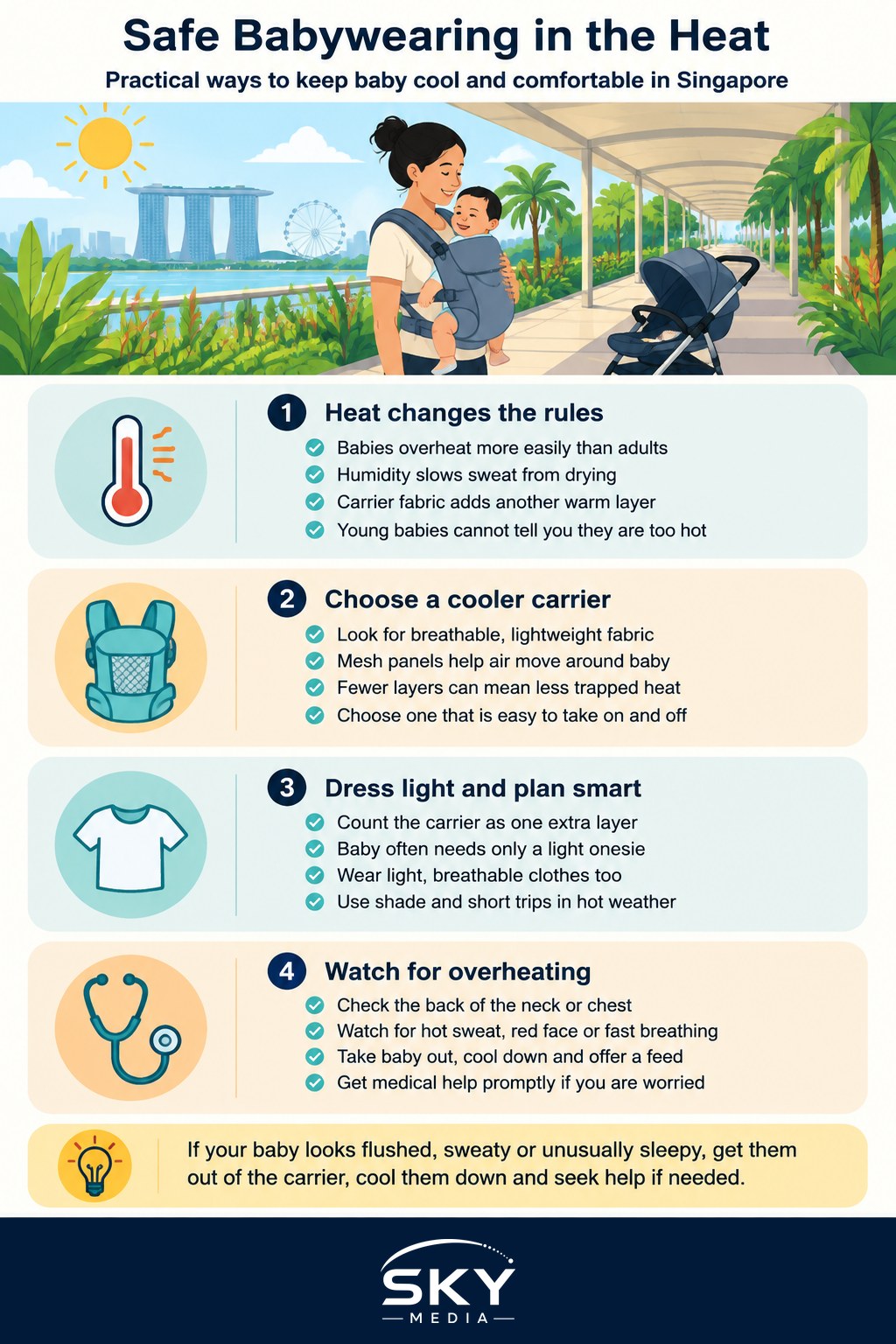
In a carrier, your baby sits against your chest or back, often with fabric over most of their body. Your own body heat, the carrier fabric and Singapore’s warm, humid air all add up. Humidity matters as much as temperature because sweat evaporates slowly, so neither you nor your baby cools down efficiently.
Young babies are especially vulnerable. They have a larger surface area relative to their weight, they cannot tell you they are too hot, and they cannot wriggle away from the heat. That is why the usual instinct to wrap a baby up for comfort works against you here.
Core Safety Basics Still Apply
Heat adds to the standard babywearing safety advice, it does not replace it. Many parents use the TICKS checklist, a widely shared guide from carrier safety groups:
- Tight: the carrier should hold the baby snugly so they do not slump.
- In view at all times: you should be able to see your baby’s face by glancing down.
- Close enough to kiss: the baby’s head should be high enough that you can kiss the top of it.
- Keep chin off chest: there should be space under the chin so the airway stays open.
- Supported back: the baby’s back should be supported in a natural position.
In hot weather, “in view at all times” does double duty. Seeing your baby’s face lets you check breathing and also spot early signs of overheating, such as flushed cheeks or sweaty hair.
Choosing a Carrier for Tropical Weather
The carrier you use in a temperate country may not be the best one here. Look for:
- Breathable fabric: mesh panels, lightweight cotton or linen blends let air move. Thick padded panels and multiple layers trap heat.
- Single-layer designs: some wraps need several passes of fabric around the baby. Fewer layers means less heat.
- Easy on and off: you will want to take your baby out of the carrier often to cool down, so a design you can manage quickly helps.
- Washable materials: carriers get sweaty in Singapore, so check that yours can be washed and dries fast.
Avoid using the hood or sun cover in a way that blocks airflow around your baby’s face. Draping a cloth over a carrier to shade the baby can create a pocket of hot, stale air.
Dressing You and Your Baby
Count the carrier as a layer of clothing. In most indoor and outdoor situations in Singapore, that means your baby needs less clothing than you might expect, often just a light, loose layer or a single cotton onesie. Socks, hats and blankets are rarely needed while in the carrier, except in heavy air-conditioning.
Dress yourself in light, breathable clothing too. Your body is effectively the baby’s mattress, so a cooler parent means a cooler baby. Our guide to dressing for Singapore’s heat and humidity has practical fabric tips that also work well under a carrier.
A thin muslin or cotton cloth between you and your baby can absorb sweat and make both of you more comfortable. Change it when it gets damp.
Planning Outdoor Trips
Where and when you go out matters as much as what you wear.
| Situation | What to expect | Safer approach |
|---|---|---|
| Midday walk outdoors | Strongest sun and highest heat stress | Go early morning or late afternoon, use shaded routes and covered walkways |
| Hawker centre or open market | Warm, crowded, little airflow | Keep visits short, sit near fans, take the baby out of the carrier when seated |
| MRT or bus | Cool inside, hot at stations and stops | Wait in shade, cool down on board, adjust clothing for air-conditioning |
| Mall or air-conditioned venue | Comfortable, sometimes cold | Have a light layer ready, watch for sudden heat when stepping outside |
| Park or nature walk | Hot, humid, often exposed | Plan short loops with shade and rest points, avoid long exposed stretches |
Also:
- Use a stroller for longer outdoor stretches. Swapping between carrier and stroller gives your baby a break from your body heat.
- Take breaks. Every so often, take your baby out, let them cool and offer a feed.
- Use shade, not covers. An umbrella held above both of you shades without trapping air around the baby.
- Watch the weather. On very hot days, consider shorter trips or indoor plans.
Hydration for Both of You
Babies under six months generally get their fluids from breast milk or formula. In hot weather they may want to feed more often, so offer feeds regularly and follow your doctor’s guidance on whether extra fluids are needed. Do not give water to young babies unless a doctor advises it.
You need to drink more too. A dehydrated, overheated parent is more likely to feel faint or tired, which is not safe while carrying a baby. Carry a water bottle and drink before you feel thirsty. Our guide to staying hydrated in Singapore’s heat covers practical habits.
Signs Your Baby Is Too Hot
Check your baby regularly by feeling the back of the neck or chest, not the hands and feet, which can feel cool even when the body is warm. Signs your baby may be overheating include:
- Hot, sweaty neck, back or hair.
- Flushed or red face.
- Fast breathing.
- Unusual fussiness, or unusual sleepiness and floppiness.
- Fewer wet nappies than normal.
If you notice these, take your baby out of the carrier, move to a cool, shaded or air-conditioned place, remove extra clothing and offer a feed. If your baby seems very drowsy, is hard to wake, has a fever, is not feeding or you are worried for any reason, get medical help promptly. Call 995 in an emergency.
Quick Checklist Before You Head Out
- Carrier fitted using TICKS, face visible.
- Baby dressed in one light layer, no blankets.
- Breathable carrier or a light, single-layer wrap.
- Water for you, feeds planned for your baby.
- Umbrella for shade, stroller for longer stretches.
- Route planned with shade, air-conditioning and rest points.
Babywearing in Singapore’s heat can be comfortable and safe with some planning. Keep layers light, take frequent breaks, watch your baby’s face and body temperature, and trust your instincts if something does not seem right.