
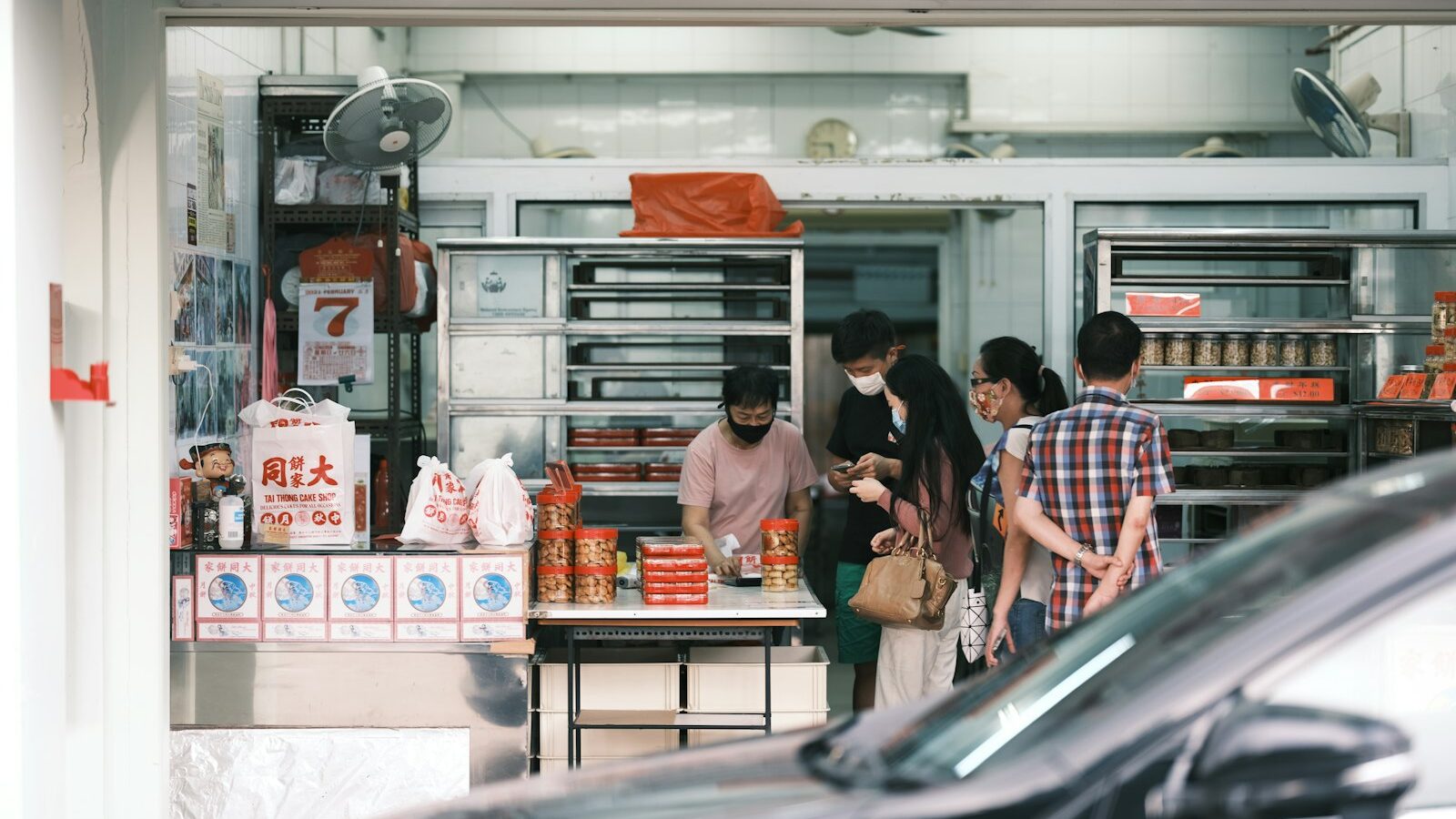
Baking for beginners in Singapore can feel like a science experiment gone wrong: the cake sinks, the cookies spread into one giant puddle, and the bread comes out dense. The truth is that home baking is very learnable once you understand a few basics. Unlike stir-frying, where you adjust as you go, baking rewards you for measuring properly and then leaving things alone. Get the fundamentals right and your results become surprisingly consistent, even in a tight HDB kitchen with a small oven.
This guide walks you through the essential tools, the ingredients you will use again and again, why our tropical humidity matters, and the simplest first bakes to build your confidence. You do not need a fancy stand mixer or a marble counter. You need patience, a set of measuring tools, and a willingness to let the first few tries be imperfect.
The Small Set of Tools You Actually Need
You can start baking with far less than the internet suggests. The genuinely useful items are:
- A digital kitchen scale. This is the single most important tool. Weighing flour and sugar in grams removes the biggest source of beginner failure, which is inconsistent cup measurements.
- Mixing bowls, two or three that nest to save cupboard space.
- A whisk, a silicone spatula, and a wooden spoon.
- Measuring spoons for small amounts of baking powder, salt and extracts.
- A baking tray and one cake tin or a loaf tin to begin. A 20cm round tin is a friendly first size.
- Baking paper to line tins so nothing sticks.
A hand mixer is a nice-to-have that makes creaming butter and whipping cream easier, but a whisk and some arm work will do at the start. Skip single-use gadgets until you know what you bake most.
Ingredients and Why Humidity Changes Things
Most home baking rests on a short list: plain flour, sugar, butter, eggs, a leavening agent like baking powder or baking soda, salt, and a flavouring such as vanilla. For bread you add yeast and usually bread flour, which has more protein for structure.
Singapore’s humidity is the quiet troublemaker here. Flour readily absorbs moisture from the air, so an open bag left on the counter can turn clumpy or attract weevils and ants within weeks. Store flour, sugar and other dry goods in airtight containers, and keep them in a cool cupboard away from the hob. If your flour has been open a while, give it a sniff; a musty smell means it is time to replace it. Brown sugar hardens quickly in our climate, so seal it tightly. Butter softens fast on the counter, which is handy when a recipe wants it at room temperature but a nuisance in the afternoon heat, so watch it and do not let it turn oily.
Because the air is damp, doughs and batters can behave slightly differently from what an overseas recipe describes. You may occasionally need a touch more flour in a sticky dough, or a minute or two longer in the oven. Trust your senses over the clock.
Mastering Measuring, Mixing and Oven Reality
The three habits that separate a decent bake from a disaster are measuring accurately, mixing correctly, and knowing your oven.
Measure by weight whenever you can. A cup of flour can vary a lot depending on how you scoop it, and that swing is often the difference between a light cake and a brick. If a recipe only gives cups, spoon the flour into the cup and level it off rather than scooping and packing.
Mixing matters more than beginners expect. For cakes, cream softened butter and sugar until pale and fluffy to trap air, then fold in flour gently so you do not overwork it and make it tough. For muffins, stir just until the flour disappears; lumps are fine. Overmixing develops gluten and gives you chewy, tunnelled results.
Then there is the oven. Small local ovens and countertop models often run hotter or unevenly, with a fierce top element that browns the top before the middle is done. An oven thermometer is a cheap way to learn your oven’s true temperature. Preheat fully, position the rack in the middle, and rotate the tray halfway through if one side colours faster. If the top browns too quickly, loosely tent it with foil.
Comparing Common Beginner Bakes
Not all first bakes are equally forgiving. This table helps you pick a starting point that matches your patience and equipment.
| First bake | Difficulty | Key skill | Why it is beginner-friendly |
|---|---|---|---|
| Butter cookies | Easy | Creaming butter and sugar | Forgiving dough, quick to bake, hard to ruin |
| Simple butter cake | Easy | Measuring and folding | One tin, clear doneness cues, crowd-pleasing |
| Muffins | Easy | Minimal mixing | No creaming needed, ready fast |
| Banana bread | Easy | Mashing and stirring | Uses up ripe bananas, very tolerant |
| Yeast bread | Moderate | Kneading and proofing | Rewarding but needs time and patience |
Start with cookies or a butter cake, get a couple of wins under your belt, then work up to bread once you understand how your oven behaves.
Reading Doneness and Storing in Our Climate
Knowing when something is done is a skill you build fast. A cake is ready when the top springs back to a light touch, the edges pull slightly from the tin, and a skewer inserted in the centre comes out clean or with a few dry crumbs. Cookies often look slightly underdone in the middle when you pull them out; they firm up as they cool, so resist baking them to fully crisp. Bread sounds hollow when you tap the base.
Cooling is not optional. Let bakes cool on a rack so steam escapes and the bottoms do not turn soggy, which happens quickly in humid air. Once fully cool, store in airtight containers. In our heat, buttercream and cream-based bakes should go in the fridge, while plain cakes and cookies keep a few days at room temperature if well sealed. Baked goods stale faster here, so freeze extra portions if you have made a big batch, and thaw as needed. When something smells off or shows any mould, throw it out.
Where to Buy Ingredients and Basic Gear
You will find everything you need without hunting. Supermarkets stock plain flour, bread flour, sugar, butter, eggs, baking powder, yeast and vanilla, usually along the same baking aisle. Baking-supply and kitchenware shops, often near wet markets or in older neighbourhood malls, carry tins, paper cases, piping tools and larger bags of flour at friendly prices. For the freshest eggs and value, the wet market is worth a look. Buy small quantities at first so nothing sits around absorbing moisture before you use it.
Every experienced baker started with a flat cake and a burnt tray. Weigh your ingredients, learn your oven, keep your flour dry, and give yourself permission to fail a few times. Consistency comes with repetition, and the smell of your first proper bake makes all the practice worth it.
Explore more
Once you have the basics down, put them to work with our guide to baking a simple cake from scratch or the easiest possible starting point, easy cookies to bake at home. When your confidence grows, try baking bread at home, and keep our list of common baking mistakes and how to fix them handy for when things go sideways.