
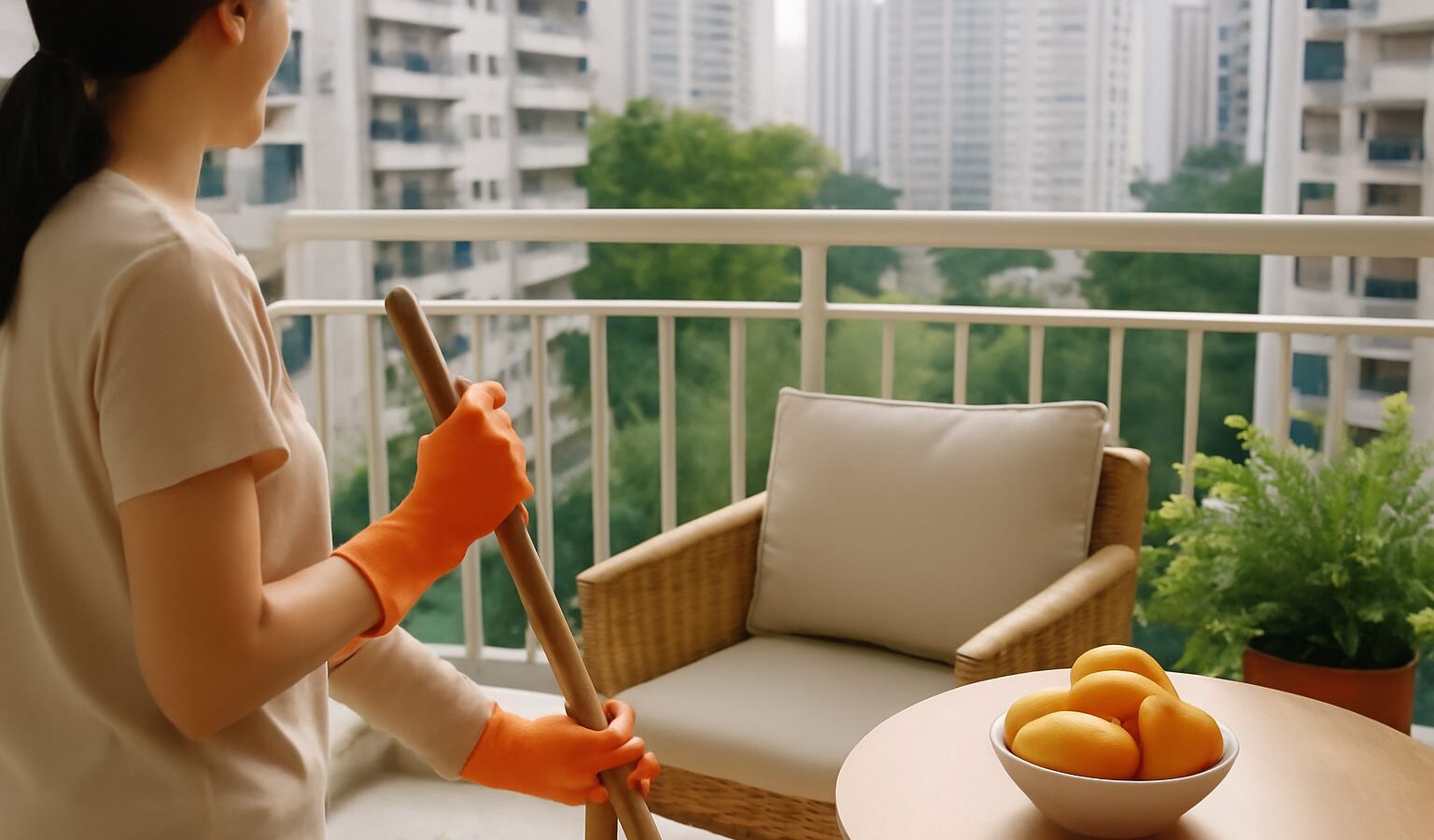
Balcony cleaning in Singapore is a bigger job than it looks. A balcony on the 15th floor collects fine black dust from traffic and construction, gets splashed during every afternoon thunderstorm, and sits directly above someone else’s balcony. That last point changes everything: you cannot simply hose it down and let the water run off the edge. This guide focuses on the practical side of keeping an apartment balcony clean, covering dust, rain exposure, drainage and the neighbourly considerations that come with high-rise living. If your balcony is mostly a garden, our guide to plants that can handle windy high-floor balconies is a better starting point.
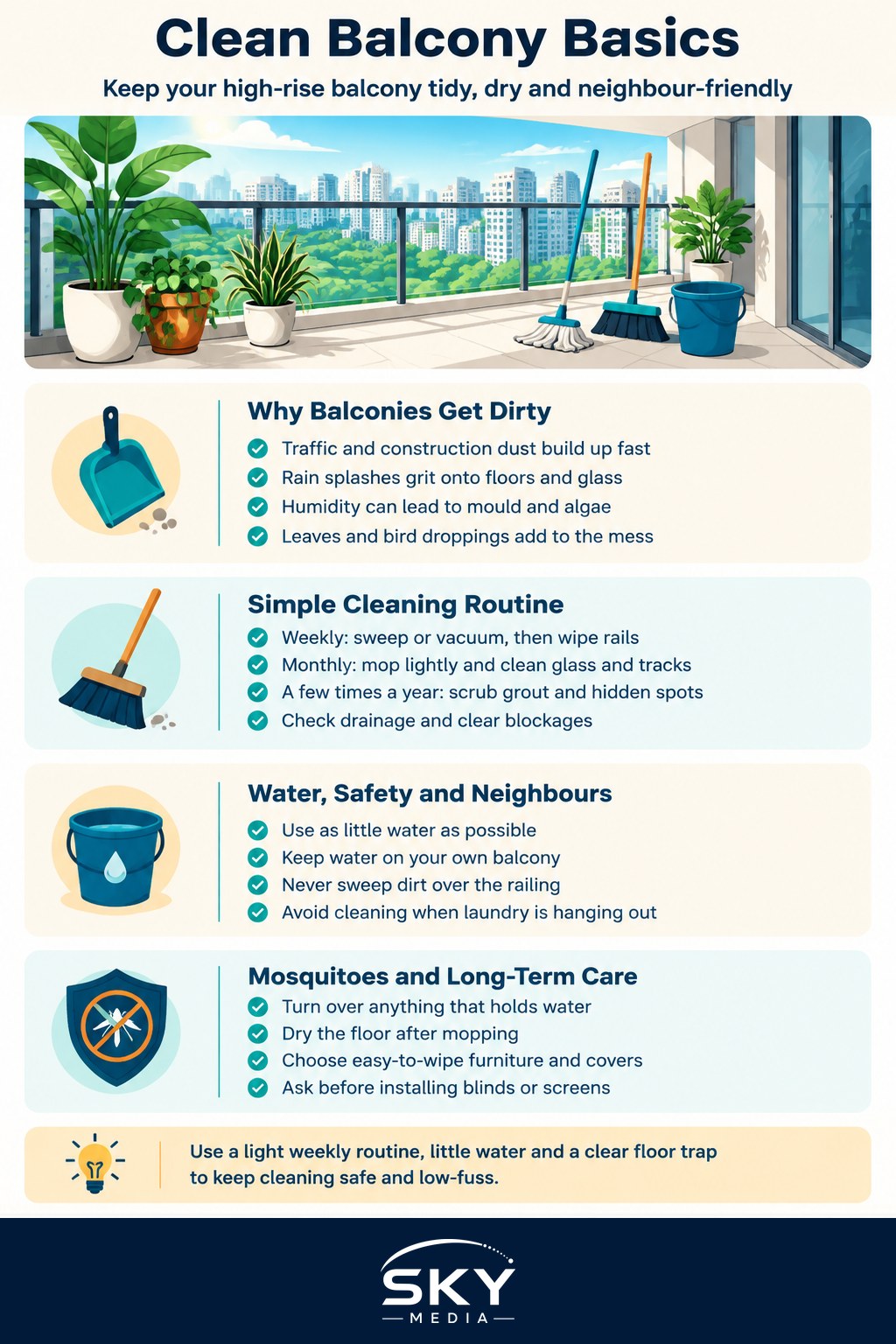
Why High-Rise Balconies Get Dirty So Fast
Most people are surprised by how quickly a balcony turns grey. A few local factors are at work:
- Airborne dust and soot. Traffic, nearby renovation and construction sites, and haze periods all deposit a fine film that sticks to tiles and railings.
- Wind-driven rain. Tropical downpours blow sideways, carrying grit onto the floor and leaving spotty marks on glass panels.
- Humidity. Damp corners and grout lines encourage mould and algae, especially on balconies that get little direct sun.
- Leaves and debris. Even without plants of your own, leaves blow in from trees and from neighbours’ pots.
- Bird droppings. Pigeons and other birds may perch on railings and ledges, especially if food is left out.
Because dirt builds up constantly, a light weekly routine is far easier than an occasional heavy scrub.
A Simple Routine That Works
A good balcony routine has three layers: quick weekly upkeep, a monthly wash, and a deeper clean a few times a year.
Weekly. Sweep or vacuum the floor using a cordless vacuum or a soft broom, and wipe railings with a damp microfibre cloth. Empty any containers that have collected water. This takes ten minutes and stops dust from turning into sticky grime.
Monthly. Mop the floor with a mild detergent, using a well-wrung mop rather than buckets of water. Wipe glass panels, window frames and the outside of sliding doors. Clean the sliding door track with a narrow brush and a vacuum crevice tool, since grit there makes the door hard to slide.
A few times a year. Scrub grout lines, clean behind and under outdoor furniture, wash cushion covers, and check the floor trap and drainage channel for blockages. If you have an air-conditioner condenser on or near the balcony, wipe the area around it, but leave servicing to a professional.
Methods Compared: What to Use and What to Avoid
Different surfaces and situations call for different approaches. This table sums up the main choices.
| Task | Better approach | Avoid |
|---|---|---|
| Removing floor dust | Vacuum or dry sweep, then a damp mop | Sweeping dust over the edge or through railings |
| Washing the floor | Small amount of water, mop, squeegee towards the floor trap | Hosing or pouring buckets that can overflow onto lower floors |
| Cleaning glass railings | Spray cleaner onto the cloth, not the glass, then wipe | Leaning over the railing to reach the outer side |
| Treating mould on grout | Mild cleaner or diluted vinegar, scrub with a stiff brush | Mixing bleach with other cleaners, which can release harmful fumes |
| Clearing leaves | Pick up by hand or sweep into a dustpan | Leaving piles near the floor trap to clog drainage |
Water, Drainage and the Neighbours Below
The most important rule of high-rise balcony cleaning is to keep water on your own balcony. Excess water can drip or flow down onto the balcony, laundry or windows of the unit below. It can stain their walls, wet their clothes and cause real friction.
To avoid this:
- Use as little water as you need. A spray bottle and a mop usually beat a bucket.
- Check that your floor trap is clear before you start. A blocked trap means water pools and finds another way out, often over the edge.
- Squeegee water towards the drain rather than letting it spread.
- Clean on a dry day if possible, and avoid times when neighbours are likely to have laundry hanging out.
- If you live in a condominium, check the house rules from your MCST (Management Corporation Strata Title, the body that manages the estate). Many have rules about balcony washing, what can be placed on balconies, and what can be hung outside.
Dust is as much of an issue as water. Shaking out mats or sweeping debris over the railing sends dirt straight onto the people and homes below.
Killer Litter and Safety Above Ground
In Singapore, throwing or allowing objects to fall from a height is treated very seriously. “Killer litter” refers to items that fall or are thrown from high-rise buildings and can seriously injure or kill someone below. Enforcement is handled by the National Environment Agency (NEA), and penalties can be severe. Check NEA’s website for current rules.
While cleaning, this means:
- Never leave buckets, brushes, spray bottles or mops on the ledge or railing.
- Secure loose items before a storm. Light chairs, cushions and empty pots can be blown off.
- Do not lean out to clean the outer face of the railing or the glass. If it truly needs cleaning, leave it to the building’s management or a professional with proper equipment.
- Keep step stools away from the railing, especially if children are around.
If you need to reach a high light fitting or ceiling corner on the balcony, our guide on how to clean high, hard-to-reach places safely covers ladders and extension poles. Pet owners should also read up on window and high-rise safety for cats, since cats on balconies need proper netting or screening.
Stopping Stagnant Water and Mosquitoes
Balconies are a common spot for mosquito breeding because small amounts of water collect in places you rarely look. The Aedes mosquito, which spreads dengue, can breed in very small pools of clean water. NEA runs regular campaigns on this, and its guidance is worth following.
Check these spots regularly, especially after rain:
- Plant pot saucers and trays
- Pails, watering cans and storage boxes left uncovered
- Covers of outdoor furniture where rain pools in folds
- Floor traps, which can be kept clean and covered with an anti-mosquito valve if suitable
- Dips in the floor where water collects after cleaning
Turn over or empty anything that holds water. Wiping the floor dry after mopping also helps.
Keeping It Tidy for Longer
A few small changes cut down on cleaning:
- Choose easy surfaces. Outdoor furniture made of aluminium, resin or treated wood is easier to wipe than fabric.
- Store cushions indoors. They stay dry and free of dust, and you avoid mould.
- Use a doormat inside the balcony door. It stops grit from being tracked indoors.
- Install blinds if permitted. Some estates allow approved blinds or screens that reduce rain splash. Check with your MCST or, for HDB flats, HDB’s guidelines before installing anything.
- Close the door during haze or nearby construction. Less dust settles indoors, and you can do a quick wipe-down once the air clears.
When to Call in Help
Most balcony cleaning is easy to do yourself, but some jobs are better left to others. Stubborn stains on stone tiles, cracked grout that keeps leaking, or water seeping into the unit below may point to a waterproofing issue rather than dirt, and a contractor should look at it. For condos, the outer face of the facade is often cleaned by the estate as part of building maintenance, so ask your management office before arranging anything yourself.
With a light weekly routine, careful use of water and attention to safety, your balcony can stay clean and pleasant without causing any trouble for the neighbours below.
Frequently Asked Questions
How do I safely remove bird droppings from my balcony? Wear gloves, soften the droppings with a damp cloth or paper towel and wipe them up without brushing, which can stir up dust. Disinfect the spot with a household cleaner, then wash your hands. Reduce return visits by not leaving food out and keeping railings and ledges tidy.
What should I do if my balcony cleaning water leaks to the unit below? Stop and clear the floor trap first, as a blockage is the usual culprit, and apologise to your neighbour. If water keeps seeping through even when you use little, there may be a waterproofing problem, so get a contractor to check. Your management office can advise on responsibilities.
Which balcony cleaning products are safe around kids and pets? Choose mild detergents and rinse residue well, keeping children and pets off the floor until it is dry. Avoid strong fumes, and never mix bleach with other cleaners. Store all products out of reach, and check labels for any guidance about pets.
How soon should I clean the balcony after a haze episode? Wait until the air has cleared, then wipe surfaces with a damp cloth rather than sweeping, which stirs up fine particles. Wear a mask if you are sensitive to dust. Keep sliding doors closed during haze, and follow NEA’s air quality updates to judge when it is safe.
Further reading: Balcony Design Ideas in Singapore