
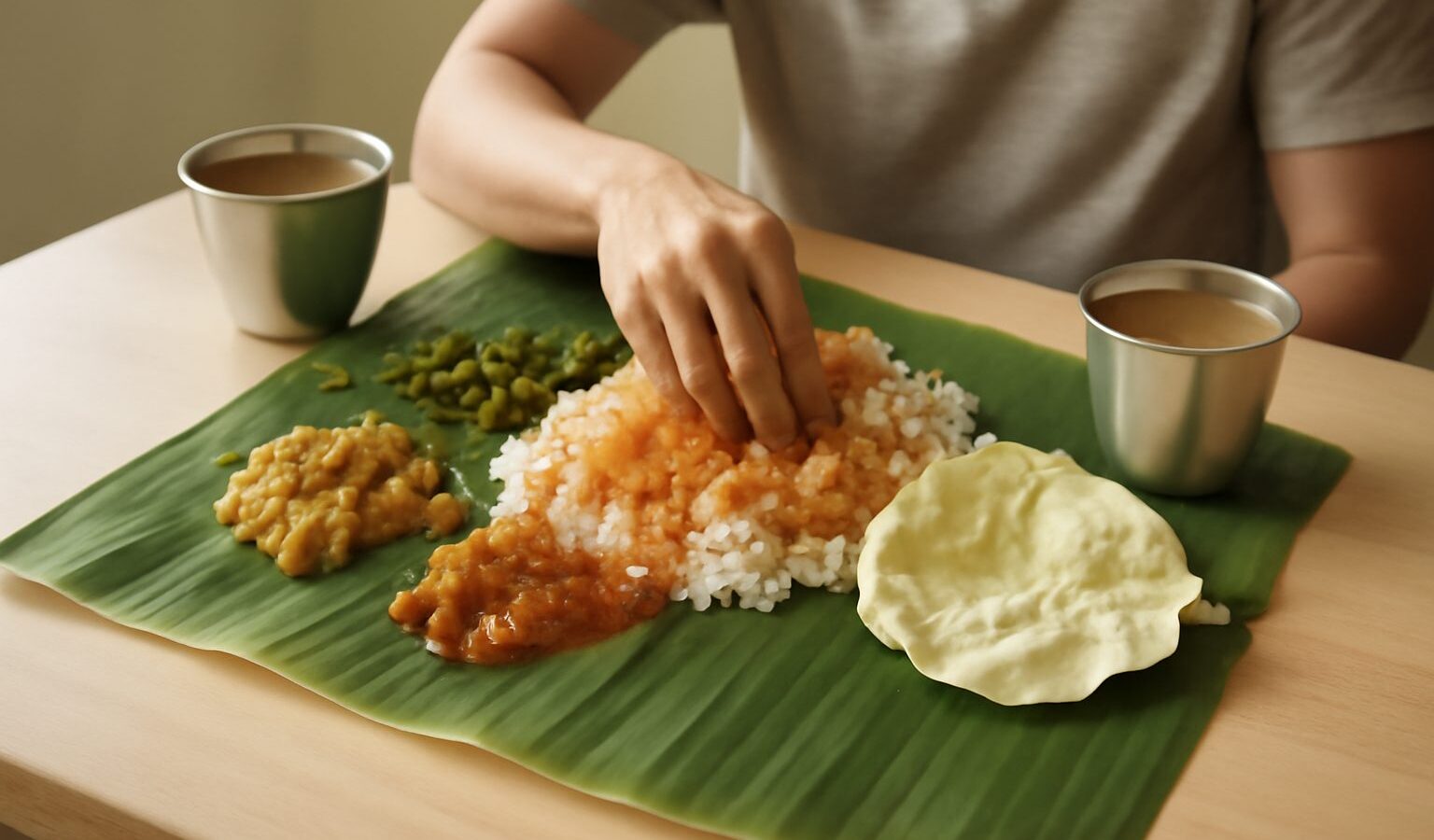
Few meals feel as generous as banana leaf rice. A glossy green leaf is laid in front of you, a mound of steaming rice lands in the middle, and then the ladles start: dhal, a couple of vegetables, tangy pickle, a crisp papadum, and curry poured over the top. Banana leaf rice is a South Indian tradition that has become a beloved fixture of Singapore’s food scene, equally at home as a quick weekday lunch and a leisurely weekend feast. If you have only ever admired it from the next table, this guide walks you through what it is, what to order, and how to enjoy every last grain.
What Banana Leaf Rice Actually Is
At its heart, banana leaf rice is a complete meal served on a fresh banana leaf instead of a plate. The leaf is not decoration. It is a natural, disposable serving surface that lends a faint grassy fragrance to hot rice and makes the whole spread feel like an occasion.
The standard version is vegetarian: a heap of rice, a rotating selection of vegetable sides, dhal or sambar, rasam, pickle, and papadum, with plenty of refills. Many eateries also offer add-ons such as fried chicken, mutton, fish, squid, or a whole fried fish, along with extra curries. The beauty of the format is that nothing is fixed. What appears on your leaf changes with the kitchen, the day, and the season, so no two visits feel exactly the same.
The rice itself is usually a long-grain white variety, though some places offer a fragrant or parboiled option. The point is that it should be plain enough to carry the flavours ladled over it, from the earthy dhal to the bright, peppery rasam.
What Lands on Your Leaf
Half the pleasure of banana leaf rice is not quite knowing what you will get. Still, a few components turn up almost every time, and knowing them helps you order and pace yourself.
- Rice: the centrepiece, and always refillable. Take a little at first; you can ask for more.
- Vegetable sides: typically two or three, such as cabbage, long beans, a spiced potato, or a beetroot poriyal. They vary daily.
- Dhal: a comforting lentil gravy that is the natural first thing to mix into your rice.
- Sambar: a tangy, tamarind-based lentil and vegetable stew, richer than dhal.
- Rasam: a thin, peppery, sour soup, often sipped at the end to aid digestion.
- Pickle and papadum: a small, intense burst of sourness and a crisp, savoury cracker for texture.
- Curry: the gravy that ties it together, poured on request, from a mild dhal-based one to a fiercer fish or mutton curry.
Here is a quick guide to the elements you are most likely to meet and what to do with each.
| Element | What it is | How to use it |
|---|---|---|
| Dhal | Mild lentil gravy | Mix into rice first for a gentle base |
| Sambar | Tangy lentil and vegetable stew | Spoon over rice or a vegetable side |
| Rasam | Thin, peppery, sour soup | Sip at the end, or pour over a last bit of rice |
| Pickle | Sharp, salty, sour condiment | Take a tiny amount; it is very concentrated |
| Papadum | Crisp lentil cracker | Crumble over rice for crunch |
How to Eat It by Hand
Banana leaf rice is traditionally eaten with your right hand, and doing so is part of the experience. Wash your hands first. Use your fingertips to mix a small area of rice with dhal or curry, gather it into a loose ball, then push it into your mouth with your thumb. Work from the side nearest you rather than digging into the centre, and mix only what you are about to eat so the rest stays neat.
If eating by hand feels daunting, a spoon and fork are perfectly acceptable and no one will mind. Either way, take modest portions of rice to start, because refills are the whole idea. When you want more of anything, catch the server’s eye and point; the ladle will come round again.
One small custom carries real meaning. When you have finished, fold the banana leaf towards yourself, top edge down over the bottom. Folding it this way is the polite signal that you enjoyed the meal. Folding it away from you is traditionally read as the opposite, so it is worth getting right, especially if you have been invited by a host.
Vegetarian, Non-Vegetarian and How to Order
Most banana leaf rice starts as a set price for the vegetarian spread with unlimited rice, vegetables, dhal, rasam and papadum. From there you build. Add a protein such as fried chicken or fish, order an extra curry, or ask for a side of crisp fried bittergourd or a masala vada. Because the base is naturally plant-forward, it is one of the easiest hearty meals to keep vegetarian, though it is always worth checking whether a particular curry contains any animal products.
A few tips make ordering smoother:
- Say how spicy you like it. Curries range from gentle to genuinely fiery; the kitchen can usually guide you.
- Pace your rice. Start small, then take refills so nothing goes to waste.
- Flag allergies clearly. Dairy (ghee, yoghurt), nuts, and mustard turn up in South Indian cooking, so mention any allergy before you order.
- Ask what the vegetables are that day. They change, and the server will happily tell you.
Where to Find Banana Leaf Rice in Singapore
Banana leaf rice is easy to track down across the island. The most atmospheric hunting ground is the Little India area, where long-running South Indian eateries serve it from late morning through the evening. Beyond there, you will find it in coffeeshops with a dedicated Indian stall, in casual restaurants tucked into the heartlands, and in busier lunch spots around the CBD that draw an office crowd at midday.
Styles differ from place to place. Some kitchens lean towards a Chettinad-influenced, peppery character; others keep things milder and more homely. Portion sizes, the number of vegetable sides, and the add-on menu all vary, so it is worth trying a few and finding the one that suits your taste. Because eateries open, close and change their hours often, check current details before you make a special trip.
Whatever you choose, banana leaf rice rewards a hungry, unhurried approach. Go with an appetite, take the refills, mix boldly, and finish with a little rasam. It is a shiok, satisfying meal that turns a plain plate of rice into something worth lingering over.
Explore more
If this whetted your appetite for South Indian cooking, read our thosai and dosai guide for the crisp, fermented crepes that pair so well with the same curries. Round out the table with our vadai and Indian fritters guide, and when you fancy something quick and savoury late at night, our Maggi goreng and mamak classics guide has you covered.