
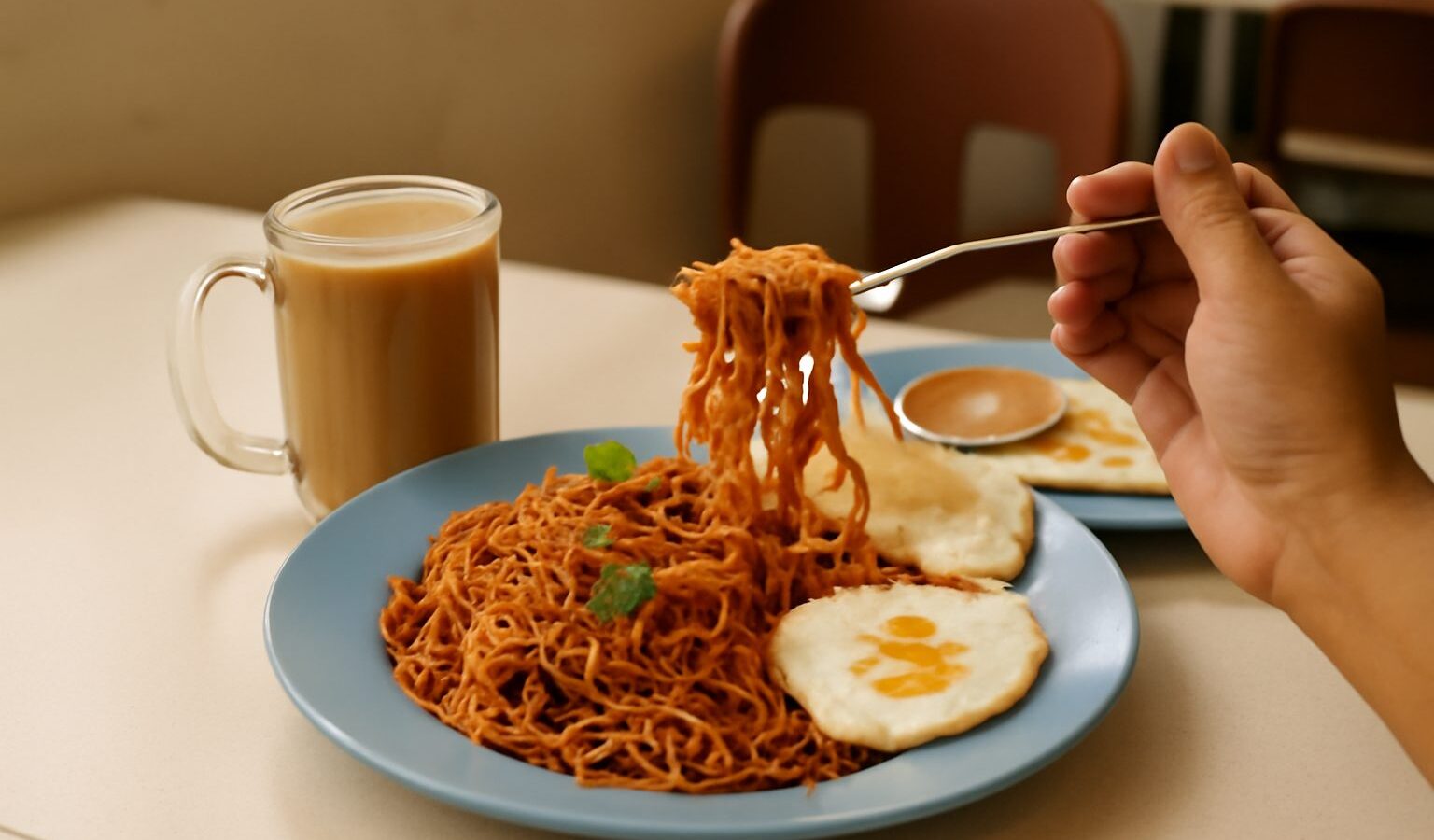
It is late, the kopitiam next door has closed, and you are craving something hot, savoury and a little bit naughty. This is when maggi goreng comes into its own. A tangle of instant noodles fried hard in a smoky wok, tossed with egg, vegetables and a sweet-savoury sauce, maggi goreng is the unofficial anthem of Singapore’s mamak and prata scene. It is cheap, fast, and endlessly comforting, the kind of dish you order without thinking and finish without pausing. This guide covers what it is, how it is made, and the whole spread of mamak classics worth ordering alongside it.
What Maggi Goreng Is
Maggi goreng means, quite literally, fried Maggi, using the instant noodles that so many Singaporeans grew up on. The dry noodle cake is boiled just until it loosens, drained, then thrown into a searing hot wok with oil, garlic, chilli, and a splash of sauce. Beaten egg goes in to coat everything, along with whatever vegetables the stall keeps on hand, usually cabbage, tomato, spring onion, and sometimes bean sprouts.
The flavour is the point. Good maggi goreng is savoury and slightly sweet, with a gentle tang and a whisper of wok hei, the smoky char that comes from a properly hot pan. The noodles should be a touch dry and springy, never soggy, with crisp edges here and there. It is humble food elevated by technique, which is exactly why a plate cooked by a skilled mamak cook tastes so much better than the same packet made at home.
Variations abound. Ask for it with chicken, with an extra egg, or made vegetarian. Some stalls offer a “special” loaded with more toppings, and many will happily turn up the chilli if you ask for it extra pedas.
The Mamak and Prata Shop Setting
To understand maggi goreng, it helps to understand where it lives. Mamak refers to the Indian Muslim food culture that gives Singapore its beloved 24-hour eateries and prata shops. These are the bright, open-fronted places, often with tables spilling onto the five-foot way, where the roti prata man flips dough at the griddle and the drinks station clatters with glasses of pulled tea.
What makes them special is the hours and the atmosphere. Many run late into the night or around the clock, which is why they anchor Singapore’s supper culture. Students, shift workers, football fans and friends winding down all end up here, sharing plates over long, unhurried conversations. You order at the counter or flag a server, dishes arrive fast, and no one rushes you out. It is casual, affordable, and quietly essential to how the island eats after dark.
Beyond Maggi Goreng: The Classics to Order
Maggi goreng rarely travels alone. Half the joy of a mamak spread is ordering a few things to share. Here are the staples worth knowing.
- Roti prata: flaky, pan-fried flatbread served with curry, ordered plain (kosong) or with egg, cheese, onion, and more.
- Murtabak: a thicker prata stuffed with spiced minced meat, egg and onion, hearty enough to be a meal on its own.
- Mee goreng: yellow noodles fried mamak-style, tangier and more tomato-forward than maggi goreng.
- Nasi goreng: fried rice with the same smoky, spiced character.
- Roti john: a split baguette griddled with an egg-and-minced-meat mixture, a supper favourite.
- Thosai: a crisp, fermented rice-and-lentil crepe for a lighter option.
This table lines up the most-ordered dishes so you can decide what suits your mood.
| Dish | What it is | Best when you want |
|---|---|---|
| Maggi goreng | Fried instant noodles with egg | A quick, savoury supper fix |
| Mee goreng | Fried yellow noodles, tangy | Something saucier and spicier |
| Roti prata | Flaky flatbread with curry | To share and dip |
| Murtabak | Stuffed, meaty prata | A filling, protein-heavy plate |
| Nasi goreng | Spiced fried rice | A heartier, rice-based meal |
What to Drink With It
No mamak meal is complete without a drink from the pulling station. Teh tarik, literally pulled tea, is the icon: strong tea and condensed milk poured back and forth between two vessels until it is frothy and smooth. Order it hot, or iced as teh tarik peng. Kopi, the local coffee, comes in the same range of sweet and milky permutations.
Beyond the classics, mamak shops are famous for their over-the-top cold drinks. A Milo dinosaur is iced Milo crowned with a heap of undissolved Milo powder, sweet enough to double as dessert. Bandung, a rose-flavoured milk drink in shocking pink, and fresh lime juice are other favourites. For something simple, a plain teh o (tea without milk) or iced water cuts nicely through the richer fried dishes. These places serve no alcohol, which is part of what makes them such easy, all-ages gathering spots.
Ordering Like a Regular
A little know-how makes the whole experience smoother and more fun.
- Learn a few terms. Kosong means plain, pedas means spicy, and peng means iced. String them together and you sound like a regular.
- Share widely. Order a couple of noodle or rice plates, a prata to dip, and a drink each, then dig in together.
- Say how spicy you want it. Cooks can dial the chilli up or down; just ask when you order.
- Mention allergies. Egg, wheat (gluten), dairy in the drinks, and nuts can all appear, so flag anything before you order.
- Dabao if you like. Almost everything packs well for takeaway, ideal for a late night at home.
Prices, opening hours and menus shift from place to place and change often, so check current details rather than assuming. You will find mamak fare in prata shops across the heartlands, near universities and nightlife strips, and in the ever-reliable 24-hour eateries that dot the island.
That is the magic of maggi goreng and its mamak companions. It is unpretentious, generous food that tastes best when shared, late, and with good company. Order boldly, mix your drinks, and settle in. There is rarely any hurry.
Explore more
Craving more from the same kitchens? Our thosai and dosai guide covers the crisp crepes that round out any mamak table, while the vadai and Indian fritters guide is your go-to for savoury snacking. For a fuller South Indian feast, don’t miss our banana leaf rice guide.