

If you spend more time scrolling nail art videos than anything else, turning that interest into a job is a realistic goal. Singapore has a large nail salon scene, from neighbourhood shops to mall chains and home studios, and many people enter the trade without a degree. Picking the right nail technician course in Singapore is the first step, but it helps to understand the whole path: skills, hygiene, pay structures and what changes if you go freelance.
This guide focuses on the career side. For the consumer side, such as picking a shape or a salon, see our beauty guides linked at the end.
What a Nail Technician Actually Does
A nail technician, also called a manicurist or nail artist, provides hand and foot nail services. A typical day might include:
- Basic manicures and pedicures: shaping, cuticle care, buffing and polishing
- Gel polish application and safe removal
- Nail extensions using tips, builder gel or acrylic
- Nail art, from simple French tips to hand-painted designs, chrome and 3D embellishments
- Cleaning and sterilising tools between every client
- Advising clients on aftercare and spotting nail or skin problems that need a doctor rather than a manicure
The job is physical and detailed. You sit for long hours, focus closely and work with chemicals and dust, so good posture, ventilation and protective habits matter from day one. Customer service is also a big part of the role, because regulars return for the person as much as the polish.
Training Options and How to Choose a Course
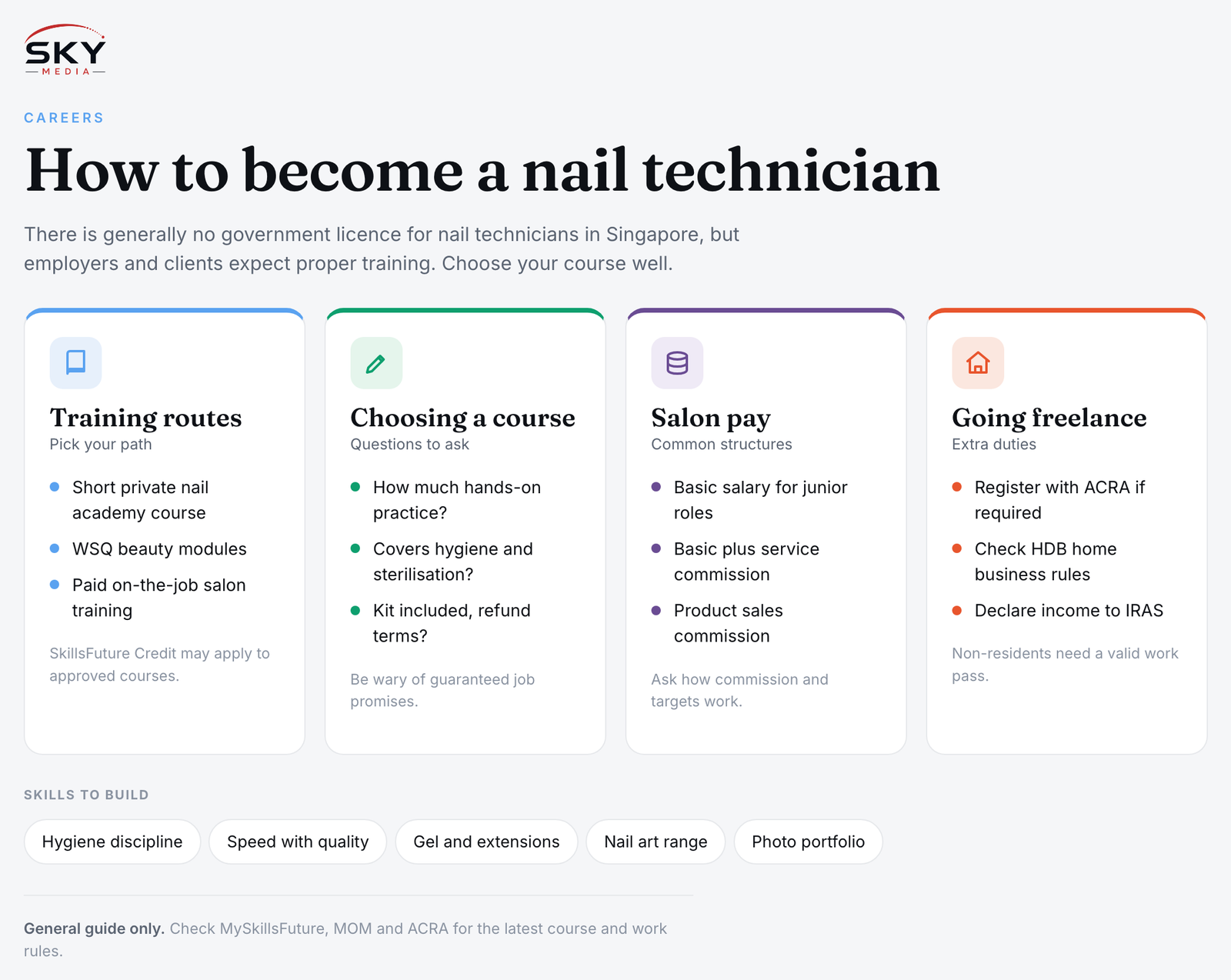
In Singapore there is generally no specific government licence required to work as a nail technician, but employers and clients expect proper training. That means the course you pick shapes your skills and your confidence. Training comes in several forms.
| Training route | What it usually involves | Best suited to |
|---|---|---|
| Short private nail academy course | Hands-on classes in manicure, gel and nail art, often with a school certificate | Beginners wanting a fast, practical start |
| WSQ beauty modules | Courses under the Workforce Skills Qualifications framework, assessed against national skill standards | People who want a recognised qualification and possible course fee funding |
| Product brand certification | Training by a gel or acrylic brand on using its system | Technicians adding a specific product skill |
| On-the-job training at a salon | Learning as a junior or assistant while being paid | People who want to earn while learning |
WSQ (Workforce Skills Qualifications) is Singapore’s national training and certification system, overseen by the Skills and Workforce Development Agency (SWDA, formed in 2026 from Workforce Singapore and SkillsFuture Singapore). Beauty and wellness modules under WSQ may cover areas like nail care services, hygiene and customer service. Course fee subsidies and the use of SkillsFuture Credit may apply to eligible Singaporeans and Permanent Residents for approved courses. Check the course listing on the MySkillsFuture portal to confirm whether a course is eligible and what support applies, as these details change.
When comparing courses, ask:
- How much of the course is hands-on practice on real hands, not just practice tips?
- What is the maximum class size?
- Does it cover hygiene, sterilisation and safe product handling, not just nail art?
- Are tools and a starter kit included, or extra?
- Is there a practical assessment, and what certificate do you receive?
- Does the school help with portfolio building or salon placements?
- What are the refund and rescheduling terms?
Visit the school, look at students’ work and read reviews from past learners. Be cautious of courses that promise guaranteed jobs or very high earnings.
Skills to Build Beyond the Basics
Passing a course gets you started. These skills help you stand out:
- Hygiene discipline. Proper cleaning and sterilisation of metal tools, single use of files and buffers where appropriate, and never working over broken or infected skin. Clients notice.
- Speed with quality. Salons often schedule services back to back, so learning to work efficiently without cutting corners matters.
- Gel and extension mastery. Structured gel manicures and extensions tend to be popular, higher value services.
- Nail art range. Practise trending styles, but also clean, classic looks for clients who want something office friendly.
- Photography. Good, well lit photos of your work become your portfolio and your marketing.
- Client communication. Consultations, managing expectations and handling complaints calmly.
How Salon Pay Usually Works
Pay varies a great deal by salon type, location and experience, and we will not quote figures that may be outdated. What is useful is understanding the common structures so you can compare offers properly:
- Basic salary only, more common for junior or assistant roles
- Basic salary plus commission on services, a common structure for technicians
- Commission on product sales, such as aftercare products or nail treatments
- Tips, which are less of a habit in Singapore than in some countries, so do not count on them
When you receive an offer, ask how commission is calculated, whether there are monthly targets, how many days off you get, what your working hours and weekend expectations are, and whether you will be paid during training. As an employee, the Employment Act sets out basic protections; check MOM’s website for what applies to you. Your employer should also make CPF contributions if you are a Singapore Citizen or PR.
To research current pay ranges, look at advertised salon jobs on job portals, MyCareersFuture (the government jobs portal), and ask experienced technicians you meet during training.
Going Freelance or Starting a Home Studio
Many technicians eventually go freelance, doing house calls, renting a seat in a salon, or working from a home studio. It offers flexibility but adds responsibilities:
- Register your business if required. Sole proprietors generally register through ACRA (the Accounting and Corporate Regulatory Authority) via Bizfile. Check ACRA’s website for whether and how registration applies to you.
- Check home business rules. If you live in an HDB flat, HDB has rules on what kinds of home-based businesses are allowed and how they can operate. Private condominiums may also have their own by-laws, managed by the MCST (the management corporation). Check before you take bookings at home.
- Understand self-employed obligations. Self-employed people must declare income to IRAS and may need to make MediSave contributions through the CPF Board. Check the current rules with IRAS and CPF.
- Budget for tools and products. Lamps, drills, quality gels and sterilisation equipment add up.
- Build steady demand. Social media portfolios, referrals and repeat clients are usually what keeps freelancers busy.
If you are not a Singapore Citizen or PR, your ability to work as a nail technician depends on holding a valid work pass that permits it. Freelancing on your own is generally not possible on many passes, so check MOM’s rules for your pass before taking any paid work.
A Simple Plan to Get Started
- Practise at home on friends and family to confirm you enjoy the work
- Shortlist two or three courses and compare them using the questions above
- Complete your course and build a photo portfolio
- Apply for junior roles or salon assistant positions to gain speed and experience
- Add advanced skills such as extensions or structured gel over time
- Consider freelance work once you have a steady client base and understand the rules
For similar hands-on, client-facing careers, read How to Become a Hairstylist in Singapore. To understand what clients look for, see How to Choose the Best Nail Salon in Singapore and Nail Art for Beginners.