

Hairstyling is one of those careers where people judge your work the moment a client walks out of the salon. That makes it rewarding, but it also means skill matters more than paper qualifications. If you are searching for a hairstylist course in Singapore, you will find that there are several routes in, from structured WSQ training to learning on the job as a salon assistant. This guide explains how each path works, what you will actually learn, and how to choose the one that fits your age, budget and learning style.
This article is about becoming a working stylist. Opening and running your own salon is a separate business decision with its own licensing and regulatory steps, and is not covered here.
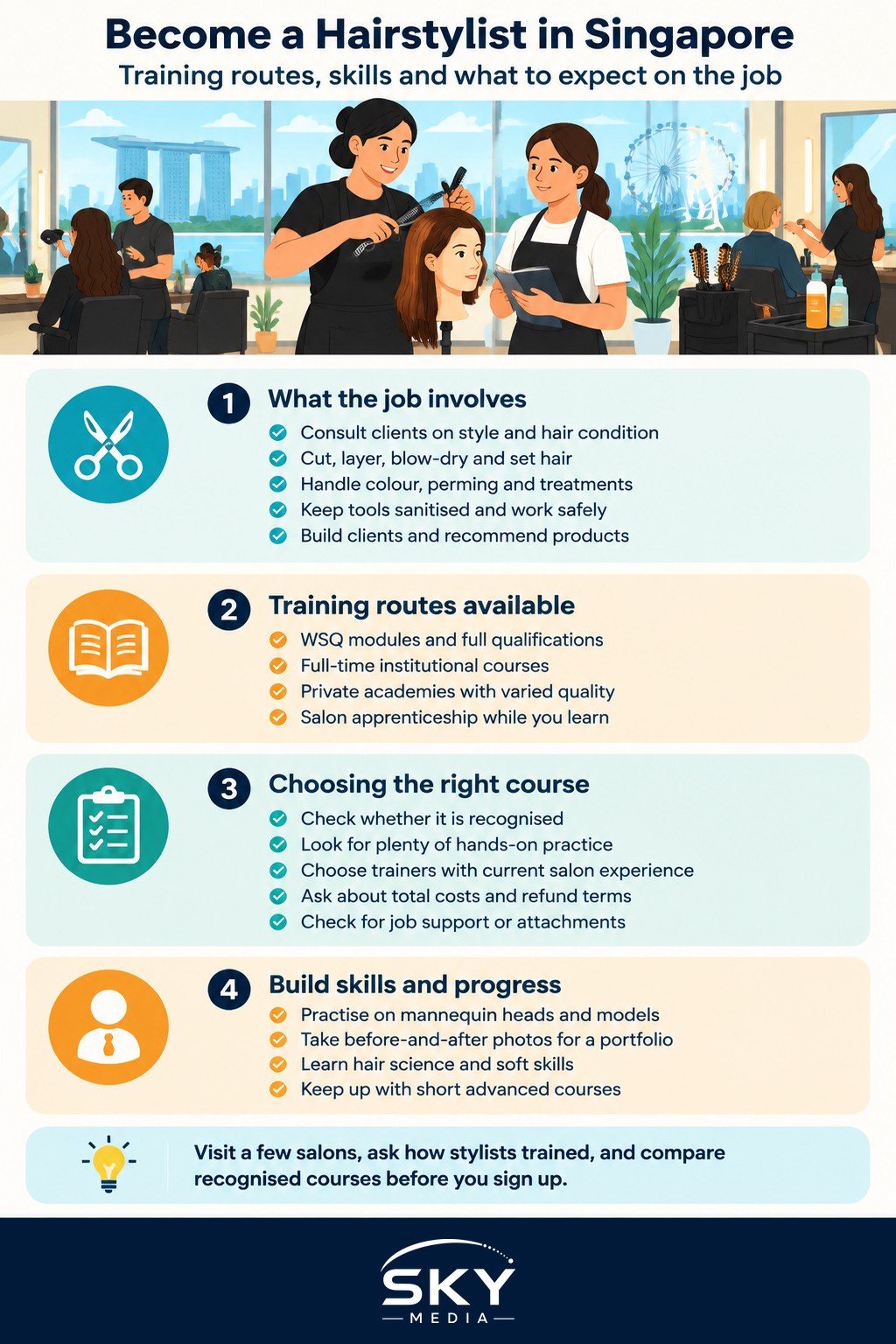
What a Hairstylist Actually Does Day to Day
Before you commit time and money to training, it helps to know what the job involves beyond cutting hair:
- Consultation. Understanding what the client wants, assessing hair and scalp condition, and managing expectations honestly.
- Cutting and styling. Precision cuts, layering, blow-drying and setting for both women’s and men’s hair.
- Chemical services. Colouring, highlights, perming, rebonding and treatments, which require careful handling of products and good knowledge of hair science.
- Hygiene and safety. Sanitising tools, protecting clients’ skin and eyes, and working safely with chemicals.
- Client care and sales. Building a regular clientele, recommending suitable products and keeping records.
The work is physical. Expect long hours on your feet, weekend and evening shifts, and busy peaks before festive seasons such as Chinese New Year and Hari Raya.
The Main Training Routes
There is no single compulsory qualification to cut hair in Singapore, but most salons strongly prefer, and many require, some formal training. The common routes are:
1. WSQ hairdressing courses. WSQ stands for Workforce Skills Qualifications, Singapore’s national framework for job skills, overseen by the Skills and Workforce Development Agency (SWDA, formed in 2026 from Workforce Singapore and SkillsFuture Singapore). Approved training providers offer WSQ modules and full qualifications in hairdressing that cover areas like basic cutting, colouring, chemical services and salon practice. Each module is assessed against a set competency standard, so you can build up skills step by step. Many WSQ courses are eligible for course fee subsidies, and Singapore Citizens may be able to use SkillsFuture Credit. Our explainer on WSQ courses covers how the framework and funding work.
2. Full-time institutional courses. Some school leavers take a full-time hairdressing or beauty-related course at an institution such as the Institute of Technical Education (ITE), where available. These courses combine theory, practical training and industry attachment. Course names and intakes change, so check the current prospectus. If you are comparing post-secondary options more broadly, our guide to choosing a course and career fit can help.
3. Private academies. Private hairdressing academies offer short and long courses, sometimes linked to international product brands or styling methods. Quality varies widely, so treat these carefully (see the checklist below).
4. Salon apprenticeship. You join a salon as an assistant, starting with shampooing, sweeping, preparing colour and assisting senior stylists, then progress to cutting under supervision. Many experienced stylists learned this way. Some salons combine in-house training with sending staff for WSQ modules.
Comparing the Routes Side by Side
| Route | Best for | Typical duration | What to watch for |
|---|---|---|---|
| WSQ modules | Career switchers and working adults who want a recognised, step-by-step qualification | Short modules that build up over months | Check the provider is approved and the course is eligible for subsidies |
| Full-time institutional course | School leavers who want a structured programme with attachment | Usually one to two years | Intake periods, entry requirements and course availability |
| Private academy | People wanting a specific technique or brand method | Days to months | Unaccredited certificates, high fees, unclear refund terms |
| Salon apprenticeship | People who learn best by doing and need income while training | Often a few years to reach full stylist | Low starting pay, training quality depends heavily on the salon |
Many stylists combine routes, for example by starting as an assistant and taking WSQ modules on days off.
How the Apprenticeship Path Usually Unfolds
Salons structure training differently, but a common progression looks like this:
- Salon assistant. Shampooing, scalp massage, cleaning, preparing tools and mixing colour under instruction. You learn the salon’s rhythm and how to talk to clients.
- Junior stylist. Blow-drying, basic cuts and simple colour applications, often practised on mannequin heads and models after hours before you touch paying clients.
- Stylist. Taking your own bookings for cuts and chemical services, building a regular client list.
- Senior or creative stylist. Handling complex colour work, training juniors and sometimes moving into education roles for product companies.
Ask any salon you join how they assess progress, how often training sessions run and whether they support external courses. A salon that trains well is worth more than a slightly higher starting salary.
Choosing a Good Hairstylist Course
Whether you pick WSQ, a full-time course or a private academy, run through these questions before you pay:
- Is it recognised? For WSQ, check the course and provider on SkillsFuture’s official course directory. For private academies, ask exactly what the certificate is and who recognises it.
- How much hands-on practice is there? Count the hours actually spent cutting and colouring, not watching demonstrations.
- Who teaches? Trainers with current salon experience bring practical, up-to-date techniques.
- What does it cost in total? Ask about tools, mannequin heads, product kits and exam fees on top of course fees. Do not rely on advertised prices without seeing the full breakdown.
- What are the refund and withdrawal terms? Read the contract before signing, especially for long programmes.
- Is there job support? Some providers have links with salons for attachments or placements.
Building Skills and a Portfolio
Technical training is only part of the picture. To get hired and keep clients:
- Practise constantly. Mannequin heads, friends and family (with their consent and realistic expectations) all count.
- Photograph your work. Before-and-after photos with good lighting form your portfolio. Always ask clients for permission before posting.
- Learn hair science. Understanding hair structure, porosity and how chemicals work helps you avoid damage and handle complaints.
- Develop soft skills. Clear consultation, punctuality and a calm manner bring clients back more reliably than trendy techniques.
- Keep learning. Trends shift quickly. Short advanced courses in colour, men’s cuts or bridal styling keep your skills current.
Pay, Prospects and Next Steps
Starting pay for assistants is usually modest, and many stylists earn part of their income from commission or service targets as they grow. Income rises as you build a loyal client base and take on more complex services. Over time, experienced stylists may move into senior salon roles, freelance bridal and event styling, education roles with product brands, or eventually their own salon.
If you are still weighing up hairstyling against other hands-on careers, our guide on how to become a lifeguard in Singapore shows how certification-led careers compare.
A good first step is simple: visit a few salons, ask stylists how they trained, and shortlist one or two recognised courses. The right mix of structured training and real salon hours will get you behind the chair with confidence.
Frequently Asked Questions
What are the working hours of a salon stylist like? Expect long hours on your feet, with weekend and evening shifts. Peaks come before festive seasons such as Chinese New Year and Hari Raya. It is physical work, so consider whether the schedule suits your lifestyle before committing.
Can I switch careers into hairstyling as a working adult? Yes, and WSQ modules suit career switchers because they build up step by step. Many stylists combine routes, such as starting as a salon assistant and taking modules on days off. Expect modest starting pay at first.
How do I know if a hairdressing academy’s certificate is recognised? For WSQ, check the course and provider on SkillsFuture’s official course directory. For private academies, ask exactly what the certificate is and who recognises it. Beware of unaccredited certificates, high fees and unclear refund terms.
Is it better to start as a salon assistant or take a course first? Both work, depending on how you learn. Apprenticeship lets you earn while learning, but starting pay is low and training quality depends on the salon. A course gives structure first. Ask any salon how they assess progress and whether they support external courses.
How do I build a portfolio as a new hairstylist? Practise on mannequin heads, and on friends and family who understand the results may vary. Take before-and-after photos in good lighting. Always ask clients for permission before posting their photos.
Further reading: How to Become a Nail Technician in Singapore