
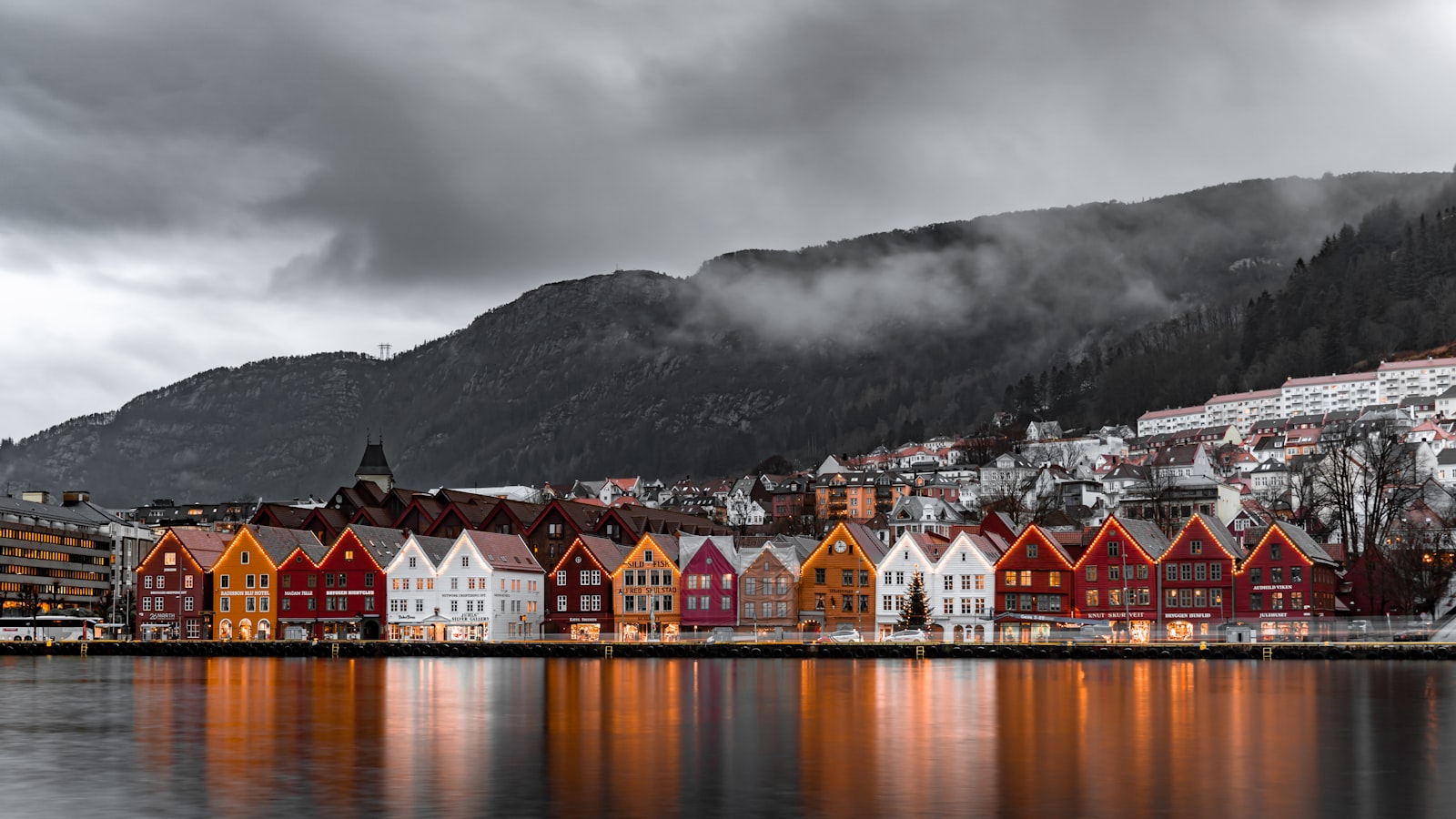
The Norwegian fjords are among the most dramatic landscapes in Europe, deep sea inlets carved by glaciers, walled by sheer cliffs and fed by waterfalls that plunge hundreds of metres. Bergen, the colourful port city on the west coast, is the natural gateway to them, with its wooden wharf, fish market and cluster of mountains. For a Singapore traveller who wants scenery over city crowds, planning the Norwegian fjords from Singapore delivers postcard views at almost every turn.
Getting to Bergen and the Fjords From Singapore
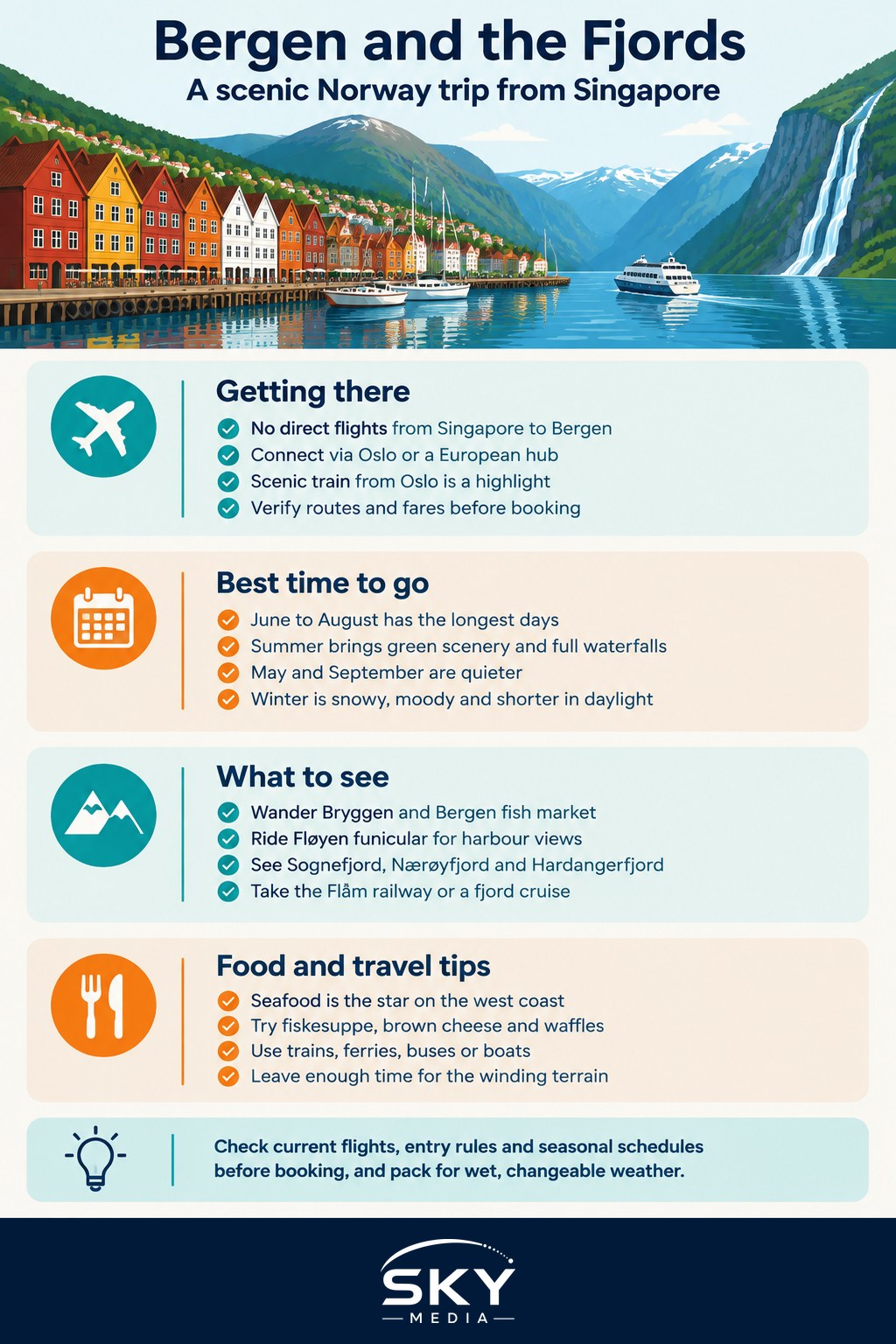
Be clear-eyed about flights. There are no direct flights from Singapore to Bergen, so you will connect through a hub and continue from there. The most common approach is to fly to Oslo and take a short onward flight, or to route via a major European hub and connect to Bergen. Either way, an onward air or rail leg gets you to the coast.
Because carriers, routings, schedules and fares change often, verify current options yourself close to booking. One of the great pleasures of this region is the journey itself, so consider arriving in Oslo and taking the scenic train across the mountains, which is a highlight in its own right. Travellers building a wider Nordic trip often pair Bergen with Copenhagen or Stockholm, which share convenient European connections.
Best Time to Visit
Summer, from June to August, is the prime window, with long daylight hours, the greenest scenery, waterfalls in full flow and all the boats and mountain railways running. This is also the busiest and priciest season, so book ahead. Late spring and early autumn, in May and September, are quieter, still beautiful and a touch calmer, though weather is more changeable.
Winter transforms the region into a snowy, moody landscape, with far shorter days and the chance of northern lights in the far north, but many fjord services scale back. For a Singaporean chasing the classic fjord experience, the summer months are the safest choice. Pack layers and waterproofs whatever the season, as the west coast is famously rainy.
Highlights of Bergen and the Fjords
Bergen itself is worth a couple of days. Wander Bryggen, the row of leaning wooden Hanseatic buildings on the old wharf, browse the fish market, and ride the funicular up Mount Floyen for views over the harbour and islands. From here the fjords open up. The Sognefjord, the longest and deepest, and the narrow Naeroyfjord branching off it are spectacular by boat. Further south, the Hardangerfjord is famed for orchards and waterfalls, and the Geirangerfjord, further north, is perhaps the most photographed of all.
The classic Flam railway, a steep and scenic descent to a fjord village, is a bucket-list ride. Hikers can tackle famous viewpoints such as Pulpit Rock or Trolltunga, which demand fitness and preparation. These are serious outdoor adventures, so prepare properly and check conditions before you set out.
Food to Try
Seafood is the star on this coast. Fresh salmon, cod, prawns and mackerel appear everywhere, and Bergen’s fish market is a fine place to sample them. Fiskesuppe, a creamy fish soup, is a west coast comfort dish, and cured and smoked fish are staples. Beyond seafood, look out for hearty lamb dishes, brown cheese with a sweet caramel note, and cinnamon buns and waffles for an afternoon treat. Eating out in Norway is expensive, so mix restaurant meals with picnics and supermarket lunches to keep costs sensible.
Getting Around
The fjord region rewards a mix of transport. Trains, buses, ferries and express boats link the main towns and valleys, and combined sightseeing routes stitch several modes into one scenic day. Hiring a car gives you freedom to reach quieter viewpoints and mountain roads, though some passes close in winter and ferries add time and cost. Many visitors also explore by fjord cruise, letting a boat handle the logistics while they watch the cliffs slide by. Distances feel longer than they look because of the winding terrain, so do not overpack your days.
A Simple Itinerary Idea
Give the region at least five to seven days. Start with a day or two in Bergen for the city and Mount Floyen. Then take the classic loop out toward the Sognefjord, riding the Flam railway and cruising the Naeroyfjord, staying overnight in a fjord village. Add a day for the Hardangerfjord and its waterfalls, or push north toward Geiranger if you have time. Round off back in Bergen or continue by train to Oslo. If you have caught the Nordic bug, our guide to Reykjavik and Iceland from Singapore offers another dramatic northern landscape.
Practical Tips
Norway is part of the Schengen area, so check the latest entry rules for a Singapore passport and confirm with ICA before you travel, as requirements change. Our guide to applying for US and Schengen visas from Singapore explains the general process. Norway is not in the euro zone and uses its own currency, and card payment is near universal. Budget generously, as prices are high. Pack waterproofs, warm layers and good walking shoes even in summer, take out travel insurance before you fly, and book popular trains and boats ahead in peak season.
The Norwegian fjords are the kind of scenery that makes the long journey feel worthwhile the moment you see them. Slow down, embrace the changeable weather, and Bergen and its fjords deliver one of Europe’s most memorable trips from Singapore.
Frequently Asked Questions
Is the scenic train from Oslo to Bergen worth it? Yes for many travellers, as the article calls the mountain crossing a highlight in its own right. It lets you see the landscape rather than just flying over it. Check current timetables and book popular services ahead in peak season.
How can I keep Norway costs down on a fjord trip? Norway is expensive, so mix restaurant meals with picnics and supermarket lunches. Seafood at Bergen’s fish market is one way to eat well. Book popular trains and boats ahead, and budget generously, since card payment is near universal.
Are Pulpit Rock and Trolltunga suitable for casual walkers? Not necessarily. Both demand fitness and preparation, and they are serious outdoor adventures. Check conditions before you set out, wear proper walking shoes and carry waterproofs. If you are unsure, choose gentler viewpoints or boat trips instead.
Do I need a car for the Norwegian fjords? Not necessarily. Trains, buses, ferries and express boats link the main towns, and fjord cruises handle the logistics. A car gives freedom for quieter viewpoints, though some passes close in winter and ferries add time and cost.
Which fjord should I pick if I only have time for one or two? The Sognefjord and the narrow Naeroyfjord branching from it are spectacular by boat and close to Bergen. The Hardangerfjord is known for orchards and waterfalls, and Geirangerfjord is further north. Pick by how far you want to travel.