
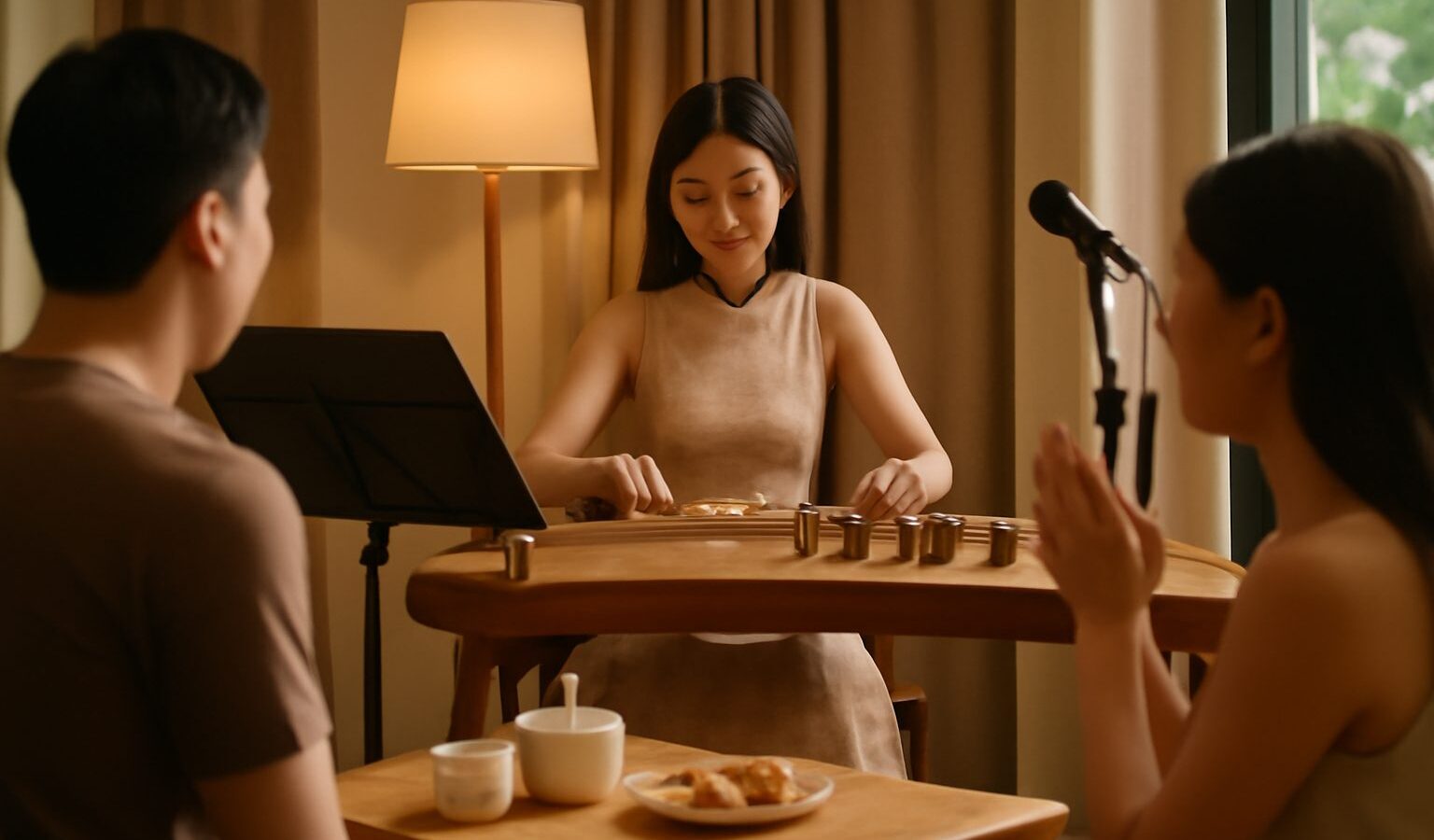
If you have moved from mainland China, Taiwan or elsewhere and miss hearing music in your own language, Singapore has more to offer than you might expect. Chinese live music in Singapore ranges from full symphonic Chinese orchestras to Mandopop arena shows, open-air getai stages, traditional opera and a home-grown folk style called xinyao. This guide is written for Mandarin speakers who want Chinese-language or Chinese-style performances, rather than the general bar and band scene.
For live music in general, including English-language bands and jazz, see our guide to live music in Singapore.
Chinese Orchestra Concerts
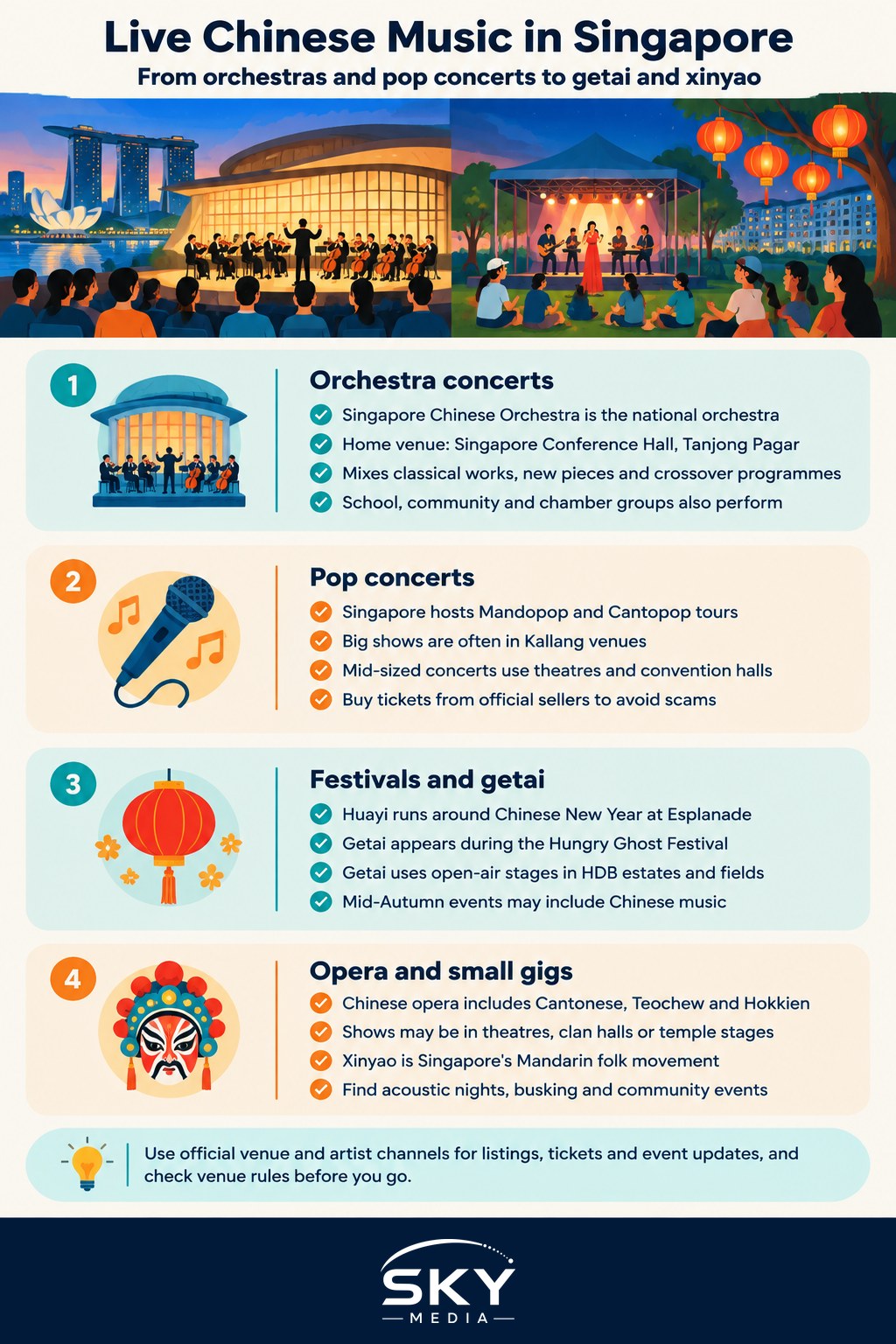
Singapore has a strong Chinese orchestra tradition. The Singapore Chinese Orchestra is the national Chinese orchestra, and its home is the Singapore Conference Hall in the Tanjong Pagar area. Its seasons usually include classical Chinese repertoire, new works by local and regional composers, and crossover programmes that mix Chinese instruments with Western ones, film music or pop arrangements.
If you are used to orchestras in Beijing, Shanghai or Guangzhou, the instrument line-up will feel familiar: erhu, pipa, guzheng, dizi, suona, yangqin and percussion. What may feel different is the local flavour. Many programmes include Nanyang (Southeast Asian Chinese) themes, Malay or Indian musical influences, and pieces inspired by Singapore’s history.
Beyond the national orchestra, you will find:
- School and university Chinese orchestras that stage public concerts, often at modest ticket prices.
- Community and amateur ensembles that perform at community centres and arts venues.
- Chamber groups focusing on guqin, pipa or silk-and-bamboo (sizhu) music in smaller, quieter settings.
To understand the instruments and styles before you go, read our guide on exploring Chinese orchestra music.
Mandopop and Cantopop Concerts
Singapore is a regular stop for regional Mandopop and Cantopop tours, and it has produced well-known Mandarin singers of its own. Large shows are typically held at the major indoor and stadium venues around the Kallang area, while mid-sized concerts may use theatres and convention halls in the city centre.
Practical points for newcomers:
- Tickets are sold through official ticketing platforms, not WeChat groups. Buy from the official seller named on the promoter’s announcement to avoid scams and fake resale tickets.
- Popular shows sell out fast. Follow the official social accounts of the artist and the venue for sale dates.
- Payment is usually by card. Local and international credit or debit cards are common; check in advance whether the platform accepts the card you have.
- Concert culture is similar to China, with lightsticks and singalongs, but venues may have rules on bags, cameras and food. Check the venue’s guidelines before you go.
Festival Seasons Worth Planning Around
Some of the best Chinese live music in Singapore is tied to particular times of year.
Around Chinese New Year, Esplanade in the Marina Bay area has for many years hosted Huayi, a festival of Chinese arts that often includes concerts, theatre and free outdoor performances. Programmes change each year, so check Esplanade’s official website for the current line-up.
During the seventh lunar month (Hungry Ghost Festival), getai shows appear across the island. Getai, literally “song stage”, are loud, colourful live shows on temporary stages in HDB estates and open fields, featuring singers performing in Mandarin, Hokkien and other dialects, with comedy hosts and glittering costumes. The front row of seats is traditionally left empty for the spirits, so sit further back. Getai are usually free to watch.
At the Mid-Autumn Festival, Chinatown and some community areas host cultural performances, which can include Chinese music alongside lantern displays.
Exact dates move with the lunar calendar every year, so check official event listings closer to the time.
Comparing Your Options
| Type of performance | Language and style | Typical setting | Best for |
|---|---|---|---|
| Chinese orchestra concert | Instrumental, classical and modern Chinese | Concert halls and arts centres | Quiet evenings, families, music lovers |
| Mandopop or Cantopop concert | Mandarin or Cantonese pop | Arenas and large theatres | Fans of specific artists |
| Getai | Mandarin, Hokkien and dialect songs with comedy | Open-air stages in housing estates | A free, lively local experience |
| Chinese opera | Cantonese, Teochew, Hokkien or Peking opera | Chinatown venues, clan halls, temple events | Traditional culture enthusiasts |
| Xinyao and Mandarin acoustic gigs | Mandarin folk and singer-songwriter | Small venues, cafes, community events | Relaxed, nostalgic listening |
Chinese Opera and Dialect Performances
Singapore’s Chinese community has deep roots in southern China, which is why dialect opera is so visible here. Cantonese opera, Teochew opera and Hokkien opera are all performed, alongside Peking opera from northern traditions. Performances may take place in theatres, in clan association halls, or on temporary stages near temples during religious festivals.
If you grew up with Peking opera or Kunqu, local dialect opera will sound quite different, but the costumes, gestures and stories will feel familiar. Many theatre performances provide English and Chinese surtitles. Temple stage shows are a community tradition first, so be a respectful guest: keep noise down, ask before photographing performers backstage, and do not block worshippers.
The Singapore Chinese Cultural Centre, near the Tanjong Pagar area, is also worth following. It runs concerts, talks and festivals on Chinese Singaporean culture, including music.
Xinyao and Small Mandarin Gigs
Xinyao (新谣, “new ballads”) is a Singapore Mandarin folk movement that grew from student songwriters in the 1980s. Its gentle guitar-based songs about school, friendship and growing up are still loved by many Singaporeans, and tribute concerts and singalong events are held from time to time.
For smaller, more casual Mandarin music, look out for:
- Acoustic nights at cafes and bars that feature Mandarin singer-songwriters.
- Busking in busy areas such as shopping streets and MRT-linked malls. Buskers in Singapore must hold a licence from the National Arts Council, so performances are generally organised and well behaved.
- Community centre events, especially around festivals, where local Chinese choirs and bands perform.
- Lounges and restaurants with live Mandarin singers in the evening, which are common in some heartland areas.
If you play an instrument yourself, joining a group is a great way to meet people. Our guide to joining a Chinese music group explains how to get started.
Tips for Mandarin-Speaking Newcomers
- Use English and Chinese search terms. Event listings may be in either language. Try “Chinese orchestra concert”, “华乐”, “演唱会” and “歌台” when searching.
- Follow official arts venues. Esplanade, the Singapore Chinese Orchestra and the Singapore Chinese Cultural Centre publish their programmes online.
- Check age guidance and dress expectations. Concert halls are generally smart casual. Getai and outdoor shows are completely casual.
- Plan transport home. Late shows may end near the last MRT train. Check the SMRT or SBS Transit timetable, or plan a ride-hailing pickup.
- Bring a jacket. Indoor concert halls in Singapore are often strongly air-conditioned.
Whether you want the polished sound of a full Chinese orchestra or the warm chaos of a neighbourhood getai, there is Chinese live music in Singapore to make a new city feel a little more like home.