
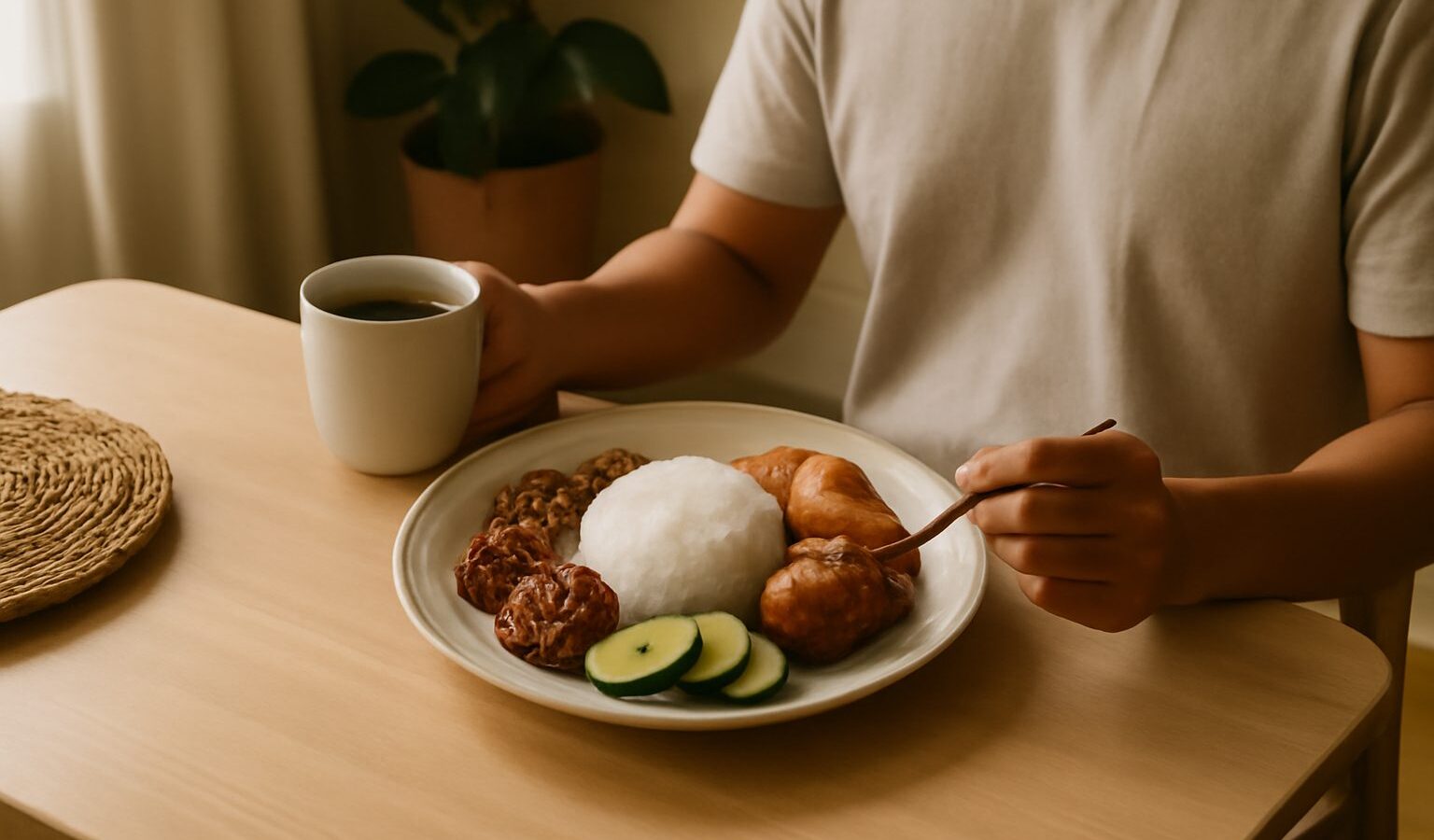
Ask ten people to name the best nasi lemak singapore serves and you will get ten different answers, often delivered with real conviction. That is the joy of this dish. Nasi lemak is deeply personal, tied to childhood breakfasts, favourite hawker stalls, and family recipes. Rather than hand you a ranked list, this guide will help you understand what makes a great plate, so you can find the version that becomes your own favourite.
At its heart, nasi lemak is fragrant coconut rice served with a cluster of accompaniments. The name means rich or fatty rice in Malay, a nod to the coconut milk cooked into it. Around that rice sit the supporting players: sambal, fried anchovies, roasted peanuts, cucumber, and often a fried egg or a piece of fried chicken or fish.
What Makes a Great Plate
The soul of any nasi lemak is the rice and the sambal, and a good stall gets both right.
The rice should be fluffy, each grain distinct rather than mushy, and perfumed with coconut and usually pandan. You should be able to smell it before you taste it. Some cooks add a knob of ginger or a stalk of lemongrass to the pot, lifting the aroma further. Rice that tastes plain or gluey is the first sign of a plate that will disappoint.
The sambal is where personalities diverge. Some are sweet and jammy, cooked down slowly until dark and glossy. Others lean hot and savoury, with a sharper chilli punch. Neither is more correct, and much of finding your favourite comes down to which sambal makes you want another spoonful of rice. A good sambal has depth, a balance of sweet, salty, spicy, and a little sourness, rather than just heat.
The rest of the plate matters too. Anchovies, known locally as ikan bilis, should be crisp and not soggy or overly salty. Peanuts should be freshly roasted and crunchy. The fried chicken, if offered, should be juicy inside with a well seasoned crust. These details separate a memorable plate from a merely acceptable one.
Allergen note worth keeping in mind: nasi lemak commonly contains peanuts and fish, and sambal often includes dried shrimp, so it is worth asking if you have allergies.
Styles and Regional Differences
Nasi lemak in Singapore reflects the wider region, drawing on Malay, and increasingly Chinese, cooking traditions.
The classic Malay style keeps things fragrant and balanced, with a sambal that may be sweet or spicy depending on the cook, and a spread that often includes fried fish, chicken wings, or otah. You will find these versions at Malay stalls in hawker centres and coffeeshops across the island.
There is also a well loved Chinese influenced style, often sold from stalls that pile the plate high with a wide choice of fried sides, from chicken wings to luncheon meat and fish cake. These versions tend to be generous and customisable, letting you build your own combination.
Beyond that, cooks experiment endlessly, with versions wrapped in banana leaf for extra fragrance, or served with unusual sides. Part of the fun is discovering which tradition speaks to you.
Where to Look and How to Order
Nasi lemak turns up almost everywhere in Singapore, which is good news for the hungry explorer. The best strategy is to try widely and pay attention.
Hawker centres and coffeeshops are the natural home of the dish, and many neighbourhoods have a Malay stall with a loyal following. Areas with strong Malay culinary heritage, such as around Kampong Glam and Geylang Serai, are especially rich hunting grounds, and the food streets and markets there reward a wander. Some of the most beloved nasi lemak comes from stalls that sell little else and have done so for decades, though you should always check current listings and reviews, since stalls move, change hands, and keep their own hours.
To spot a good stall, watch for a few signs. A steady queue of regulars, especially in the morning, usually means the rice and sambal are worth waiting for. Look for rice that steams when scooped and sambal that looks freshly cooked rather than sitting out all day. High turnover keeps the anchovies crisp and the chicken fresh.
Ordering is simple. Point to the sides you want, say whether you would like it packed or on a plate, and mention how much sambal you prefer. Packed in paper or banana leaf, it travels beautifully for a breakfast on the go.
If you want to go deeper into the dish, from its history to how the components come together, our dedicated nasi lemak guide is the natural next read. And for the wider picture of eating out affordably, our guide to hawker centres in Singapore will help you navigate the stalls with confidence.