
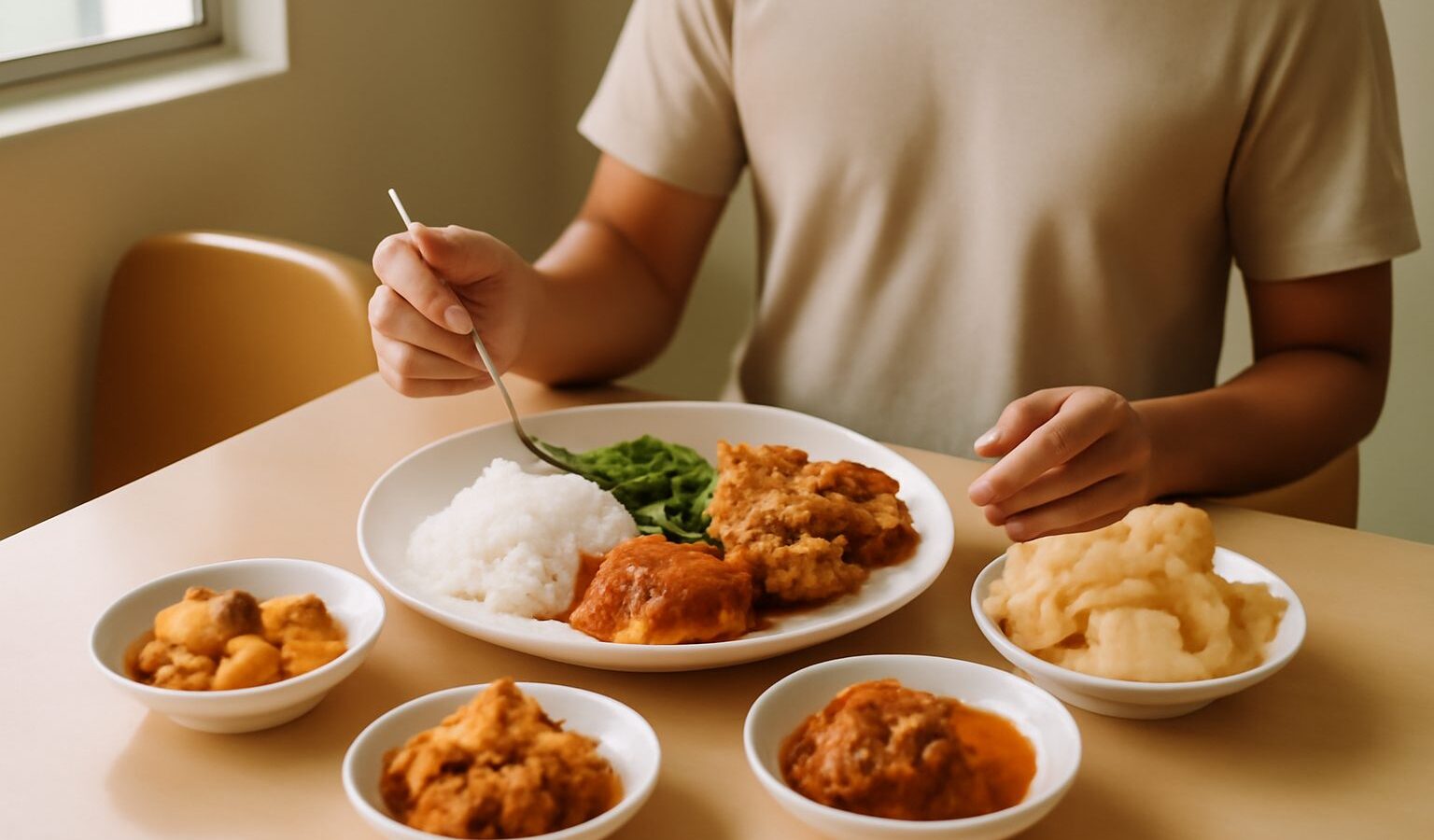
Nasi padang is one of the most rewarding ways to eat in Singapore, a spread of rich Minangkabau dishes from West Sumatra served over rice and chosen from a colourful display. Finding the best nasi padang Singapore offers is partly about the stall and partly about knowing how to order, because the joy of this cuisine is in the mix of dishes you build on your own plate. This guide explains the style, the classic dishes to look for, where to find good versions, and how to order like a regular.
What Nasi Padang Actually Is
Nasi padang means Padang-style rice, named after the city of Padang in West Sumatra, and it belongs to the Minangkabau, or Minang, people. The food is known for being bold, spiced, and often rich with coconut milk and chilli. Traditionally the dishes are cooked in the morning and displayed at room temperature, so you can see everything on offer and point to what you want. Your plate is then assembled with a scoop of rice and your chosen items, usually with a spoonful of sauce ladled over the top.
The cuisine is naturally suited to Singapore because it is almost always halal, being rooted in a Muslim community, though it is still worth confirming certification per stall if that matters to you. It sits comfortably alongside the wider Malay and Indonesian food you find across the island.
The Dishes Worth Knowing
Half the pleasure of nasi padang is recognising the classics in the display, so a short vocabulary helps.
Rendang is the headline dish, beef slow-cooked in coconut milk and spices until the liquid reduces and the meat turns dark, tender, and deeply flavoured. A good rendang is dry and intense rather than saucy.
Ayam is chicken, prepared several ways. Look for ayam bakar, which is grilled, ayam goreng, which is fried, and ayam pop, a gentler boiled-then-fried Padang speciality served with a light sauce.
Sayur and vegetables round out the plate. Sayur lodeh is a mild coconut vegetable stew, while daun singkong, or cassava leaves, is a common green. There is often a fiery sambal goreng and a plate of raw or blanched vegetables to cool the palate.
Other staples to watch for include dendeng, thin crispy fried beef in chilli, gulai dishes in a yellow coconut curry, telur, meaning egg, cooked in sambal, and sambal ijo, a green chilli relish that many people cannot get enough of. A great meal balances something rich, something spicy, something with sauce, and a vegetable or two.
Where to Find Good Nasi Padang
Nasi padang stalls appear across the city, but a few areas are especially known for Malay and Indonesian food. The Kampong Glam area, around the historic Malay-Muslim quarter, is a natural starting point and holds some long-established names. Geylang Serai and its market are another stronghold, busy with heritage Malay cooking and a strong hawker culture around it. Beyond these, many hawker centres and food courts across the heartlands carry a nasi padang or Malay economy rice stall, and some of the best plates come from unassuming spots that locals quietly favour.
For a deeper dive into the cuisine and its dishes, see our dedicated nasi padang guide, and to understand the wider hawker setting where many of these stalls live, our hawker centres guide is a helpful read.
How to Order and Eat Well
There are two ways nasi padang is served. In the point-and-pick style, you approach the display and choose your dishes, paying for what you take. In the hidang style, more common at sit-down restaurants, many small plates are brought to your table and you are charged only for what you eat, with the rest taken back. Both are normal, so just follow the stall’s lead.
A few practical tips. Go earlier in the day for the widest choice, since popular dishes sell out and the display thins by late afternoon. Do not overload on the richest items alone, as a balance of rendang or ayam with a vegetable and a sambal eats far better. Ask for extra sauce, the kuah, over your rice if you like it moist, as this is expected and usually free. And always try the sambal, since a stall’s chilli often tells you how much care goes into the rest.
Because menus, hours, and stalls change over time, treat this as a guide to the style rather than a fixed ranking, and check current listings and reviews before you visit. If you enjoy exploring this kind of food, our roundup of the best restaurants in Singapore can point you towards more of the city’s standout eating. With a little dish knowledge and a willingness to mix boldly, a plate of nasi padang becomes one of the most satisfying meals in town.