
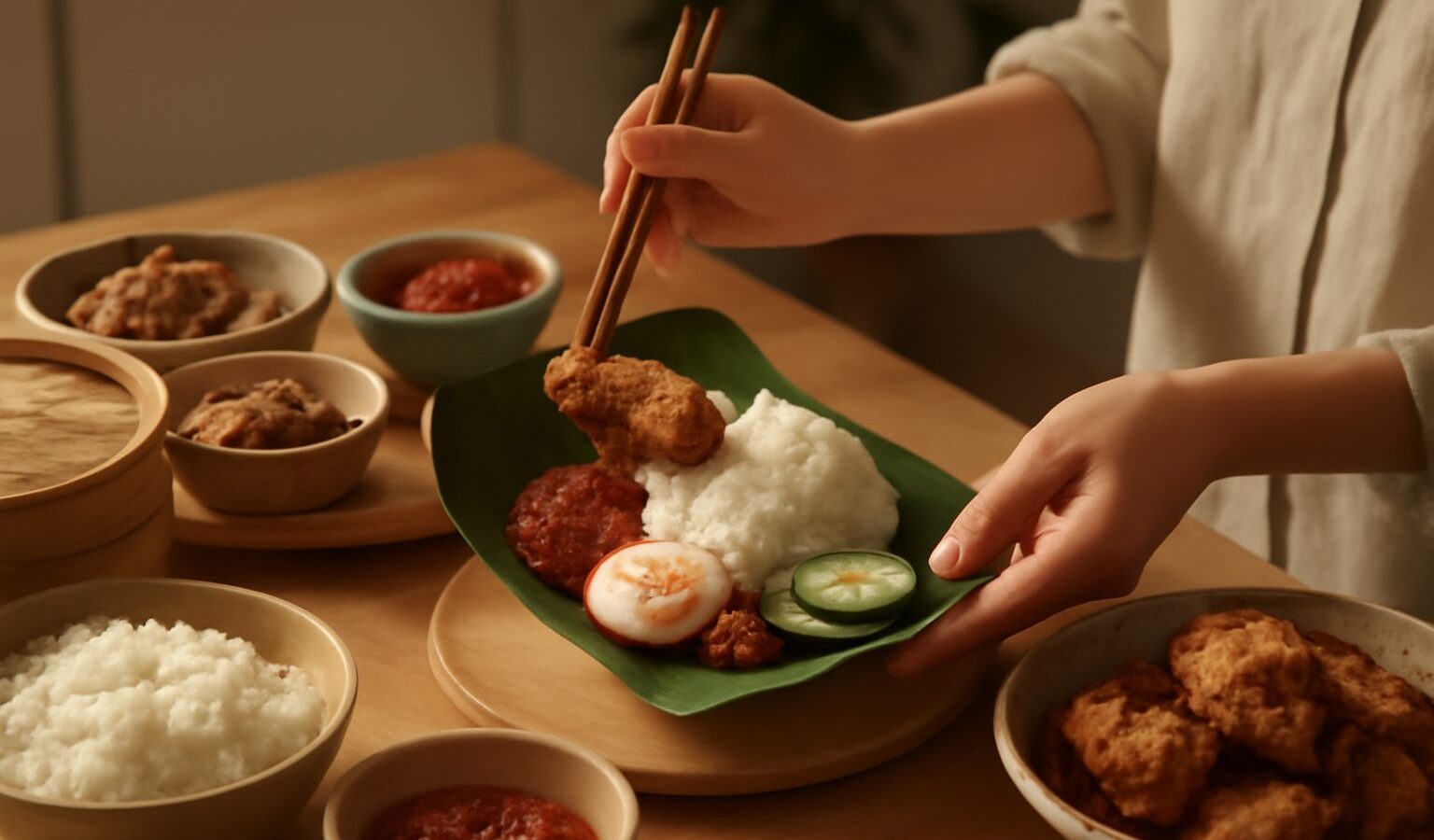
Making nasi lemak at home is one of the most rewarding cooking projects a Singaporean kitchen can take on. This beloved plate, built around fragrant coconut rice and a cluster of moreish sides, tastes far greater than the sum of its parts. There is real satisfaction in assembling your own version, from the glossy coconut rice to the sweet-spicy sambal, the crunchy ikan bilis and peanuts, a fried egg and perhaps some crispy chicken. Best of all, it is far more achievable than it looks. Each component is simple on its own, and you can prepare several ahead of time.
This guide breaks nasi lemak down into its parts so you can tackle it one step at a time. We will cover the coconut rice technique, the sambal, the crispy accompaniments, and how to cook everything safely before bringing it all together on the plate.
The Coconut Rice
The heart of nasi lemak is the rice, and getting it right is what separates a good plate from a forgettable one. The name itself hints at the method, since lemak refers to the rich, creamy quality that coconut milk brings. You are aiming for rice that is fragrant, tender and just slightly rich, with each grain distinct rather than mushy.
Start by rinsing your rice until the water runs clearer, which washes off excess starch and helps keep the grains separate. Cook it with coconut milk in place of some of the usual water, along with a few knotted pandan leaves, some sliced ginger, and a little salt. The pandan and ginger perfume the rice beautifully, while the coconut milk carries that signature richness. A knotted stalk of pandan is easy to fish out later.
Because coconut milk is richer and can catch or boil over more easily than water, keep the heat gentle and stir now and then if cooking on the stovetop, or use your rice cooker as normal with the coconut milk making up part of the liquid. Take care not to add too much liquid, since coconut milk makes the rice softer than plain water would. Once cooked, let it rest with the lid on for ten minutes, then fluff it gently with a fork or chopsticks. Well made coconut rice smells fragrant and feels light, and it forms the calm base against which the spicy, salty sides play.
The Sambal and Crispy Sides
If the rice is the heart, the sambal is the soul. This sweet, spicy, savoury chilli paste is what most people remember about a great nasi lemak. A good sambal for nasi lemak leans a little sweet, balancing dried chillies with shallots, garlic, a touch of belacan, or shrimp paste, some tamarind for tang, and sugar to round it off. The aromatics are traditionally pounded into a paste, and this is a perfect job for a mortar and pestle, then fried down slowly in oil until the mixture darkens, splits and turns glossy and fragrant. Take your time frying it, as this long, patient cook is what develops the deep flavour. Sliced onions added towards the end give a lovely sweetness.
The crispy sides bring texture and salt. Ikan bilis, or dried anchovies, are rinsed and dried well, then fried until crisp and golden. Frying raw peanuts alongside, or separately, gives you that essential crunch. Fry both over steady heat and watch them closely, as they turn from perfect to burnt quickly. Drain them well on kitchen paper so they stay crisp. These keep well in an airtight container, so you can make them ahead.
To finish the plate you usually add egg, either a runny fried egg or a sliced hard boiled one, and often a protein such as fried chicken. Cut cucumber slices bring a cool, fresh contrast to all that richness. Fry your egg to your liking, and if you are making fried chicken, marinate it first for flavour.
Assembling a Nasi Lemak Plate
Once your components are ready, building the plate is the fun part. The table below shows a typical nasi lemak and the role each element plays, so you can balance the flavours as you serve.
| Component | Flavour role | Prepared how | Can prep ahead |
|---|---|---|---|
| Coconut rice | Rich, fragrant base | Cooked with coconut milk and pandan | Best fresh, reheat gently |
| Sambal | Sweet, spicy, savoury | Pounded paste fried down slowly | Yes, keeps well chilled |
| Ikan bilis and peanuts | Salty crunch | Fried until crisp | Yes, store airtight |
| Egg | Rich, soft | Fried or hard boiled | Best fresh |
| Cucumber | Cool, fresh contrast | Sliced raw | Slice just before serving |
Mound the warm coconut rice in the centre, then arrange a spoon of sambal, a scatter of ikan bilis and peanuts, the egg, cucumber and any protein around it. Half the pleasure is mixing a little of each element into every mouthful.
Cooking Safely and Adapting the Dish
Because nasi lemak brings together several cooked proteins, a few food safety habits are worth keeping in mind. If you are frying chicken, make sure it is cooked all the way through before serving, with no pink remaining at the bone. When handling raw chicken, keep it away from ready to eat items like the cucumber and cooked sides, and wash your hands, boards and knives well after contact to avoid cross-contamination. Cook eggs to your comfort level, keeping in mind that a fully set egg is the safest choice. Once cooked, do not leave the assembled plate or its components sitting out at room temperature for a long stretch, and refrigerate leftovers promptly, reheating the rice and sambal thoroughly until piping hot. This is general guidance rather than a substitute for official food safety advice.
Nasi lemak is traditionally not a vegetarian dish, given the ikan bilis, belacan and often meat, but it adapts well. You can build a vegetarian version by leaving out the anchovies and shrimp paste, using a vegetarian sambal, and adding fried tofu, tempeh or extra egg for substance. However you make it, nasi lemak is a dish that brings people together, and the first time you serve a plate you assembled yourself, fragrant rice and glistening sambal and all, you will understand exactly why it is so loved.
Explore more
Nasi Lemak Guide
How to Make Sambal Chilli from Scratch
How to Use a Mortar and Pestle
How to Make Satay at Home