
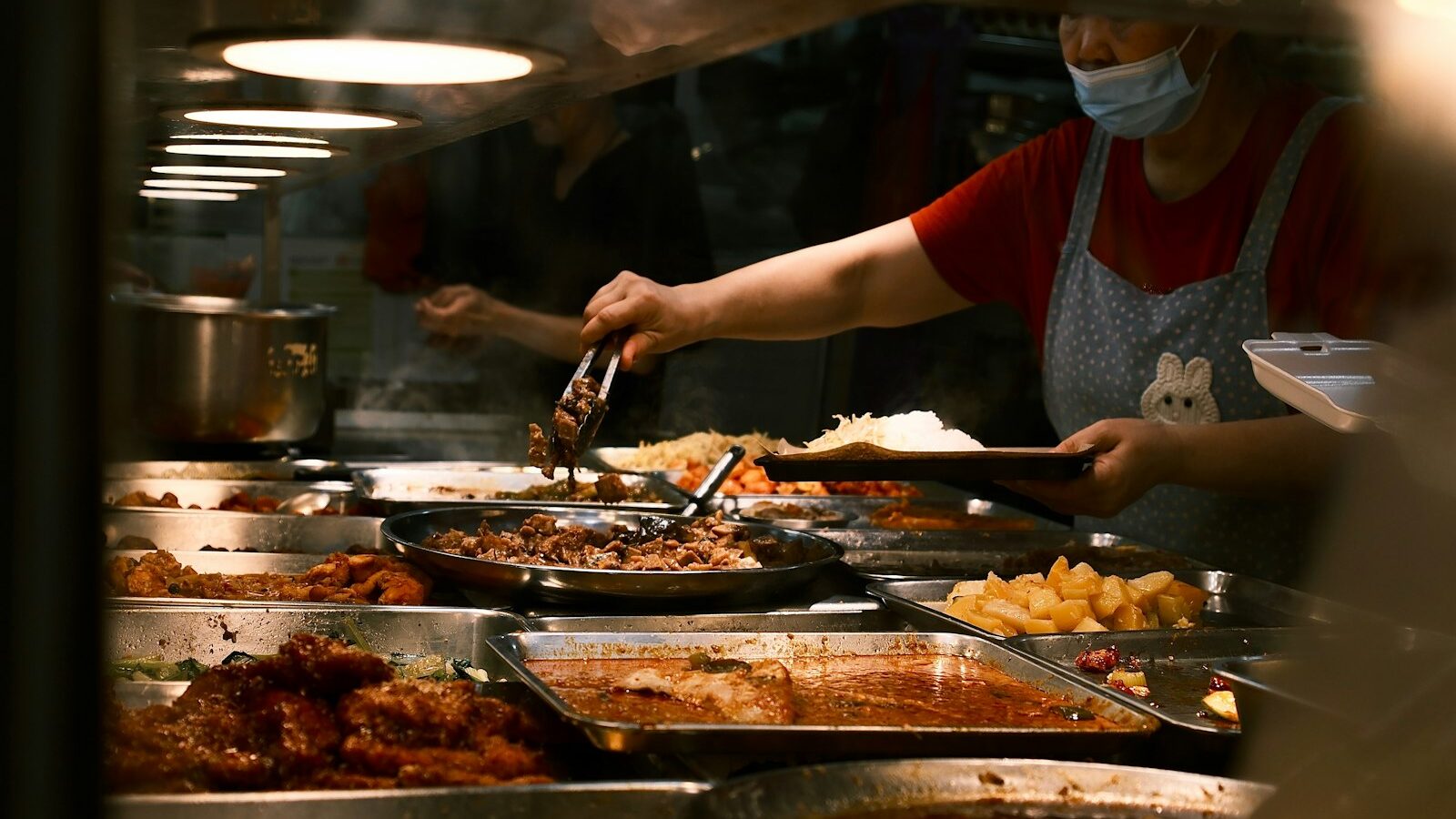
Step up to a nasi padang stall and you face a glorious dilemma: a whole counter of curries, sambals, vegetables and meats, all waiting to be spooned over rice. Choosing is half the fun. This guide explains what nasi padang is, the dishes you will encounter, and how to build a plate that sings.
What nasi padang is
Nasi padang originates from the Minangkabau people of the Padang region in Indonesia, and it has become a beloved part of Singapore’s Malay and Indonesian food landscape. The concept is simple and generous: steamed rice served with a selection of pre-cooked dishes that you choose from a display. You point at what you want, and it is spooned onto or alongside your rice, often finished with a ladle of curry gravy. The joy lies in the variety, since a single plate can bring together several contrasting flavours and textures.
The star dishes
Nasi padang spreads are rich and varied, but certain dishes are icons of the cuisine.
- Rendang, beef slow-cooked in coconut milk and spices until dark, tender and intensely flavourful.
- Ayam goreng, fragrant fried chicken, crisp and well-seasoned.
- Sambal goreng, a savoury-spicy medley often featuring tempeh, tofu and long beans.
- Sayur lodeh, vegetables in a coconut gravy.
- Assorted sambals, chilli-based condiments that add heat and depth.
- Fish and egg dishes, from sambal-coated fish to braised eggs.
Rendang in particular is a showstopper, and a good one, deeply spiced and meltingly tender, is a joy.
How to order
Ordering nasi padang is an interactive, point-and-choose experience.
| Step | What happens |
|---|---|
| Survey the spread | Look over the display of dishes |
| Choose your rice | Rice is plated as the base |
| Point and pick | Select your meats, vegetables and sambals |
| Add gravy | Curry or sauce is often ladled over |
Do not be shy about asking what a dish is; stallholders are used to guiding newcomers. You can order a modest plate or an indulgent one, tailoring it to your appetite and budget.
Building a great plate
A well-composed nasi padang plate balances richness, freshness and heat.
- Anchor with a hero. Choose a standout like rendang or fried chicken as your centrepiece.
- Add a vegetable. Something like sayur lodeh or long beans brings balance and freshness.
- Do not skip the sambal. The chilli condiments are essential to the experience, adding the characteristic kick.
- Get the gravy. A ladle of curry gravy ties the plate together, much as it does in other local rice dishes.
- Mind the balance. A mix of one or two rich items with vegetables and rice usually eats better than a plate crowded with heavy dishes.
The role of sambal
Sambal deserves special mention, because it is central to Malay and Indonesian cooking. These chilli-based condiments range from fiery to fragrant, and they lift the whole plate, adding heat, depth and complexity. A good nasi padang stall takes pride in its sambal, and adventurous eaters will want to try the different varieties on offer. If you are sensitive to spice, ask, but do give the sambal a try, since it is a defining flavour of the cuisine.
Halal and everyday appeal
Nasi padang is typically halal, making it a widely accessible and popular choice across communities in Singapore. It is everyday food that also happens to be deeply flavourful, which is why it draws long lunchtime queues at popular stalls. The combination of variety, value and rich, satisfying flavours makes it a go-to meal for many, whether for a quick lunch or a hearty, shared spread.
Where to find it
Nasi padang stalls are found in hawker centres, food courts and dedicated eateries across the island, with some long-established names having built strong reputations over the years. Areas with a strong Malay food presence and busy food centres are good places to look. A stall with a well-stocked, freshly cooked display and a steady stream of customers is a promising sign, since turnover keeps the dishes fresh.
Value, variety and everyday joy
One of the quiet strengths of nasi padang is how well it suits everyday life. Because you choose your own dishes, you control both the plate and the price, from a simple, economical lunch to a generous feast. This flexibility, combined with the sheer variety on offer, makes it endlessly repeatable; you can eat nasi padang regularly and never have the same plate twice. It also lends itself beautifully to sharing, with a group ordering an array of dishes to pass around, turning a meal into a communal spread. That blend of value, variety and conviviality is a big part of why the dish is so woven into daily eating here, equally at home as a solo weekday lunch or the centre of a weekend gathering.
The takeaway
Nasi padang is a celebration of variety and flavour: a spread of rich curries, fragrant fried dishes, fresh vegetables and essential sambals, all chosen by you and served over rice. Anchored by icons like rendang, it lets every diner compose a plate to their own taste, balancing richness with freshness and heat. Approach the counter with curiosity, ask about anything unfamiliar, do not skip the sambal, and you will build a plate that showcases some of the most soulful, deeply spiced cooking in Singapore’s food scene.
Nasi padang versus economy rice
If you have eaten at a “cai fan” or economy rice stall, the point-and-choose format of nasi padang will feel familiar, but the two are distinct traditions. Economy rice draws on Chinese home-style cooking, with dishes such as stir-fried greens, sweet and sour pork, braised egg and steamed fish, and it is usually not halal. Nasi padang, by contrast, is rooted in Minangkabau and wider Malay-Indonesian cooking, built around coconut-milk gravies, deep spice pastes and sambal, and it is typically halal.
- Flavour base. Economy rice leans on soy, garlic and ginger, while nasi padang leans on coconut, chilli and aromatic rempah.
- Signature dishes. Rendang and sambal goreng anchor a nasi padang plate, whereas economy rice has no single equivalent icon.
- The gravy. A ladle of curry over the rice is a defining nasi padang touch that economy rice generally does not share.
Both offer variety and value, so the real choice comes down to the flavours you are craving on the day.
Common mistakes to avoid
A few simple missteps can hold back an otherwise great plate. First, over-ordering: piling on three or four rich, gravy-heavy items can leave the plate muddled and heavy, so let one hero shine and build around it. Second, forgetting to ask about the price before the dishes are plated, since a plate loaded with premium meats and seafood will naturally cost more; if you are watching the budget, ask the stallholder as you go. Third, skipping the sambal out of caution, which means missing the dish’s defining note – request a small amount on the side instead. Finally, arriving very late in the service, when the freshest, most popular items may have run out. For anything relating to hygiene grades or halal certification of a specific stall, look for the displayed certificate or check with the operator directly rather than assuming.
Explore more: Nasi lemak guide · Halal food in Singapore · Sambal and chilli: a local flavour guide