
Hyaluronic acid gets most of the attention when people talk about hydration, but there is a quieter alternative that some skincare fans quietly prefer. Interest in beta glucan skincare in Singapore has been rising because it promises the same soft, plumped, well-hydrated feeling while also being known as a soothing ingredient. If you have sensitive or easily stressed skin, or you simply want a gentle hydrator that suits our humid weather, beta-glucan is worth understanding. This guide explains what it is, what it does, who it suits and where the honest limits lie.
What beta-glucan is
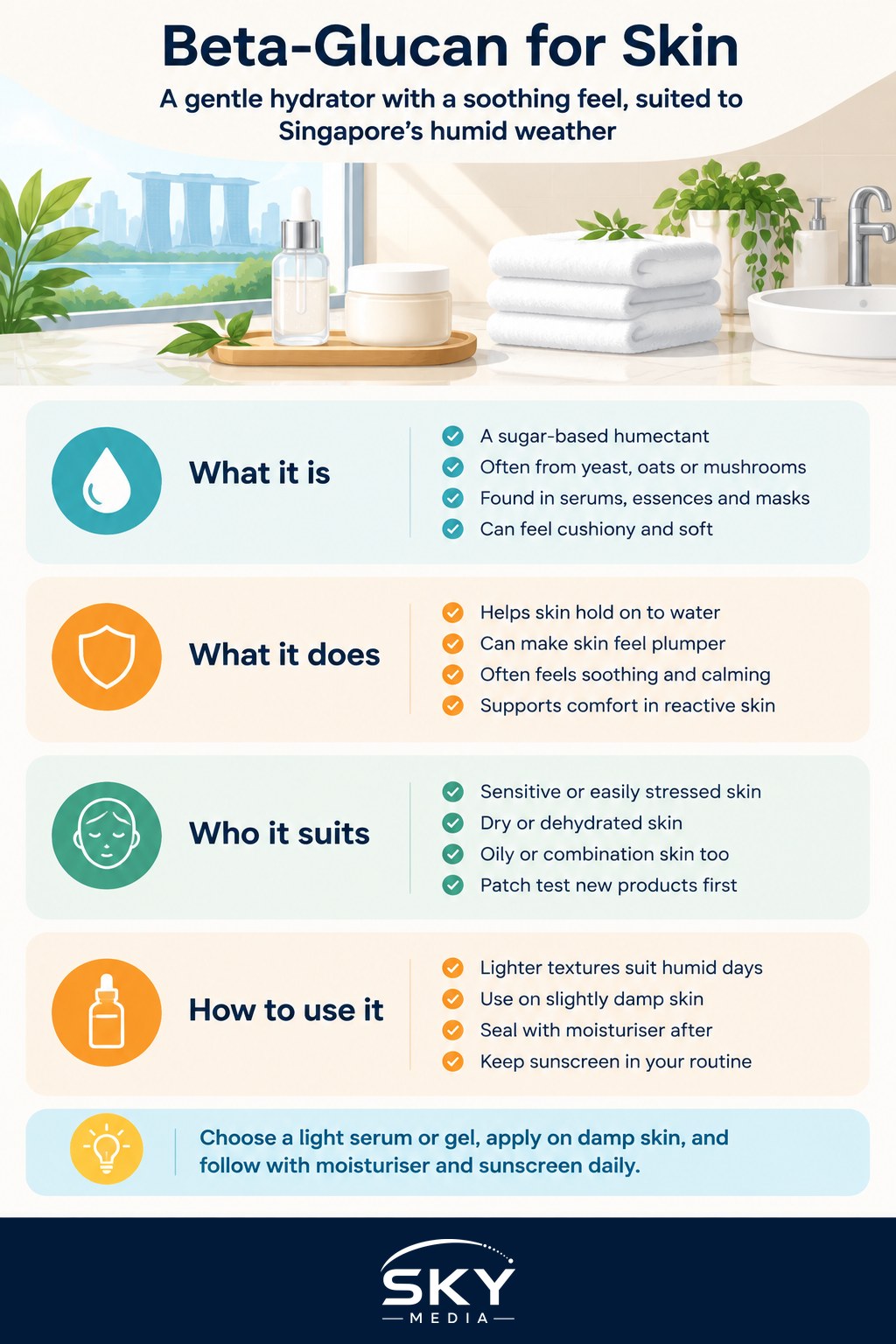
Beta-glucan is a type of polysaccharide, which is a long chain of sugar molecules. In skincare it is most often sourced from yeast, oats or certain mushrooms. On an ingredient list you may see it written as “beta-glucan,” “beta glucan” or listed by its source, such as an oat or yeast extract.
The key thing to know is that it is a large, water-loving molecule. Like other humectants, it can help bind water in the upper layers of skin, which is where the plumping, comfortable feeling comes from. It also tends to give products a lovely, cushiony texture, which is part of why formulators like it. Because it is gentle and water-soluble, it slots easily into serums, essences, moisturisers and masks. For the bigger picture on how hydrating ingredients work together, our guide to understanding skincare ingredients in Singapore is a helpful starting point.
What it does for your skin
Beta-glucan is usually promoted for two overlapping benefits, and it helps to be clear-eyed about each.
- Hydration and plumping. As a humectant, beta-glucan can help skin hold on to water, so it looks and feels softer, smoother and more supple. Some people find it feels richer or more cushioning than hyaluronic acid, though preference is personal. Our explainer on hyaluronic acid in Singapore is a useful comparison read.
- Soothing and comfort. Beta-glucan is widely described as calming, and it is often included in products aimed at sensitive, stressed or reactive skin. It is a common companion to barrier-supporting formulas.
What it is not: beta-glucan is not an exfoliant, an acne treatment, or a substitute for sunscreen. It is a supportive hydrator that helps skin feel comfortable. If your skin is persistently red, itchy or inflamed, that is a reason to see a doctor or dermatologist rather than to rely on any single cosmetic ingredient.
Because comfort and hydration go hand in hand with a healthy outer layer, beta-glucan pairs well with barrier care. Our guide to repairing your skin barrier in Singapore explains why that outer layer matters so much in our climate.
Who it suits
Beta-glucan is one of the more broadly friendly hydrators. It tends to suit:
- Sensitive and reactive skin that wants hydration without a long list of strong actives.
- Dry or dehydrated skin that needs extra water-binding help.
- Oily and combination skin, since it can be delivered in light, non-greasy textures.
As gentle as it is, no ingredient is universal. Other components in the same product could still trigger a reaction, so patch test any new product and add just one at a time so you can judge how your skin responds.
How to use it in Singapore’s humid climate
Beta-glucan fits neatly into the light-layering approach that works best in our heat.
- Pick a texture that matches the weather. A beta-glucan serum, essence or light gel usually feels better in humidity than a heavy cream. Save richer formats for aircon-dry nights.
- Apply to damp skin, then seal. As a humectant it works best on slightly damp skin, followed by a moisturiser to lock it in. Our guide to hydrating versus moisturising your skin explains why you usually want both.
- Use it alongside actives. Beta-glucan can make a routine that includes niacinamide, acids or a retinoid feel more comfortable. If you are building an actives routine, see niacinamide and skincare actives.
- Keep sunscreen daily. Hydration does not protect against UV, and our sun is strong year-round.
The honest limits
Beta-glucan has a solid reputation as a gentle hydrator with soothing qualities, and many people genuinely enjoy how it feels. That said, the marketing sometimes stretches into bold “repair” and “boosting” claims that go beyond what everyday cosmetic use can promise. Any visible benefit depends on the formula, the concentration and your own skin, and cosmetic products are not medicines. Treat beta-glucan as a comfortable, dependable hydrator rather than a miracle ingredient.
In short, beta-glucan is a soft, cushiony hydrator with a calming reputation and a texture many people love. Choose a light version for our weather, layer it on damp skin, patch test first, keep up your sunscreen, and see a professional for anything that persists or worsens.
Frequently Asked Questions
Is beta-glucan better than hyaluronic acid for hydration? Neither is simply better, since both are humectants that bind water in the upper skin. Some people find beta-glucan feels more cushioning, while others prefer hyaluronic acid. The article stresses that preference is personal, and many routines use both, so choose whichever feels better on your skin.
Can people with oat or yeast allergies use beta-glucan skincare? Be cautious. Beta-glucan is often sourced from oats, yeast or mushrooms, and the label may list only the source, such as an oat or yeast extract. If you have a known allergy or sensitivity, check the full ingredient list, patch test and ask a doctor or pharmacist if unsure.
Can I layer beta-glucan with niacinamide, acids or retinoids? Yes, it is commonly used that way, since beta-glucan tends to make a routine with stronger actives feel more comfortable. Introduce the actives one at a time rather than together, so you can tell which product your skin is responding to, and keep up daily sunscreen.
Should beta-glucan go in the morning or at night? Either works, because it is gentle and has no special timing rules. Many people use it in both routines on damp skin, followed by a moisturiser. In the morning, finish with sunscreen, as hydration alone gives no UV protection.
How do I find beta-glucan on a product label? Look for beta-glucan or beta glucan, or for its source such as an oat or yeast extract. Because brands name it differently, a product described as soothing may not say beta-glucan on the front. Checking the full ingredient list is the reliable way to confirm.