
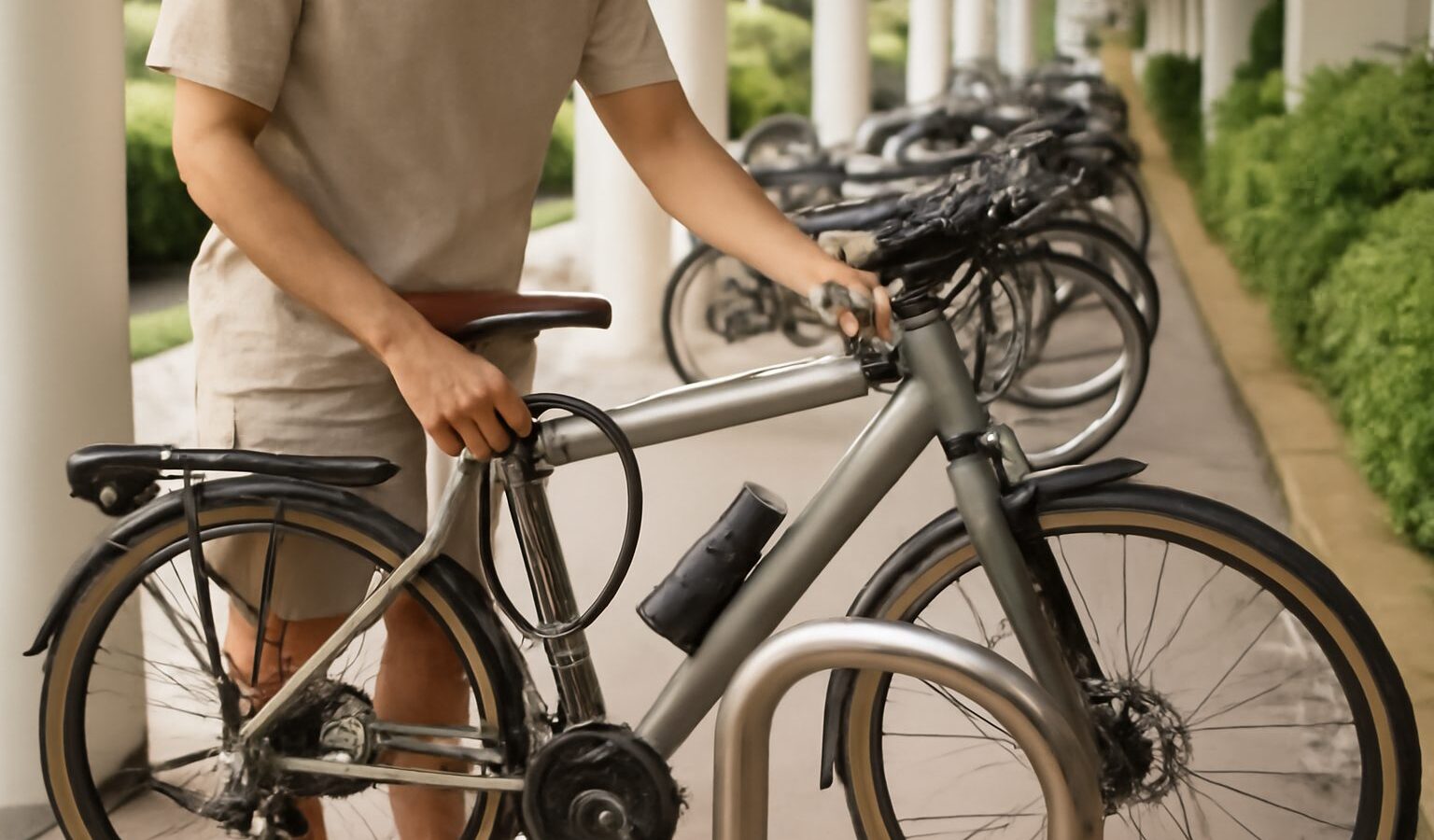
A bicycle is only useful if it is there when you come back for it. For everyday riders, few things are as deflating as returning to an empty rack or a cut lock. Sensible bicycle parking anti theft singapore habits are not complicated, but they do take a little discipline. Where you park, how you lock up and what lock you use together decide whether your bike stays yours.
The good news is that most bike theft is opportunistic. Thieves look for the easiest target, so your job is simply to make your bike a harder, slower and less attractive one than the bikes around it.
Park in the right places
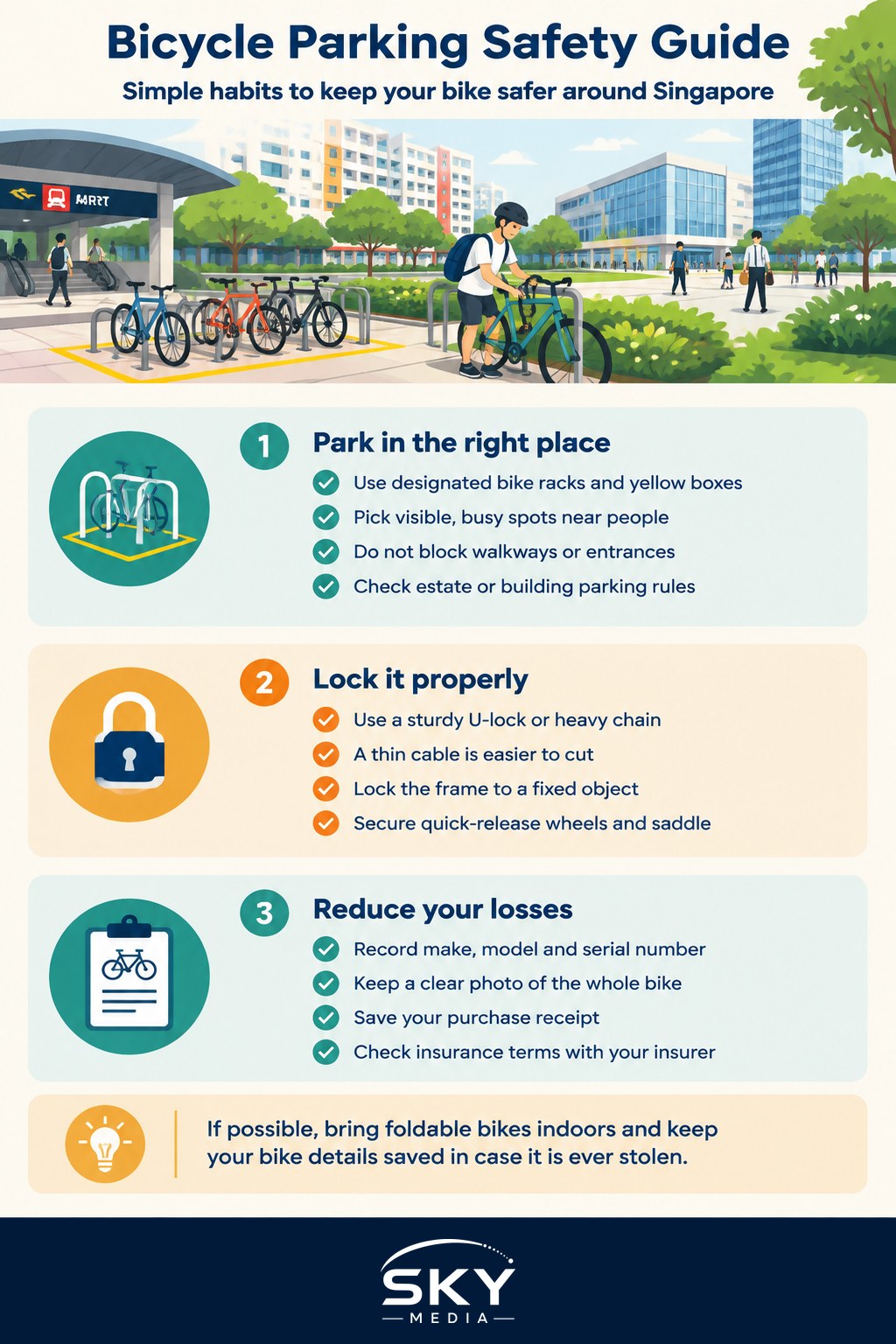
Where you leave your bike matters as much as how you lock it. Use the designated bicycle parking racks and yellow boxes provided at MRT stations, HDB estates, malls and workplaces. These spots are designed for bikes, are often in view of passers-by, and keep your bike out of walkways where it could obstruct others or be moved.
A few habits help:
- Choose visible, busy spots. A rack under a light and near foot traffic is far less appealing to a thief than a quiet corner.
- Avoid blocking paths and entrances. Bikes left in the wrong places can be an obstruction, and estate rules on where bikes may be parked and stored do apply. Check your town council or building’s guidance if you are unsure.
- Bring folding bikes indoors where allowed. One advantage of a folding bike is that it can often come inside with you, removing the risk entirely. Our guide to choosing a commuter bicycle covers this trade-off.
If you regularly mix cycling with the train or bus, our guide to bringing a bicycle on the MRT and bus explains how that can reduce the time your bike spends parked in public at all.
Lock it properly
A good lock, used badly, protects nothing. The lock itself matters, but technique matters just as much.
Invest in a sturdy lock. A hardened U-lock or a heavy chain resists cutting far better than a thin cable, which a determined thief can defeat in seconds. Many riders use two different types of lock, since that forces a thief to carry and use two different tools.
Then lock it the right way. The golden rule is to secure the frame, not just a wheel, to a fixed, immovable object such as a proper bike rack. A bike locked only through the front wheel can lose its frame while the wheel stays behind. If your wheels or saddle release quickly, secure them too or swap the quick-release parts for bolted ones. Keep the lock off the ground and positioned so there is little room to lever or attack it.
Do not rely on locking one bike to another, and never leave a bike unlocked “just for a minute”, as that minute is all a thief needs.
Reduce your losses if the worst happens
Even careful riders can be unlucky, so plan for it. Record your bicycle’s make, model and any serial or frame number, and keep a clear photo of the whole bike. This information helps enormously if you ever need to report a theft to the police or identify a recovered bike.
Consider marking your bike in a discreet, recognisable way, and keep your purchase receipt. Some riders explore whether their home or personal insurance offers any cover for bicycles, though terms vary widely, so read the actual policy and check with your insurer rather than assuming. Fitting good lights and keeping the bike well maintained, as covered in our guide to basic bicycle maintenance, also makes it easier to describe and recover.
Make your bike the hard target
Protecting your bike is mostly about consistency. Park in designated, visible spots, respect estate rules, lock the frame to something solid with a strong lock, and secure your wheels and saddle. Bring the bike indoors when you can, and keep a record of its details in case you ever need them. None of this guarantees your bike will never be stolen, but every step you take moves you further down the thief’s list, and that is usually enough to keep your bike waiting patiently for your next ride.
Frequently Asked Questions
What type of bike lock is hardest for thieves to cut? A hardened U-lock or heavy chain resists cutting far better than a thin cable, which can be defeated in seconds. Many riders use two different lock types so a thief must carry two different tools. Lock quality matters, but so does using it correctly.
Should I lock the wheel or the frame of my bike? Lock the frame, not just a wheel, to a fixed, immovable object such as a proper bike rack. A bike locked only through the front wheel can lose its frame and leave the wheel behind. Secure quick-release wheels and the saddle too.
What details should I record in case my bike is stolen? Note the make, model and any serial or frame number, and keep a clear photo of the whole bike. Keep your purchase receipt too. This information helps when reporting a theft to the police or identifying a recovered bike.
Does home insurance cover a stolen bicycle? It may or may not, because terms vary widely. Read the actual policy and ask your insurer directly rather than assuming. Some riders explore whether home or personal policies offer any cover for bicycles before relying on it.
Is it safe to leave my bike unlocked for just a minute? No, that minute is all an opportunistic thief needs, and most bike theft is opportunistic. Always lock it, even for a quick stop. Make your bike a harder, slower target than the ones around it.
Further reading: Learning to Ride a Bicycle as an Adult in Singapore