
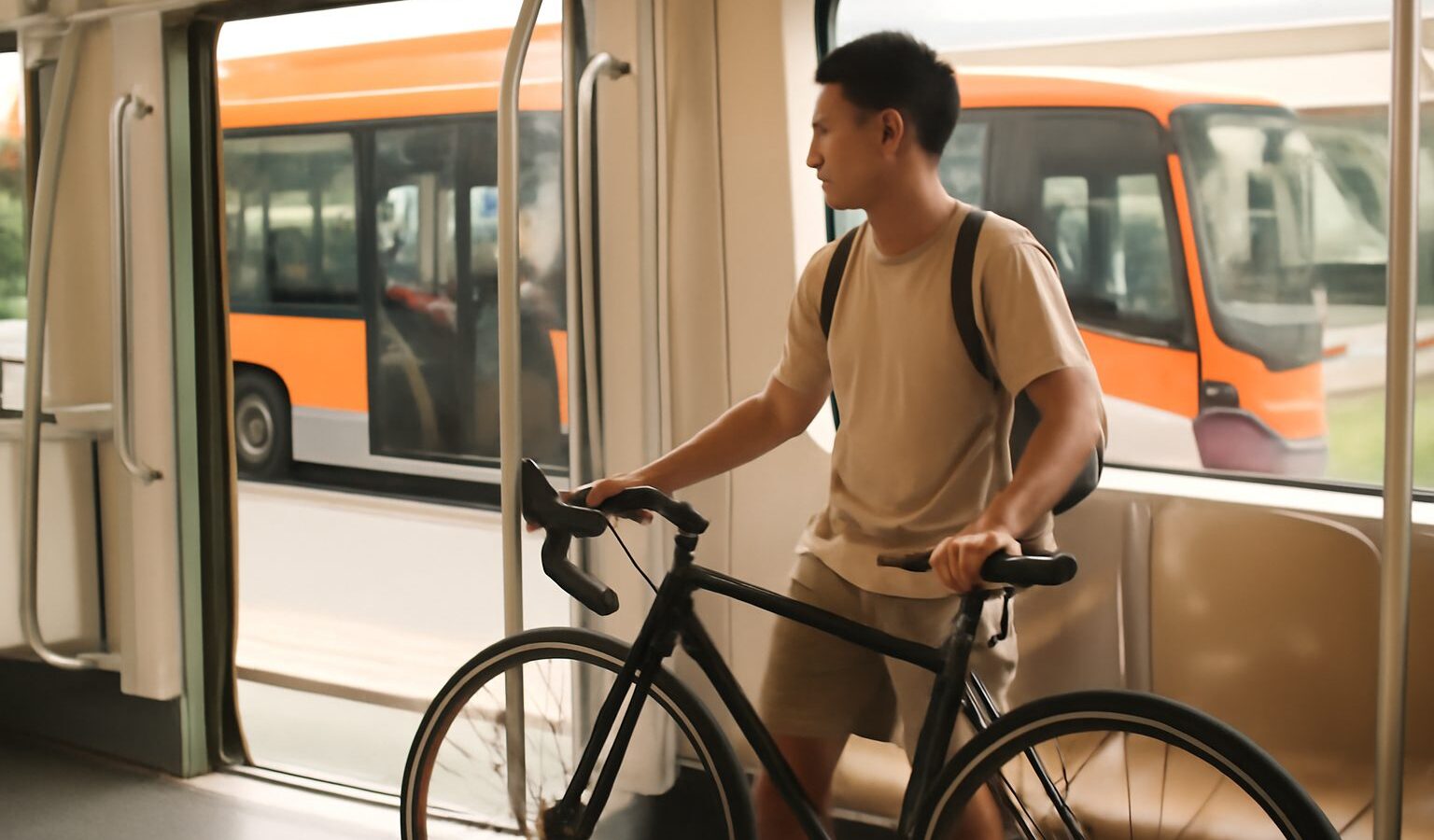
Combining cycling with public transport is a great way to get around. You can ride to the station, hop on the train for the long stretch, then ride the last bit to your destination. For this to work smoothly, it helps to know how bringing a bicycle on mrt and bus singapore services actually works in practice. This guide covers the general principles, focusing on foldable bikes, sensible timings, and courtesy, while pointing you to the operators and the Land Transport Authority for the exact rules, which they set and can adjust.
Foldable Bikes and What Is Allowed
The most important thing to understand is that not every bicycle can simply be wheeled onto a train or bus. Public transport is designed around foldable bicycles, because a folded bike takes up far less space and can be carried without blocking others.
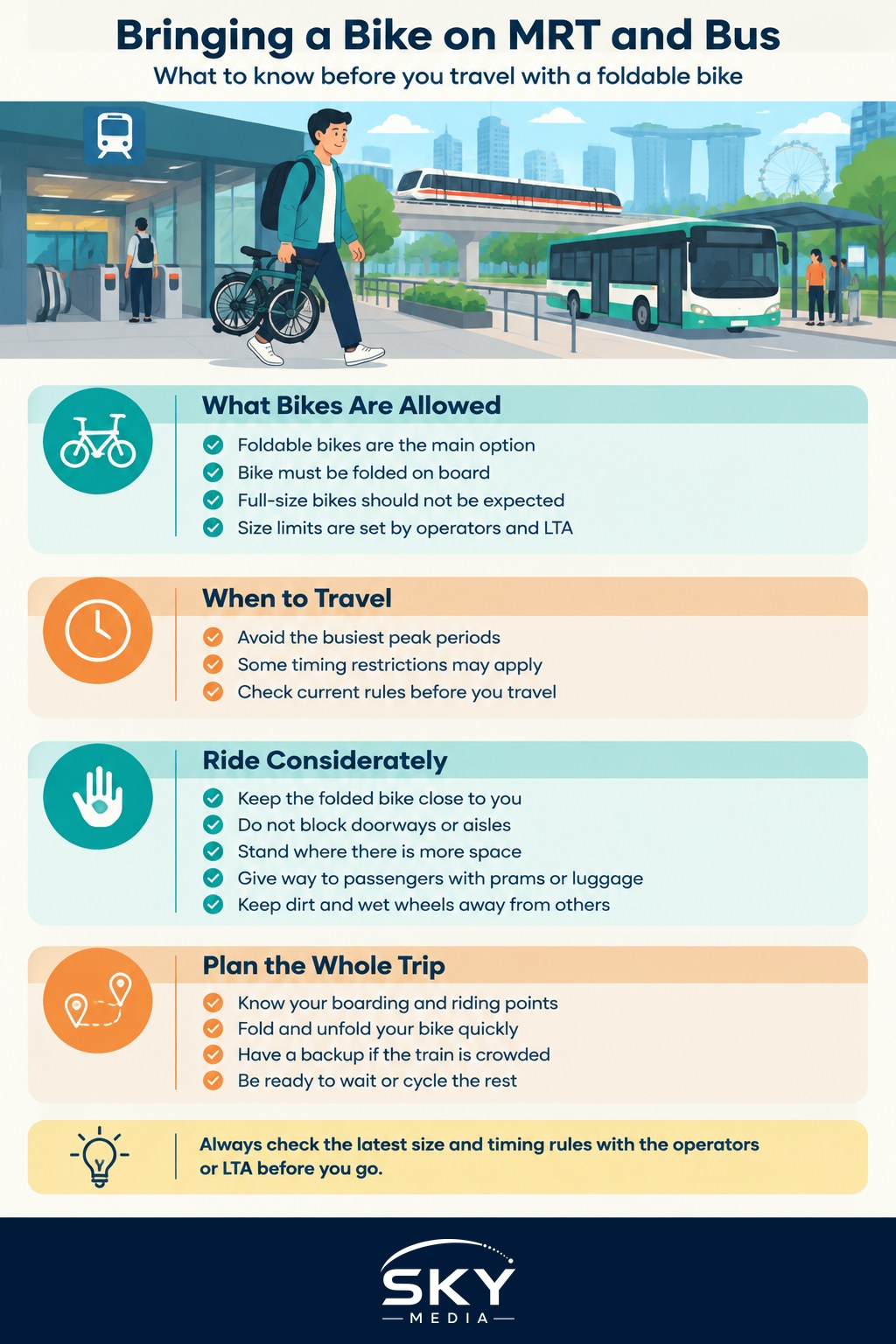
In general, the expectation is that a bicycle brought onto the MRT or bus is folded and kept within certain size limits when folded. There are dimension rules that determine what is acceptable, and these are set by the operators and LTA rather than being open to interpretation. Because those specific measurements can change and differ between trains and buses, the sensible move is to check the current allowed dimensions directly with the operators, SBS Transit and SMRT, or with LTA, before you rely on taking your bike along. Do not assume a particular size is fine just because it fit last year or because a friend managed it.
A non-folding bicycle is a different matter, and you should not expect to bring a full-size bike onto a regular train or bus service. If your setup involves a larger bike, plan your route differently. Our guide to first and last mile travel options covers the alternatives, and if you are choosing a bike partly for this reason, choosing a commuter bicycle is worth reading, since a good foldable can make all the difference.
Timing and Courtesy on Board
Even with a compliant foldable bike, when and how you travel matters enormously. Peak-hour trains and buses are packed, and squeezing a bicycle in during the crush is stressful for everyone and sometimes simply not workable. There may be specific timing restrictions on when bicycles are allowed, so again, check the current position with the operators.
Beyond any formal rule, good sense and courtesy go a long way:
- Travel outside the busiest peak periods where you can, so you are not competing for space.
- Keep your bike folded and hold it close to you, out of doorways and walkways.
- Stand in areas with more space rather than blocking seats or aisles.
- Watch for other passengers, especially those with prams, luggage, or mobility needs, and give way.
- Keep any dirt, grease, or wet wheels away from other people and their belongings.
Being considerate is not just polite, it is what keeps this privilege workable for all the cyclists who rely on it. Our piece on MRT and bus etiquette covers the broader habits that make shared journeys pleasant.
Making the Combined Journey Work
Mixing cycling and public transport rewards a bit of planning. Think through your route end to end: where you will ride, where you will board, and whether the timing avoids the worst crowds. Know how quickly you can fold and unfold your bike so you are not fumbling at the gantry. Carry a small strap or cover if it helps you manage the bike neatly on board.
It also pays to have a backup plan. If a train is unexpectedly crowded or your timing lands you in a peak crush, be ready to wait for the next service or to cycle the rest of the way. For longer term commuting, our guide to cycling for transport in Singapore has plenty of practical tips on building cycling into your daily routine.
The freedom of bringing a bicycle on mrt and bus singapore offers is genuinely useful once you know how to do it well. Keep to a foldable bike within the allowed size, travel considerately and outside the crush where possible, and always confirm the current dimension and timing rules with the operators or LTA rather than guessing. Do that, and the ride-plus-rail combination becomes one of the most flexible and enjoyable ways to move around the island.
Official sources: Land Transport Authority (LTA)
Further reading: How to Transport a Bicycle on a Car in Singapore · The MRT System Explained in Singapore