
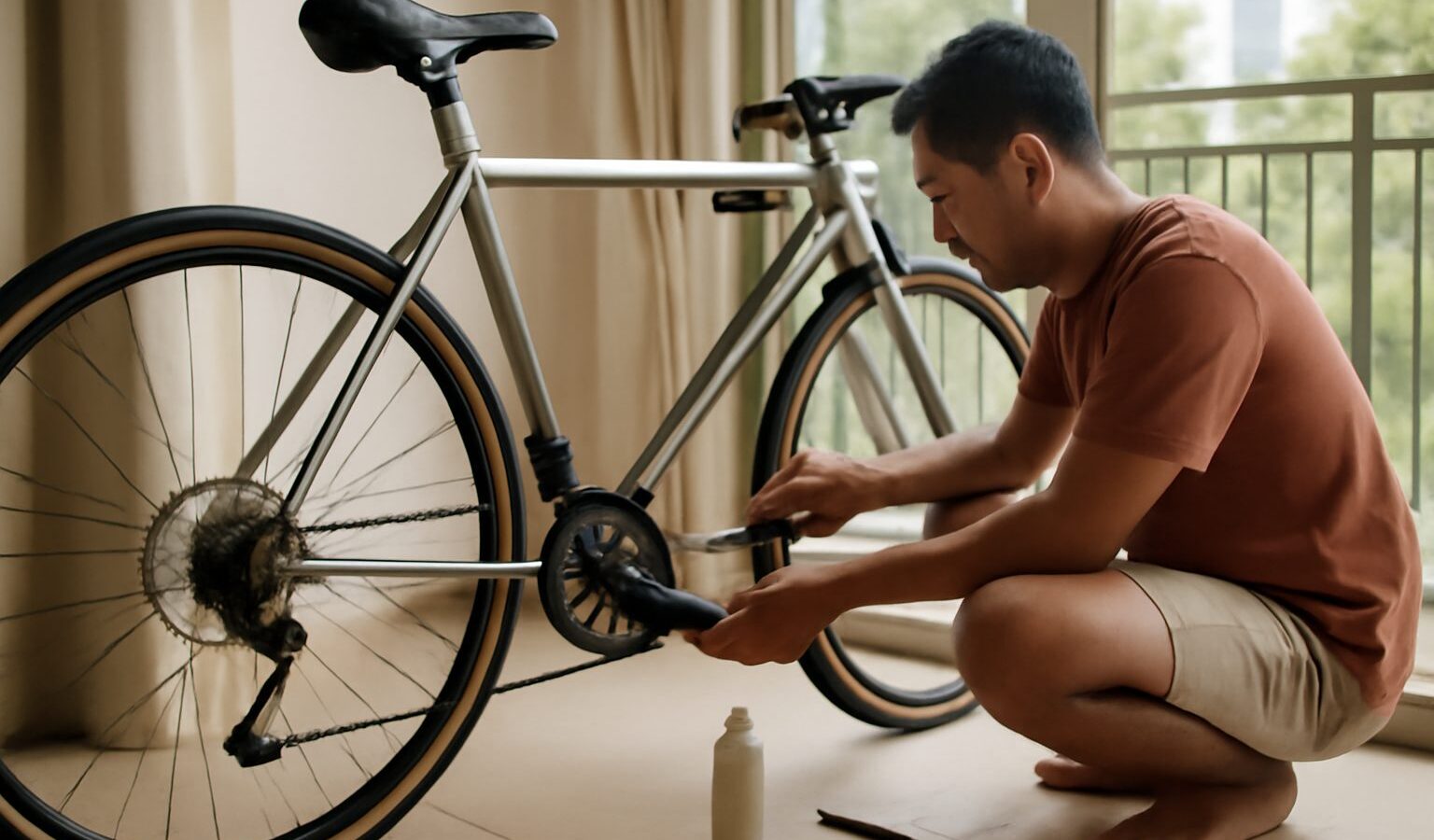
A bicycle rewards a little regular care with years of smooth, safe riding. You do not need a workshop full of tools or deep mechanical knowledge to keep yours rolling. Basic bicycle maintenance singapore riders can manage at home mostly comes down to keeping things clean, keeping them lubricated and checking a handful of parts before you ride. Our heat, rain and humidity work against you, so a simple routine goes a long way.
Think of maintenance in two layers: quick checks you do often, and slightly deeper care you do every few weeks. Anything beyond that, especially safety-critical work, is best left to a proper bike shop.
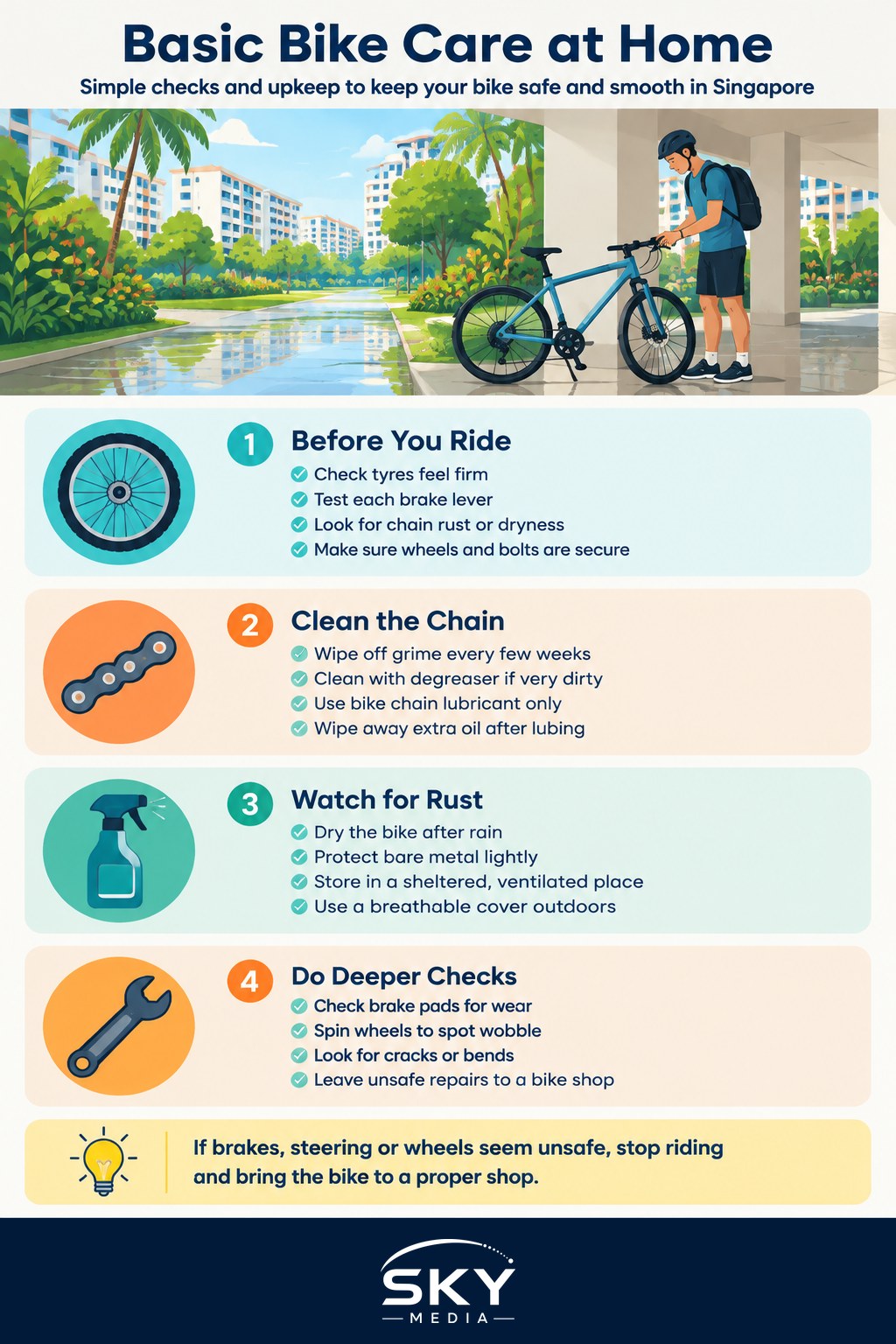
The quick pre-ride check
Get into the habit of a short once-over before you set off. It takes a minute and catches most problems before they leave you stranded.
- Air. Squeeze the tyres. They should feel firm. Under-inflated tyres are slow, uncomfortable and puncture more easily. Pump them up to the pressure range printed on the tyre sidewall.
- Brakes. Roll the bike forward and squeeze each lever. The bike should stop, and the levers should not pull all the way to the handlebar. Spongy or weak brakes are a reason to stop riding until they are fixed.
- Chain and drivetrain. A quick glance for rust or a dry, squeaky chain tells you if it needs cleaning and oil.
- Quick releases and bolts. Make sure wheels are secure and nothing is rattling loose.
This habit pairs naturally with wearing the right gear, which we cover in cycling safety gear and lights.
Cleaning and lubricating the chain
The chain is the heart of your bike and the part our climate punishes most. Rain washes away oil, and grit sticks to what is left, grinding down your gears. A clean, lightly oiled chain shifts better, lasts longer and rides quieter.
Every couple of weeks, or after a rainy ride, wipe the chain with a rag to lift off grime. If it is really dirty, use a bicycle degreaser, then rinse and dry it. Once the chain is clean and dry, apply a bicycle-specific chain lubricant to each link while slowly turning the pedals backwards, then wipe off the excess. Too much oil attracts dirt, so less is more. Avoid spraying general household lubricants everywhere, as they can fling off and contaminate your brakes.
While you are down there, keep an eye on the tyres for cuts, embedded stones or worn tread, and learn to fix a flat. Knowing how to patch or swap a tube saves a long walk home. Our related guides on choosing a commuter bicycle and general cycling for transport in Singapore round out the picture for daily riders.
Fighting rust and storing your bike
Humidity and coastal air are the enemy of exposed metal. After riding in the rain, dry your bike with a cloth, paying attention to the chain, bolts and any bare metal. A very light film of protective spray on vulnerable parts helps, but keep it well away from braking surfaces and disc rotors.
Where you store the bike matters as much as how you clean it. A sheltered, ventilated spot slows rust far more than leaving the bike out in the open where it bakes in the sun and soaks in every shower. If you must park outside, a breathable cover helps.
Every month or so, do a slightly deeper check. Look at brake pads for wear, spin the wheels to see if they wobble, and gently test that nothing is cracked or bent. Tighten any loose bolts, but do not force them, as over-tightening can damage parts.
Know your limits and ride safely
Home care handles the routine, but some jobs are best left to a qualified bike shop: wheel truing, worn bearings, gear and brake systems that will not adjust, and anything involving cracked frames or forks. Brakes, steering and wheels are safety-critical, so if you are unsure, get them checked rather than guess. Follow any instructions that came with your bike, and never ride a bike you suspect is unsafe. A little regular attention keeps repairs small, cheap and rare, and keeps your rides smooth and safe.
Frequently Asked Questions
How often should I clean and oil my bicycle chain? Every couple of weeks, or after a rainy ride, wipe the chain to lift off grime and apply bicycle-specific lubricant, then wipe off the excess. Too much oil attracts dirt. Heavily soiled chains may need a degreaser first.
What tyre pressure should I use? Use the range printed on the tyre sidewall. Squeeze the tyres before each ride, as they should feel firm. Under-inflated tyres are slow, uncomfortable and puncture more easily, so keep a pump handy.
Can I use household lubricant spray on my bicycle? It is better not to. Spraying general household lubricants everywhere can fling off and contaminate your brakes. Use a bicycle-specific chain lubricant on the links, and keep protective sprays away from braking surfaces and disc rotors.
How do I stop my bike rusting in humid weather? Dry the bike with a cloth after riding in the rain, paying attention to the chain, bolts and bare metal. Store it in a sheltered, ventilated spot rather than leaving it in the sun and showers. A breathable cover helps outdoors.
Which bike repairs should I leave to a shop? Wheel truing, worn bearings, gear and brake systems that will not adjust, and anything involving cracked frames or forks. Brakes, steering and wheels are safety-critical, so get them checked if unsure. Never ride a bike you suspect is unsafe.
Further reading: Learning to Ride a Bicycle as an Adult in Singapore · Bicycle Parking and Anti-Theft in Singapore · How to Transport a Bicycle on a Car in Singapore