

Whether you ride to the MRT every morning or take weekend spins along the park connectors, sooner or later your bike will need professional attention. Finding a good bicycle repair shop Singapore riders trust is not hard, but knowing what to look for, what drives the bill and when you can skip the shop altogether will save you time and money.
This guide focuses on getting repairs done by others: choosing a shop, understanding costs, using mobile mechanics and deciding which jobs are worth tackling yourself. For routine upkeep at home, such as cleaning and lubing your chain, see our separate guide to basic bicycle maintenance in Singapore.
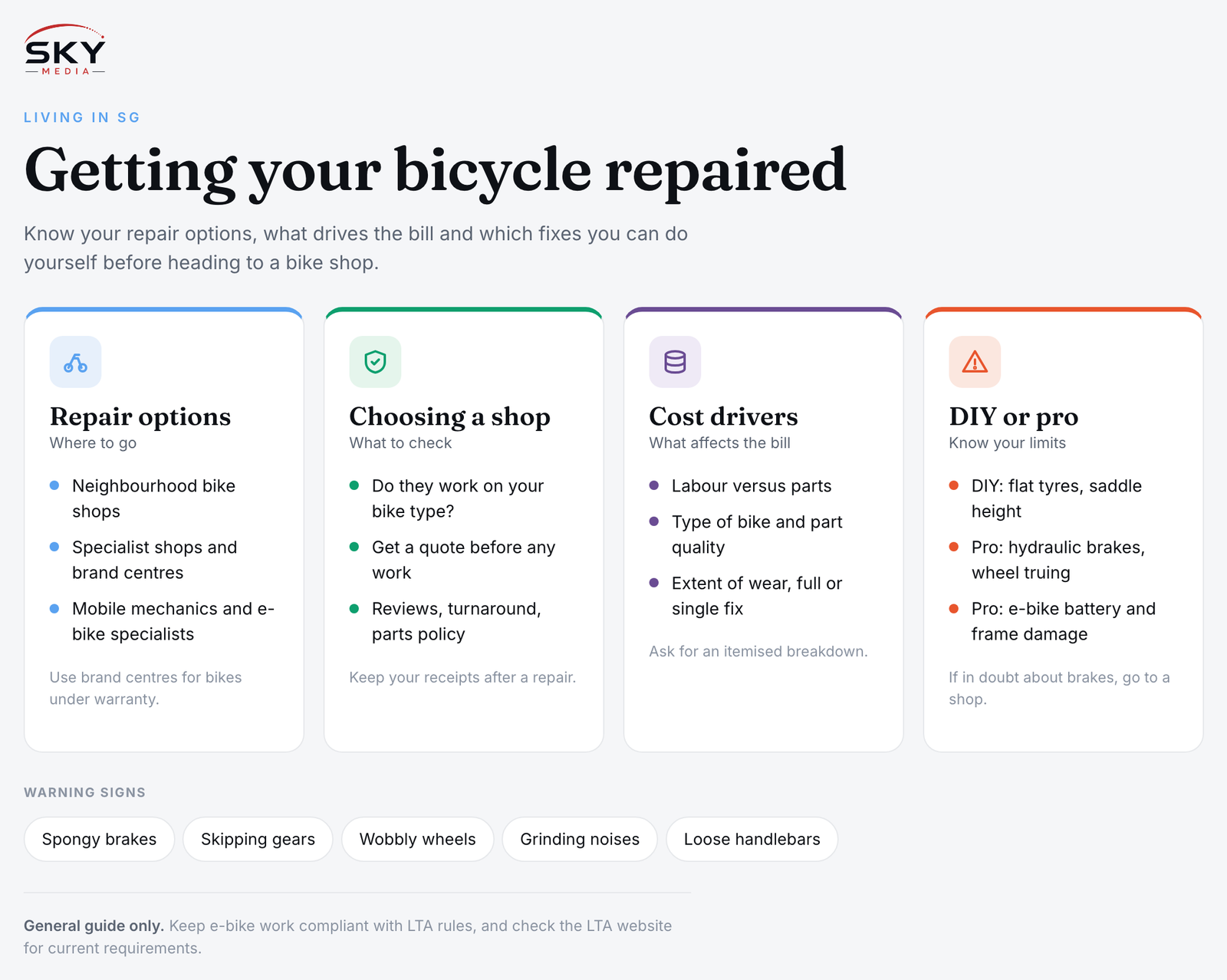
Types of Bike Repair Options in Singapore
Singapore has a wide spread of places that fix bicycles, and each suits different needs.
- Neighbourhood bicycle shops. Often found in HDB estates and older shophouse areas, these shops handle everyday repairs on commuter bikes, foldables and kids’ bikes. Many have served the same neighbourhood for years and can do quick fixes while you wait.
- Specialist and performance bike shops. These focus on road bikes, mountain bikes and higher-end foldables. They tend to stock more specialist parts and may offer bike fitting and full overhauls.
- Brand service centres. Some bike brands have authorised dealers or service centres. These matter if your bike is still under warranty, since unauthorised work may affect your coverage.
- Mobile bike mechanics. Independent mechanics who come to your home, office or a meeting point with tools and common parts.
- E-bike repair specialists. Power-assisted bicycles (PABs) involve motors, batteries and electronics, and not every shop handles them. Any work on a PAB should keep it compliant with LTA rules; modifications that change its speed or power can make it illegal to ride. Check the LTA website for current requirements.
Comparing Your Repair Options
| Option | Best for | Things to keep in mind |
|---|---|---|
| Neighbourhood bike shop | Punctures, brake and gear adjustments, commuter and foldable bikes | Quick and convenient, but stock of specialist parts may be limited |
| Specialist bike shop | Road, mountain and premium foldable bikes, full servicing | Wider expertise and parts, often longer waiting times in busy periods |
| Brand service centre | Bikes under warranty, model-specific parts | Check warranty terms and whether you need proof of purchase |
| Mobile mechanic | Busy riders, minor and moderate repairs at your doorstep | Usually a call-out charge; big jobs may still need a workshop |
| DIY at home | Flat tyres, simple adjustments, cleaning | Needs basic tools and a little confidence; know your limits |
How to Choose a Good Bike Shop
A good shop will be honest, explain what needs doing and not push unnecessary upgrades. Here is what to check:
- Do they work on your type of bike? Some shops specialise. A shop that mostly services road bikes may not be the best for a vintage foldable, and vice versa.
- Do they explain the problem clearly? A good mechanic tells you what is wrong, why, and what the options are, including whether a repair or replacement makes more sense.
- Do they give a quote first? Ask for an estimate before any work starts, and ask them to call you if they find additional problems.
- Reviews and word of mouth. Online reviews, neighbourhood groups and cycling communities can point you to reliable shops. Look for comments about honesty and turnaround, not only price.
- Turnaround time. Ask how long the repair will take. Popular shops can have a queue, particularly on weekends and before public holidays.
- Parts policy. Ask whether they use original or compatible parts, and whether you can bring your own if you prefer.
Keep any receipts in case something goes wrong soon after a repair.
What Affects the Cost of a Bike Repair
Prices vary widely between shops and change over time, so we do not quote figures here. Instead, understand what drives the bill so you can compare quotes sensibly.
- Labour versus parts. Simple adjustments are mostly labour. Replacing worn components adds the cost of parts.
- Type of bike. Specialist bikes, internal gear hubs, hydraulic disc brakes and e-bike components usually cost more to service than a basic single-speed commuter.
- Quality of parts. Entry-level and premium components can differ greatly in price. Ask the shop to show you options.
- Extent of wear. A worn chain left too long can wear out the cassette and chainrings too, turning a small job into a bigger one. Regular checks prevent this.
- Full service versus single fix. A full tune-up covers many points at once and can be better value if several things need attention.
If a quote seems high, it is perfectly reasonable to ask for an itemised breakdown or to get a second opinion from another shop.
When a Mobile Mechanic Makes Sense
Mobile mechanics suit riders who:
- Lack transport to carry a bike to a shop. (If you do drive, see how to transport a bicycle on a car.)
- Have multiple family bikes needing servicing at once.
- Need a quick fix before a weekend ride or commute.
Before booking, confirm what is included in the call-out fee, which parts they carry, and whether you need to provide space and access, such as a corridor or void deck area where work is allowed. Bigger jobs, such as wheel truing or frame issues, may still need a workshop.
Repairs You Can Usually Do Yourself
Some jobs are simple enough to learn with a few tools and an online tutorial:
- Fixing a flat tyre. Patching or replacing an inner tube is the single most useful skill for any cyclist.
- Adjusting saddle height. A quick fix that improves comfort and efficiency.
- Minor brake adjustments. Tightening a loose cable or aligning brake pads on rim brakes.
- Replacing lights and accessories. Front and rear lights, bells and reflectors.
Leave these to a professional:
- Hydraulic brake bleeding and anything affecting braking reliability.
- Wheel truing and spoke replacement.
- Bottom bracket, headset or hub overhauls.
- Any electrical or battery work on e-bikes.
- Frame damage, especially cracks on carbon or aluminium frames.
If in doubt about safety, especially brakes, take it to a shop.
Signs Your Bike Needs Professional Attention
- Brakes feel spongy, weak or squeal persistently.
- Gears skip, slip or do not shift cleanly even after a basic adjustment.
- Wheels wobble or rub against the brakes or frame.
- Grinding, clicking or creaking noises from the pedals or wheels.
- You feel any looseness in the handlebars or headset.
Catching problems early is cheaper and safer. Heavy rain and humidity in Singapore can speed up rust and wear, so bikes stored outdoors or ridden often in wet weather may need more frequent servicing.
Keep Riding Safely
A well-maintained bike is safer, more comfortable and more pleasant to ride. Find a shop you trust, learn a few basic fixes, and do not ignore early warning signs. If you are thinking of upgrading instead of repairing an old bike, our guide on choosing a commuter bicycle can help you weigh up the options.
Frequently Asked Questions
Will using a non-authorised repair shop void my bike warranty? It might. Unauthorised work may affect warranty coverage, which is why bikes still under warranty are best taken to an authorised dealer or the brand’s service centre. Check the warranty terms and whether proof of purchase is needed before booking a repair elsewhere.
Is it better to repair an old bicycle or buy a new one? Ask the shop for an itemised quote and compare it with a replacement. Cheap fixes on a sound frame usually make sense, but frame damage, worn drivetrain parts and several issues at once may tip the balance. A second opinion from another shop is reasonable.
Where can I get an electric bicycle or PAB repaired safely? Look for a specialist that handles motors, batteries and electronics, since not every shop does. Any work should keep the bicycle compliant with LTA rules, because modifications that change speed or power can make it illegal to ride. Check the LTA website for current requirements.
How can I avoid being overcharged at a bike shop? Ask for an estimate before work starts, and ask the shop to call you if they find extra problems. Request an itemised breakdown if a quote seems high, and compare with another shop. Keep your receipts in case something goes wrong soon after the repair.
Does Singapore’s rain and humidity mean I should service my bike more often? Often, yes. Heavy rain and humidity speed up rust and wear, so bikes stored outdoors or ridden frequently in wet weather may need more frequent servicing. Regular checks of the chain, brakes and cables help catch problems before they become costlier.
Further reading: Buying and Using a Bicycle or PMD in Singapore