

A few weeks after bringing your baby home, you may notice one eye that always looks wet, with a crust of yellowish gunk on the lashes every morning. Often it is a blocked tear duct, one of the most common eye issues in young babies. A blocked tear duct baby usually looks well, feeds normally and has a white, clear eye, but tears and mucus cannot drain away properly, so they pool and spill over.
This guide explains what is going on, how it differs from conjunctivitis (the “pink eye” older children catch at preschool), how to keep your baby’s eyes clean at home, and which signs mean you should see a doctor promptly. It is general information, not medical advice. Your paediatrician, GP or polyclinic doctor should always examine your baby’s eyes if you are unsure.
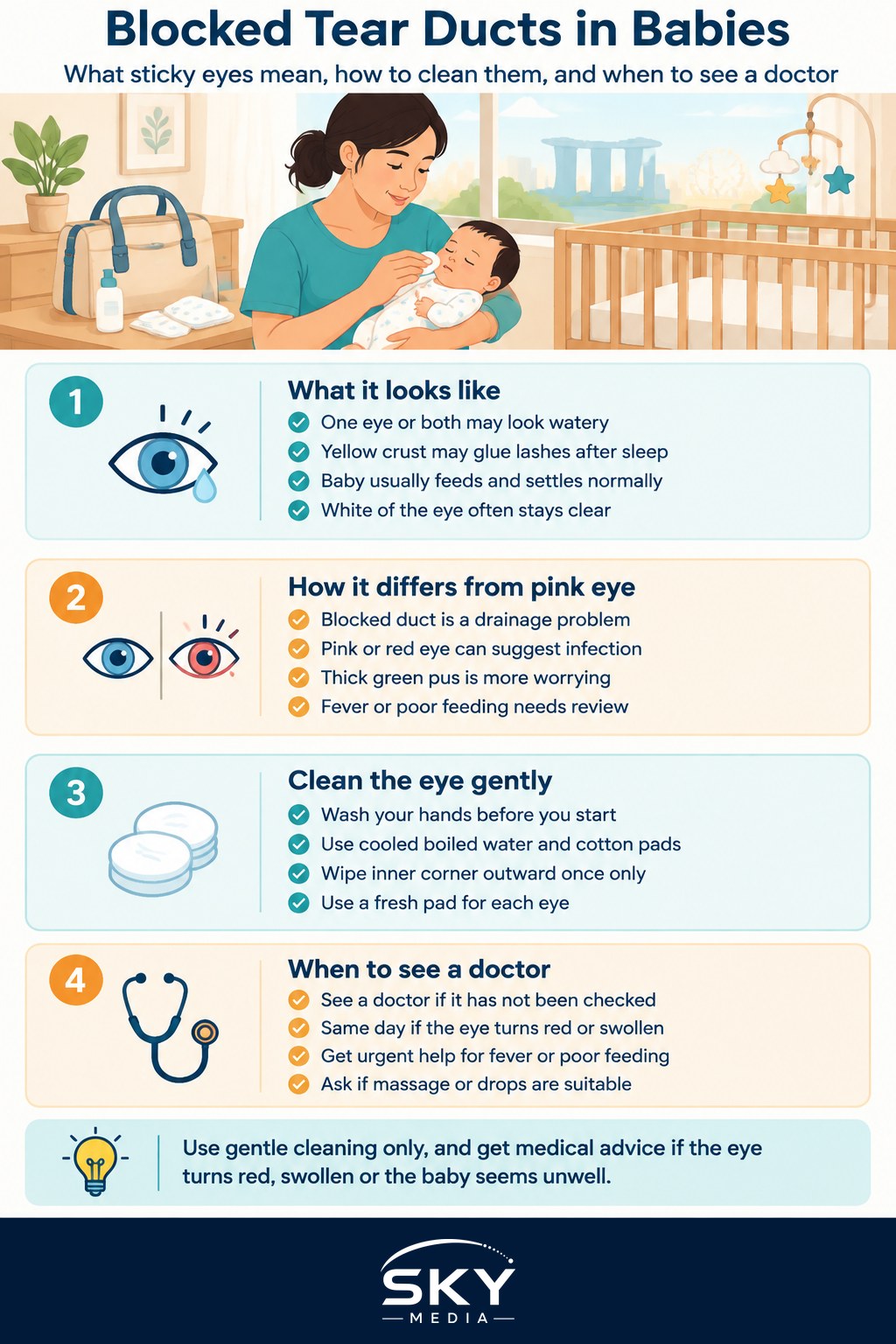
What a Blocked Tear Duct Actually Is
Tears are made constantly by a gland above each eye. They wash across the eye and drain through two tiny openings at the inner corner of the eyelids, then down a narrow channel called the nasolacrimal duct into the nose. That is why your own nose runs when you cry.
In some newborns, the end of this duct has not fully opened at birth, often because a thin membrane is still covering it. The doctor’s term is nasolacrimal duct obstruction. Tears have nowhere to go, so they:
- Well up and roll down the cheek even when the baby is not crying
- Collect with mucus at the inner corner, forming sticky discharge
- Dry into crusts that glue the lashes together after sleep
It can affect one eye or both, and signs often appear in the first weeks of life. Doctors commonly say that many cases clear up on their own as the duct opens during the first year, but every baby is different, so let your doctor guide you on what to expect for your child.
How It Differs From Conjunctivitis
Older children and adults get conjunctivitis, an inflammation of the clear membrane covering the white of the eye, from viruses, bacteria or allergies. A blocked duct is a plumbing problem rather than an infection, although trapped fluid can sometimes become infected.
| Sign | Typical blocked tear duct | Possible infection or other problem |
|---|---|---|
| White of the eye | Stays white and calm | Turns pink or red |
| Discharge | Watery tears plus some sticky mucus, worse after sleep | Heavy, thick or green pus that returns quickly after cleaning |
| Eyelids and inner corner | Look normal, maybe slightly crusty | Swollen, red, warm or a tender bump beside the nose |
| Baby’s behaviour | Feeding and settling as usual | Fever, unusually fussy, sleepy or feeding poorly |
| Light and eye size | No change | Squinting away from light, cloudy eye or one eye looking larger |
The right-hand column is not something to manage at home. Any of those signs is a reason to see a doctor the same day.
Cleaning Sticky Eyes Safely at Home
Gentle cleaning keeps your baby comfortable and helps prevent skin irritation. A typical routine, often taught by maternity ward nurses, looks like this:
- Wash your hands with soap and water first. Keep nails short.
- Use cooled boiled water and clean cotton wool pads or balls. Avoid tissues that shed fibres.
- Wipe from the inner corner outward, once, then throw the pad away. Use a fresh pad for each wipe and a separate one for each eye, so you do not carry discharge from one eye to the other.
- Soften stubborn crusts by holding a damp pad against the lashes for a few seconds rather than rubbing.
- Pat the skin dry around the eye with a clean cloth.
- Repeat as often as needed, such as after naps and feeds.
A few things to avoid:
- Do not put breast milk, saline you have mixed yourself, tea or home remedies into the eye. Ask your doctor before using any drops.
- Do not use eye drops or ointment meant for adults or older siblings.
- Do not share face towels between family members while there is discharge.
About tear duct massage
Some doctors show parents a gentle massage over the inner corner of the eye, beside the nose, to help the duct open and empty. If your doctor recommends it, ask them to demonstrate the exact technique and how often to do it, and follow those instructions. Do not try to learn it from videos alone, and stop and check with the doctor if your baby seems uncomfortable or the area becomes red or swollen.
When to See a Doctor and How Fast
Mention a watery or sticky eye at any routine check. Beyond that, use these as a guide.
Book an appointment soon (within a few days) if:
- The watering or discharge has not been checked by a doctor yet
- It keeps going for many weeks without improving
- The skin around the eye is getting sore or raw from constant wetness
See a doctor the same day if:
- The white of the eye turns red or pink
- The discharge becomes thick, green or heavy and returns soon after cleaning
- There is a swollen, red or tender lump at the inner corner beside the nose
- The eyelids become swollen or red
Seek urgent care (children’s emergency department) if:
- Your baby is under about three months old and has a fever, or is unusually drowsy or not feeding
- Eye discharge appears in the first days to weeks after birth together with red, swollen lids, since eye infections in very young newborns can be serious and need prompt treatment
- The eye looks cloudy, larger than the other eye, or your baby keeps squeezing it shut and turning away from light
Rare eye conditions can also cause watering, which is why a proper examination matters.
What Treatment Can Involve
Treatment depends on your baby’s age and how things progress, and only a doctor can advise on your child’s situation. In general terms:
- Watching and cleaning is often the first approach, since many ducts open by themselves.
- Medication such as antibiotic eye drops or ointment may be prescribed if a doctor finds signs of infection. These do not open the duct, they treat the infection.
- Referral to a paediatric eye specialist may be suggested if symptoms continue for a long time or keep causing infections. The specialist may discuss a minor procedure to open the duct. They will explain what it involves, the timing, and the options available at public or private hospitals.
In Singapore you can start with your polyclinic, a family GP or a paediatrician. Public hospital eye services generally see babies on referral, and fees depend on the institution and whether you are subsidised, so check current details when you book. HealthHub, the Ministry of Health’s health information portal, is a reliable place for general background reading.
Living With It Day to Day
A few practical tips:
- Pack eye-cleaning supplies in the diaper bag: a small sealed container of cooled boiled water, cotton pads and a little waste bag.
- Photograph the eye on good and bad days to show the doctor the pattern.
- Watch for patterns. Note whether it is one eye or both, and whether it worsens with colds, since a stuffy nose can make drainage harder.
- Keep fans and aircon airflow from blowing straight onto your baby’s face, which can dry the skin around a weepy eye. Our guide on whether a newborn can sleep in aircon covers comfortable room settings.
- Tell caregivers such as grandparents or a confinement nanny how you clean the eye, so everyone uses the same gentle, hygienic method.
Sticky eyes can be one more worry in an already busy few months, alongside feeding, sleep and things like newborn jaundice. The reassuring news is that this is a well-known condition that doctors see often, and it usually improves with time and simple care.
Explore more: Bringing Your Newborn Home · Newborn Essentials Checklist
Official sources: HealthHub