
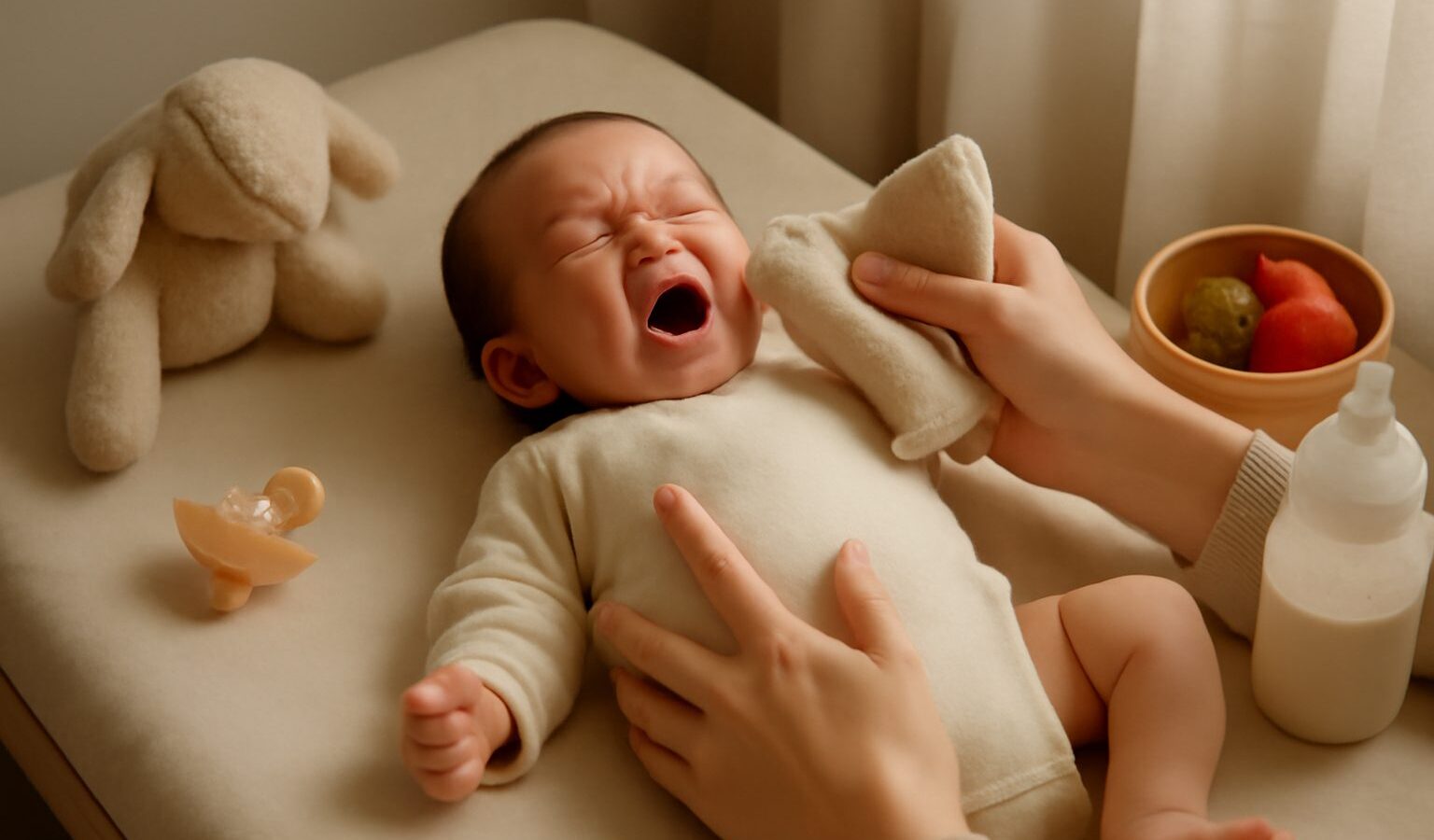
New parents notice everything. A tiny sneeze, a bout of baby hiccups that seems to go on forever, a little snuffle at night, and suddenly you are searching online at 3am. The good news is that hiccups and sneezes are among the most common and usually harmless things newborns do.
This guide explains why babies hiccup and sneeze so often, simple ways to keep them comfortable, and the signs that mean it is time to check with a doctor. It is general information, not medical advice. If you are ever worried about your baby, trust your instincts and speak to a doctor, polyclinic or your baby’s paediatrician.
Why Babies Hiccup So Often
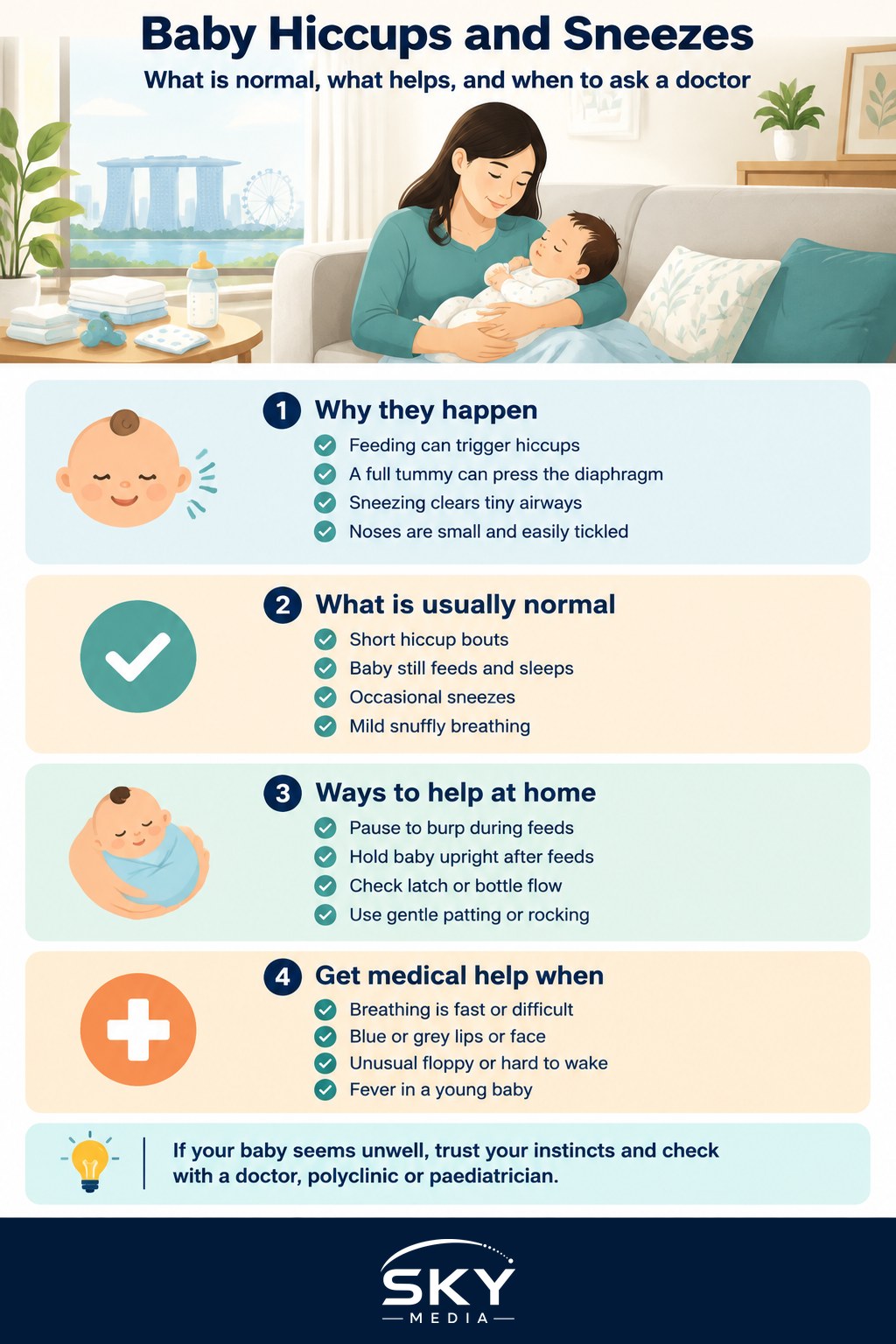
Hiccups happen when the diaphragm, the muscle below the lungs, contracts suddenly and the vocal cords snap shut, making the familiar “hic” sound. In babies, this is very common, and many parents even felt hiccups during pregnancy.
Common triggers include:
- Feeding. Hiccups often appear during or after a feed, especially if a baby feeds quickly or swallows air.
- A full tummy. A stretched stomach can press on the diaphragm.
- Excitement or temperature changes. Some babies hiccup after laughing, crying or a change from warm to cooler air.
- Immature systems. A newborn’s nervous system and digestive system are still developing, which makes hiccups more frequent in the early months.
Most babies are not bothered by hiccups at all. They may carry on feeding, sleeping or looking around while hiccupping. Bouts usually pass on their own, and they tend to become less frequent as babies grow.
Why Newborns Sneeze So Much
A sneezing baby does not necessarily mean a cold. Sneezing is one of the main ways newborns keep their airways clear.
- Small nasal passages. Newborn noses are tiny, so even a little milk, mucus or dust can tickle them.
- Clearing amniotic fluid and mucus. In the first days and weeks, sneezing helps clear leftover fluid.
- Breathing through the nose. Young babies mostly breathe through their noses, so keeping them clear matters.
- Irritants. Dust, strong scents, smoke, and air conditioning that dries the air can all cause sneezing.
Occasional sneezing without other symptoms is generally normal.
Normal vs Worth Checking With a Doctor
The table below gives a general guide. It is not a diagnostic tool. When in doubt, ask a healthcare professional.
| What you notice | Usually normal | Worth checking with a doctor |
|---|---|---|
| Hiccups | Short bouts, baby seems content, feeding and sleep are fine | Hiccups with frequent vomiting, distress during feeds, arching or poor weight gain |
| Sneezing | Occasional sneezes, baby feeds and breathes comfortably | Sneezing with fever, persistent runny nose, cough or difficulty feeding |
| Snuffly breathing | Mild noisy breathing that clears, especially after feeds | Fast breathing, flaring nostrils, grunting, or skin pulling in between the ribs |
| Spitting up | Small amounts after feeds in a happy, growing baby | Forceful or green vomit, blood, or signs of dehydration such as far fewer wet nappies |
| Fussiness | Settles with feeding, burping or cuddles | Inconsolable crying, unusual drowsiness or floppiness |
For newborns, fever is a particular concern. If a young baby has a fever, contact a doctor promptly, and seek urgent care for very young infants as advised by your healthcare provider.
Gentle Ways to Ease Baby Hiccups
Hiccups usually stop without any help, but these general tips may make feeds more comfortable:
- Pause and burp. Take breaks during feeds to burp your baby, especially if they gulp quickly.
- Keep baby upright after feeds. Holding your baby upright for a short while after feeding may help.
- Check the latch or bottle. For breastfed babies, a good latch reduces swallowed air. For bottle-fed babies, check that the teat flow suits your baby’s age and that the bottle is tilted so the teat is full of milk.
- Feed before baby is frantic. Very hungry babies tend to gulp. Watch for early hunger cues like rooting and hand sucking.
- Offer comfort. Gentle patting or rocking can help a baby relax.
Things to avoid: old remedies such as startling a baby, pulling the tongue, pressing on the eyes or giving water or other drinks to young babies. Ask your doctor or nurse before giving anything other than breast milk or formula to a young infant, and do not give any medicine unless advised by a doctor.
Helping a Sneezy or Snuffly Baby
If your baby sneezes a lot or sounds blocked:
- Keep the air clean. Avoid smoking around your baby and keep strong fragrances to a minimum.
- Mind the air conditioning. Cold, dry air can irritate the nose. Some families find a comfortable room temperature and good airflow helpful.
- Dust regularly. Wipe surfaces, wash soft toys and change bedding to reduce dust.
- Ask about saline. Doctors sometimes suggest saline drops for a blocked nose. Ask your doctor or pharmacist before using them, and follow their instructions.
If your baby uses a baby monitor, it can help you keep an ear on night-time breathing sounds. Our guide to choosing a baby monitor covers what features to look for, but no device replaces checking on your baby and seeking medical advice when you are concerned.
When to Seek Medical Help Urgently
Call 995 or go to the nearest emergency department immediately if your baby:
- Has difficulty breathing, is breathing very fast, or the skin pulls in around the ribs or neck.
- Has blue or grey lips, tongue or face.
- Is unusually floppy, difficult to wake or unresponsive.
- Has a seizure.
For less urgent concerns, contact your GP, a polyclinic or your paediatrician. HealthHub, the Ministry of Health’s health information portal, also has trusted parenting and child health information.
Using Check-Ups to Ask Questions
Your baby will have regular developmental check-ups and vaccinations in the first year, typically recorded in the child health booklet and on HealthHub. These visits are a good time to ask about hiccups, sneezing, feeding and growth. Write down your questions beforehand so you do not forget, and note how often things happen and how your baby behaves.
If you are still preparing for your baby’s arrival, our guide to preparing for your first baby covers what to set up and what to expect in the early weeks. Later on, when gums get sore, our piece on teething and soothing your baby can help.
Trust Yourself and Ask for Help
Baby hiccups and newborn sneezes are part of normal life with a small baby, and most pass quickly without any fuss. Knowing what is typical helps you relax, while knowing the warning signs helps you act fast when something is not right. No question is too small to ask a doctor or nurse, and seeking reassurance is part of caring well for your baby.
Frequently Asked Questions
How long can baby hiccups last before I should worry? Short bouts that pass on their own are normal, and babies often carry on feeding or sleeping through them. Worry if hiccups come with frequent vomiting, distress during feeds, arching or poor weight gain. Mention persistent hiccups at your baby’s next check-up.
Is it safe to give a hiccupping baby a little water? It is best not to. Ask your doctor or nurse before giving young infants anything other than breast milk or formula. Hiccups usually stop without help, and pausing to burp or holding baby upright after a feed is gentler.
Does a sneezing newborn mean they have caught a cold? Not necessarily. Sneezing is one of the main ways newborns clear tiny nasal passages of milk, mucus, dust or leftover fluid. See a doctor if sneezing comes with fever, a persistent runny nose, cough or difficulty feeding.
Can air conditioning make my baby sneeze or sound blocked? It can. Cold, dry air may irritate a baby’s nose, as can dust, smoke and strong scents. A comfortable room temperature, good airflow and regular dusting help. Ask your doctor or pharmacist before using saline drops.
What breathing signs mean I should go to A&E with my baby? Call 995 or go to the nearest emergency department if your baby has difficulty breathing, breathes very fast, has skin pulling in around the ribs or neck, or has blue or grey lips, tongue or face. Floppiness or being hard to wake is also urgent.
Official sources: HealthHub