
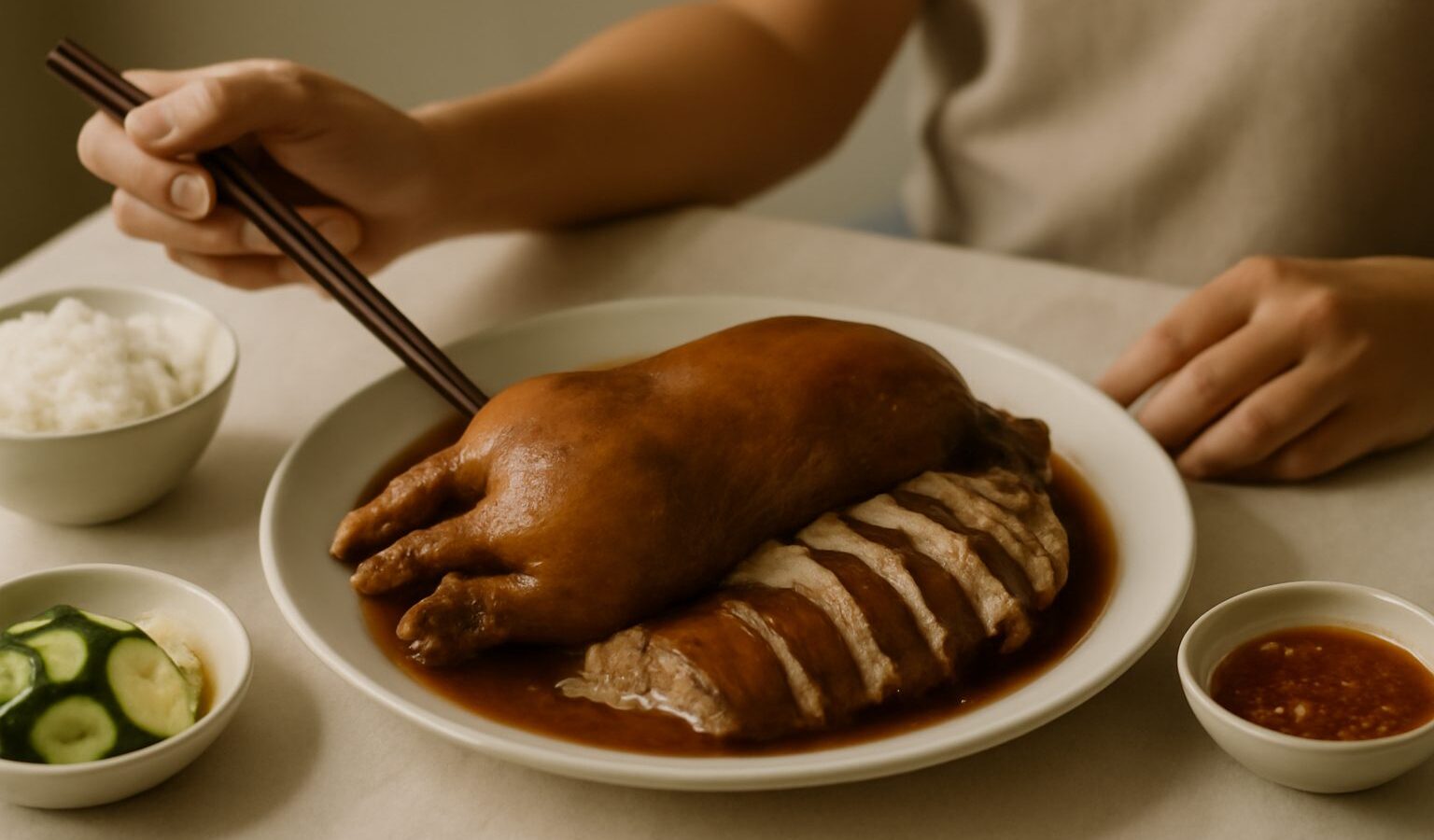
Tender slices of duck, deeply savoury from hours in a dark, aromatic master stock, served over rice or with a bowl of that same braising liquid ladled on top. Teochew braised duck is one of the great comfort dishes of the local table, gentle in spice yet full of depth. For anyone exploring braised duck singapore has to offer, understanding the Teochew tradition behind it makes every plate more rewarding.
This guide explains what the dish is, the master stock at its heart, how it is served, and how to recognise a good version.
What Teochew Braised Duck Is
Braising, or lou, is a cornerstone of Teochew cuisine in Singapore, a style brought by immigrants from the Chaoshan region of eastern Guangdong in China. The Teochew people are known for cooking that respects the natural taste of ingredients, favouring balance and subtlety over heavy seasoning. Their braised dishes reflect this, aromatic and savoury rather than fiery.
The dish centres on duck simmered slowly in a spiced soy based master stock until the meat turns tender and takes on a rich, mahogany colour. Alongside the duck, the same pot often braises other items such as eggs, firm bean curd, and pork, so a plate can come with a small spread of braised accompaniments. The result is homely and deeply satisfying, the sort of food families cook for gatherings and reunion meals.
Teochew braised duck differs from other braised meats in its restraint. Where some styles lean heavily on star anise or five spice, the Teochew version aims for harmony, letting the duck and the fragrant stock speak clearly.
The Master Stock at Its Heart
The soul of the dish is the lou stock, sometimes called a master stock. This is a braising liquid built from dark and light soy sauce, sugar, and a blend of aromatics that typically includes galangal, garlic, star anise, cinnamon, and other spices. Many kitchens keep and reuse their stock, topping it up and re braising with each batch so it grows deeper and more complex over time. A well maintained master stock is a point of pride, its flavour developed through countless rounds of cooking.
Galangal is an especially Teochew touch, giving the braise a distinctive fragrance that sets it apart from other regional styles. The duck is simmered gently so the meat absorbs the stock without drying out, then rested and sliced to order.
A good stock is dark and glossy, savoury and slightly sweet, with a warm spice aroma that lingers. It is used not only to cook the duck but also as a sauce, spooned over the meat and rice to tie the plate together.
How It Is Served
You will find braised duck served in a few common ways. The simplest is duck rice, sliced duck over plain or lightly flavoured rice, with a drizzle of the braising liquid and often a side of chilli and garlic sauce. This overlaps with the broader world covered in our duck rice guide for Singapore, where you can compare styles.
Another popular form is a plate of sliced duck served on its own, meant for sharing, accompanied by braised eggs, tofu, and sometimes braised pork or innards for those who enjoy them. A bowl of the braising liquid may come alongside as a light soup or dipping sauce.
The classic condiment is a tangy garlic and vinegar chilli, which cuts through the richness of the meat and brightens each bite. Some stalls also serve the duck with kway chap, flat rice sheets in a bowl of braising broth, making a heartier meal.
How to Eat and Order It
Ordering is straightforward. You can ask for duck rice as a single serving, or order a plate of sliced duck to share with braised sides. If you prefer certain cuts, many stalls will accommodate a request for more meat or leaner portions. The braised eggs and tofu are worth adding, since they carry the same lovely stock flavour.
Eat the duck with a little of the chilli and vinegar sauce, and use the braising liquid to moisten the rice. The dish is filling and savoury, so a simple vegetable or a bowl of soup rounds it out nicely. If you are new to these stalls, our notes on how to order at a hawker centre in Singapore cover the practical steps.
What to Look For in a Good Plate
Tenderness is the first sign of care. Well braised duck should be moist and yield easily, never tough or dry, a result of gentle, patient cooking. The colour should be a deep, appealing brown, and the meat should taste thoroughly of the stock rather than plain underneath.
The braising liquid tells you about the master stock. A good one is fragrant with galangal and spice, balanced between savoury and sweet, and rich without being cloying. The chilli sauce should be sharp and garlicky to provide contrast.
You will typically find Teochew braised duck at hawker centres, coffeeshops, and casual eateries, some run by families who have kept the same stock going for years. A few long established specialists are well known for the dish, though stalls, hours, and offerings change over time, so check current listings and recent reviews before making a trip. Find a stall with a well loved master stock, and you will understand why this quiet, aromatic dish holds such a treasured place at the local table.