
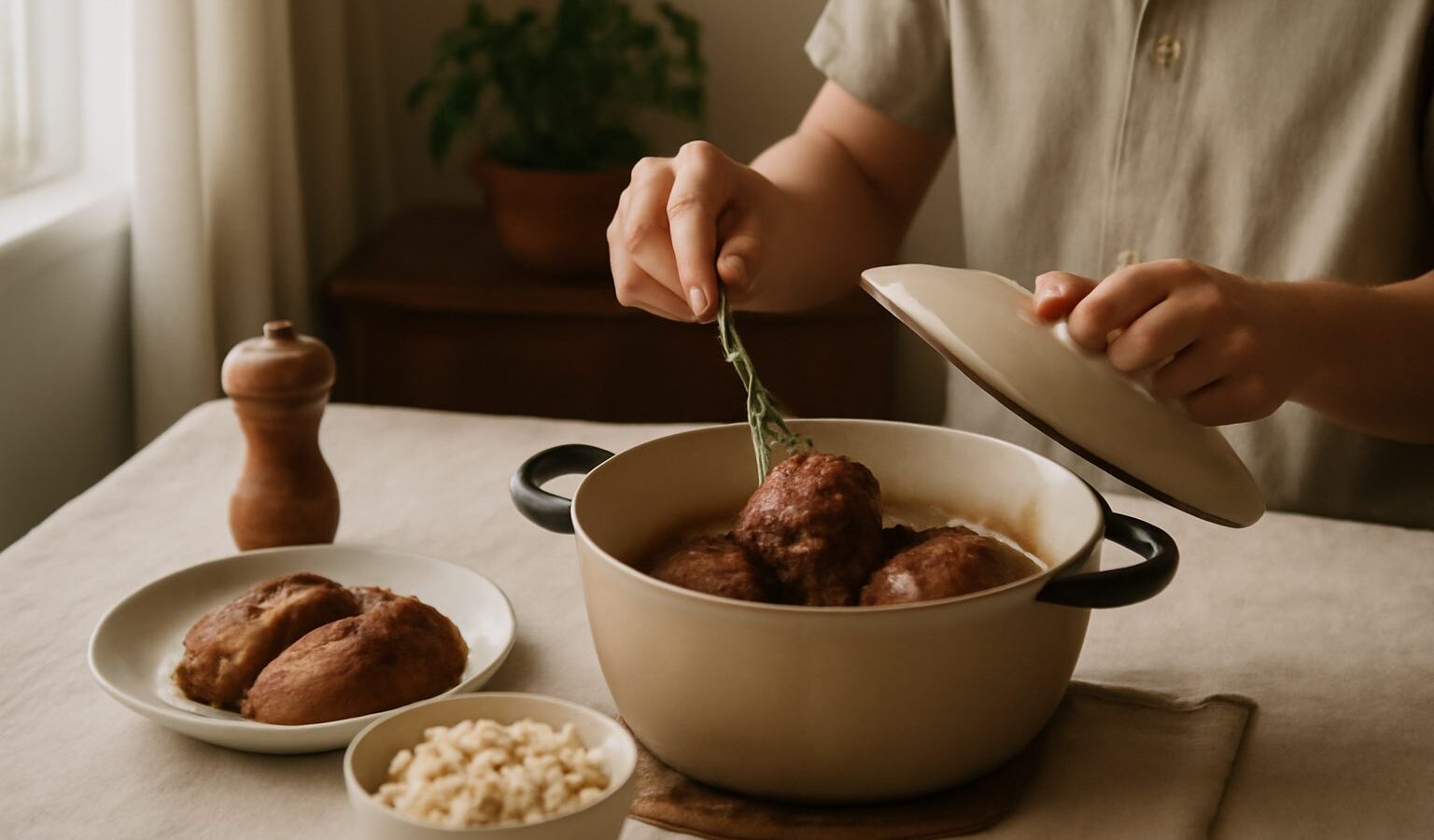
Braising is kitchen alchemy. It takes the cheapest, toughest cuts of meat, the ones that look unpromising at the wet market, and turns them into fall-apart, deeply savoury comfort food. Think of the soy-braised pork many families simmer for hours, the kind that perfumes the whole corridor and tastes even better the next day. Braising meat in Singapore is also wonderfully practical: it is mostly hands-off, uses one pot, forgives imprecise timing, and reheats beautifully. If you have only ever grilled or stir-fried, learning to braise unlocks a whole category of hearty home meals. Here is how the technique works and how to get tender results every time.
Why Tough Cuts Are The Right Choice
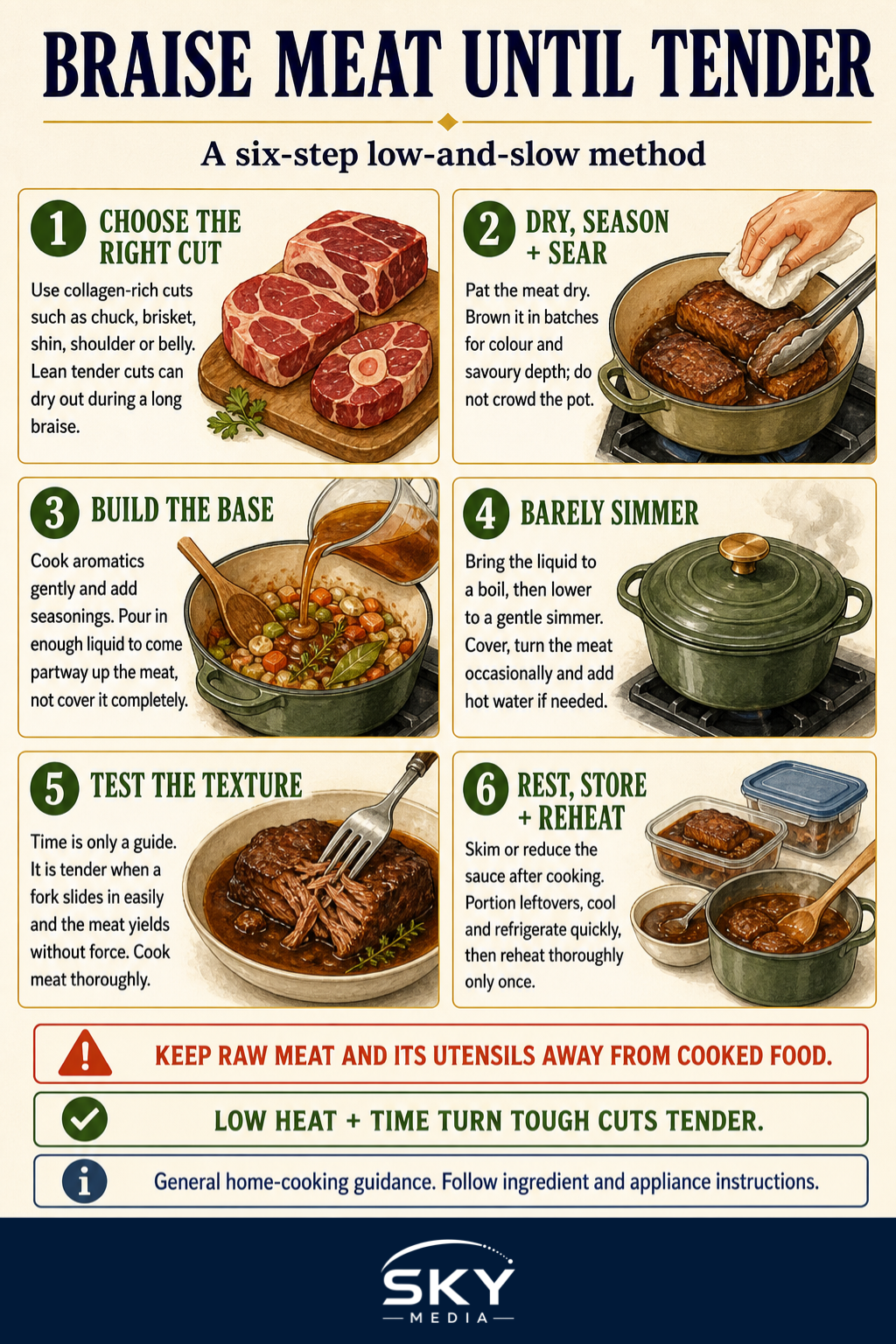
It sounds backwards, but braising is one place where the cheap cut beats the expensive one. Lean, tender cuts like fillet dry out and toughen with long cooking, while tough, hard-working cuts such as pork belly, shoulder, shank, beef brisket, chuck and shin are full of connective tissue and collagen. Given long, gentle, moist heat, that collagen slowly melts into gelatine, which is what gives braised meat its silky, lip-sticking richness and keeps it moist. Rush it with high heat and the meat just seizes up and stays chewy; the whole point is patience.
At the wet market or supermarket, ask for or look out for these cuts and do not be put off by visible fat and sinew, because that is exactly what breaks down into flavour and body. Cuts on the bone add even more depth to the liquid. Buy a piece with a good mix of lean and fat for the best texture. Because these cuts are inexpensive, braising is also a friendly way to feed a family or batch-cook for the week without spending much.
The Braising Method Step By Step
Braising follows a clear rhythm: sear, build the base, add liquid, then simmer low and slow. Here is the reliable sequence.
- Dry and season the meat. Pat it dry so it browns rather than steams, and season it.
- Sear on high heat. In a heavy pot with a little oil, brown the meat on all sides in batches. This step builds the deep, savoury flavour and colour; do not skip it.
- Build the aromatic base. Lower the heat and cook your aromatics, garlic, ginger, shallot, and any whole spices, until fragrant.
- Add liquid and seasonings. Pour in your braising liquid, such as water or stock with light and dark soy, a little sugar, and aromatics. It should come partway up the meat, not fully cover it.
- Bring to a boil, then drop to a bare simmer. You want the gentlest bubbles, not a rolling boil. Cover the pot.
- Cook low and slow. Let it simmer gently, turning the meat now and then, until a fork slides in with almost no resistance. This takes a good while and cannot be rushed.
- Rest and skim. Let it settle, skim excess fat from the surface, and reduce the liquid a little if you want a thicker sauce.
You can do this on the stovetop at the lowest steady flame, which is easy to monitor in a small kitchen. A heavy pot with a tight lid holds gentle heat best and stops the liquid drying out.
Building Deep Flavour
The liquid is where a braise gains its soul, and Singapore pantries are perfectly stocked for it. A classic savoury braise leans on light soy for salt, dark soy for colour and body, a little rock sugar or regular sugar for balance, and aromatics like ginger, garlic, star anise, cinnamon and white pepper. A splash of Shaoxing-style cooking wine adds fragrance, and a few pieces of dried shiitake or a little dried shrimp lend background umami. Taste as it cooks and adjust near the end, since the liquid concentrates as it reduces and can turn salty if you seasoned heavily at the start.
Use the table below to match cut and approach, treating times as rough guidance rather than fixed rules, because size and heat vary.
| Cut | Character | Braising approach |
|---|---|---|
| Pork belly | Rich, fatty, tender | Low and slow until fat is soft and jiggly |
| Pork shoulder | Meaty, some fat | Long simmer until it shreds easily |
| Beef brisket or shin | Firm, collagen-rich | Longest, gentlest cook for silky texture |
| Chicken thigh or wing | Quicker, stays moist | Shorter braise; do not overcook to dryness |
| Beef chuck | Well-marbled, hearty | Slow simmer until fork-tender |
The doneness test is not the clock but the fork: when a fork or chopstick slides in and the meat yields with almost no push, it is ready. If it still resists, it simply needs more time and a little more liquid.
Common Mistakes, Storage And Safety
The biggest braising mistake is impatience: boiling hard instead of simmering gently, which makes meat stringy and dry rather than tender. Keep the heat low. The second is letting the pot run dry, so check the liquid now and then and top up with hot water if needed. Skipping the sear leaves the dish flat, and over-seasoning early leaves it too salty once reduced. If your sauce is thin at the end, lift out the meat and reduce the liquid on higher heat; if it is too salty, add water or a few chunks of potato or radish to absorb some salt.
Braising is ideal for making ahead, and it genuinely improves overnight as the flavours meld. Cool it down promptly rather than leaving the pot out in our heat, then refrigerate; the fat will set on top and is easy to lift off before reheating. Reheat until piping hot right through, and only once. Make sure pork and chicken are fully cooked, keep raw meat separate from cooked, and when in doubt, throw it out. With a little patience and a heavy pot, braising meat in Singapore rewards you with tender, comforting one-pot meals, and your first attempt only gets better as leftovers.
Explore more
Braises love a plain, comforting partner. Ladle yours over fluffy stovetop rice, deepen the flavour base with homemade stock and broth, and read how to marinate meat and seafood well to add another layer of flavour before the pot even goes on.
Frequently Asked Questions
Can I braise meat in a pressure cooker or slow cooker? Yes, both work well and suit busy households. Brown the meat and build the aromatic base first if the appliance allows, then follow the maker’s instructions for liquid and timing. A pressure cooker is faster, while a slow cooker is gentler and more hands-off.
Why is my braised meat still tough after cooking for a long time? It usually needs more time, or the liquid was boiling too hard rather than gently simmering. Tough cuts need patience for the collagen to break down. Add a little hot water, keep the heat low, cover the pot and test again with a fork.
How do I cut down the fat in braised pork without losing flavour? Chill the finished dish, then lift off the fat that sets on top before reheating. You can also trim some visible fat before cooking while leaving enough for texture, or choose a leaner cut such as shoulder. Skim the surface as it simmers.
Can I freeze braised meat and reheat it later? Yes, braises freeze well. Cool the dish promptly, portion it with some of the sauce, label it and freeze. Thaw in the fridge, then reheat gently until piping hot all the way through. Loosen the sauce with a splash of water if it has thickened.
What can I add to a braise to stretch it into a fuller meal? Hard-boiled eggs, tofu, radish, potatoes or mushrooms soak up the braising liquid well, and are good value. Add them partway through so they do not fall apart. Serve with rice and a plain green vegetable to balance the richness.