

New shoes look perfect in the shop, then turn on you halfway through the first day. Learning how to break in new shoes properly saves your heels, your toes and your mood, especially in Singapore, where heat and humidity make feet swell and skin softer, so friction blisters form faster. This guide covers stretching methods, preventing blisters before they start, and fixing shoes that rub at the heel.
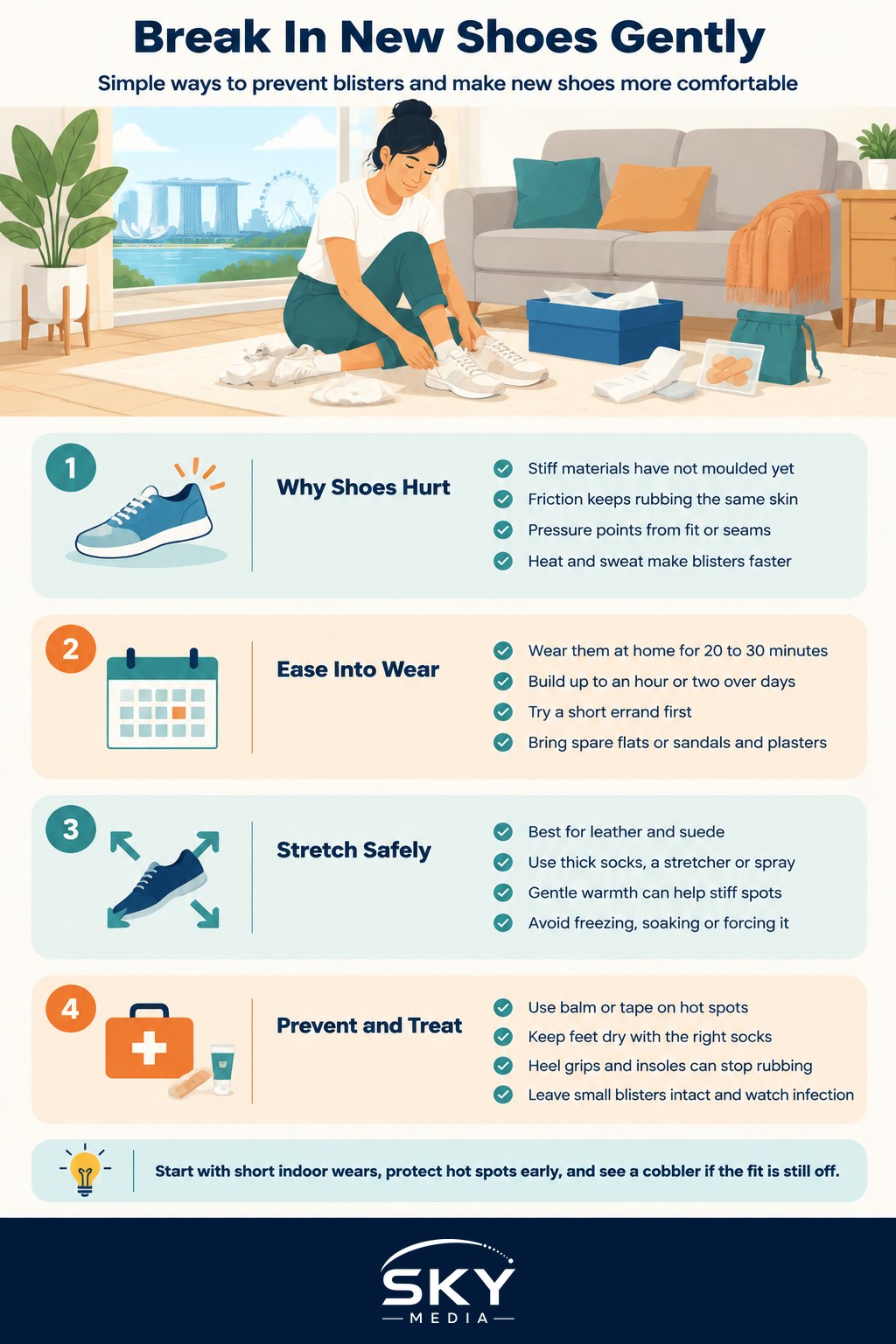
Why New Shoes Hurt in the First Place
Most discomfort comes from three things:
- Stiff materials: new leather, patent finishes and structured heel counters have not yet moulded to your foot.
- Friction: a shoe that slips slightly with each step rubs the same patch of skin hundreds of times.
- Pressure points: a narrow toe box, a seam in the wrong place or a strap that digs in.
Heat adds to all three. Feet tend to swell later in the day and after a long walk, which is why shoes that felt fine at 10am pinch by 6pm. Damp skin also blisters more easily than dry skin, so sweat matters more here than in cooler climates.
Start Indoors and Build Up Gradually
The single most effective method is also the simplest: wear new shoes for short periods at home before you trust them outside.
- Day one to three: wear them indoors for 20 to 30 minutes, with the socks or hosiery you plan to wear.
- Next few days: extend to an hour or two, including some standing and stairs.
- First outing: a short errand close to home, not a full day at work or a wedding.
- Carry a backup: pack flats or sandals and plasters the first few times you go out.
Wearing shoes indoors also keeps the soles clean, which helps if you need to return or exchange them. Check the shop’s return policy before you scuff them outside.
Stretching Methods That Actually Work
If a shoe is slightly too snug, gentle stretching can help. It works best on natural leather and suede, less well on synthetics, and barely at all on patent leather or plastic.
| Method | Best for | How it works | Watch out for |
|---|---|---|---|
| Thick socks at home | Leather shoes slightly tight all over | Wear thick socks with the shoes for short periods so the material eases | Too long at once can cause the blisters you are avoiding |
| Shoe stretcher | Tight width or toe box | A wooden or plastic form left inside overnight, adjusted gradually | Over-stretching cannot be undone |
| Stretch spray plus wear | Leather pressure points | Spray softens fibres, then you wear or insert a stretcher | Test on a hidden area first for colour change |
| Gentle warmth plus wear | Stiff leather spots | Warm the spot briefly with a hairdryer while wearing thick socks, then walk | Heat can dry or crack leather; condition it afterwards |
| Professional stretching | Expensive or delicate shoes | A cobbler uses proper stretchers and knows the limits of each material | Ask what is realistic before you pay |
Skip home tricks like freezing bags of water inside shoes or soaking them; they can warp, stain or crack the material. If a shoe is more than slightly too small, stretching will not save it. For delicate pairs, a cobbler is a safer choice, and our guide to getting your shoes repaired in Singapore explains what to look for.
Preventing Blisters Before They Start
Blisters form when skin is rubbed back and forth while damp and warm. Cut any of those three and you lower the risk:
- Reduce friction: apply an anti-friction balm or stick to heels, toes and the sides of your feet before you set out.
- Pre-tape hot spots: if you know a shoe catches a certain spot, put a blister plaster or smooth tape there before walking, not after it hurts.
- Keep feet dry: use moisture-wicking socks, change them if they get damp, and consider foot powder on humid days.
- Use the right socks or liners: invisible liners for loafers and flats; proper sports socks for sneakers.
- Lace properly: loose laces let the foot slide forward and the heel lift. Retie sneakers snugly and try a heel-lock lacing pattern if your heel slips.
Stop as soon as you feel a hot, stinging spot. That warning sign usually comes before the blister, and covering it then can stop it forming.
Fixing Shoes That Rub at the Heel
Heel rubbing is the most common complaint, usually because the shoe is slightly loose at the back and the heel slips up and down. Try these fixes:
- Heel grips: adhesive pads stuck inside the back of the shoe fill the gap and add cushioning.
- Insoles or half insoles: lifting the foot slightly can hold it more firmly in the shoe.
- Tongue pads: for loafers and laced shoes, a pad under the tongue pushes the foot back into the heel cup.
- Soften the edge: for a stiff leather heel counter, gently working the back edge with your hands, or asking a cobbler to soften it, can help.
- Check the size: if the heel slips a lot, the shoe may simply be a half size too big.
For heels and dress shoes, also look at where the strap or vamp sits. A cobbler can sometimes add padding or adjust a strap.
Caring for a Blister if You Get One
Even with care, blisters happen. General first aid:
- Leave small blisters intact where possible; the skin on top protects against infection.
- Cover with a hydrocolloid blister plaster, which cushions and keeps the area clean.
- Rest the shoe for a few days and wear something open at that spot.
- Watch for signs of infection, such as increasing redness, warmth, swelling or pus, and see a doctor if they appear.
People with diabetes or poor circulation should take any foot blister seriously and get advice from a doctor or podiatrist rather than treating it themselves.
Different Shoes, Different Approaches
- Leather work shoes: expect a week or two of short wears; condition the leather and use shoe trees.
- Sneakers: usually need little breaking in; if they rub, check sizing and lacing first. For sports use, see choosing running shoes in Singapore.
- Heels: practise at home, use ball-of-foot cushions, and start with short events.
- Wedding or event shoes: buy early so you have weeks, not days, to wear them in; our guide to choosing wedding shoes and accessories has more tips.
Take your time to break in new shoes, protect the hot spots early, and know when a pair needs a cobbler’s help. Your feet will thank you on every long walk home from the MRT.
Further reading: Finding Shoes for Wide Feet in Singapore · Best Shoes for Walking in Singapore All Day