

Your toddler is crying hard after being told “no”, then suddenly goes silent, turns blue or pale, and goes limp in your arms. For many parents, the first breath holding spells toddler episode is one of the most frightening moments of early parenthood. The reassuring news is that these spells are common, the child starts breathing again on their own, and most children outgrow them completely.
This guide explains what is actually happening during a spell, how to respond in the moment, and why your doctor may want to check for iron deficiency anaemia. It is general information, not medical advice. If you are worried about your child, speak to your GP, a polyclinic doctor or a paediatrician.
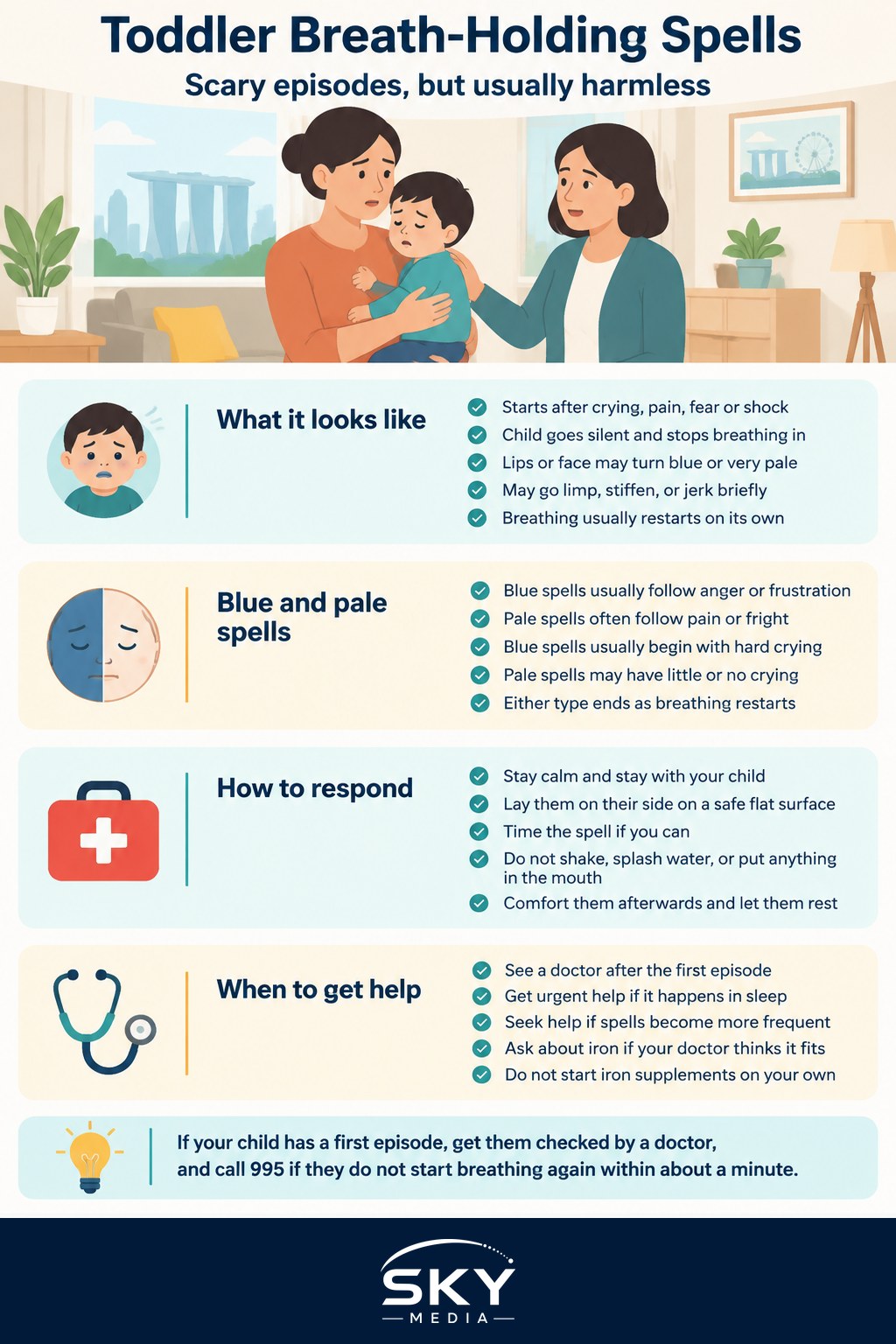
What Happens During a Breath-Holding Spell
A breath-holding spell is not a deliberate act and it is not the same as a tantrum, even though it often starts with one. The child is not “choosing” to stop breathing. It is a reflex response, usually set off by a strong emotion or a sudden shock.
A typical spell follows a pattern:
- The trigger: frustration, anger, fear, a bump or fall, or being startled.
- The cry: the child may cry hard for a few seconds, or barely cry at all.
- The pause: the child breathes out and does not breathe back in. They go silent.
- The colour change: lips and face turn blue or grey, or the child goes very pale.
- Going limp: some children lose consciousness briefly and flop. A few may stiffen or have a few jerking movements.
- Recovery: breathing restarts by itself, usually within a minute. The child may be sleepy or clingy afterwards.
Spells are most often seen in children between about six months and six years old, and tend to peak in the toddler years. They often run in families. Most children stop having them by school age.
Blue Spells and Pale Spells: The Two Main Types
Doctors generally describe two types of spell. Knowing which one your child tends to have helps you describe the episodes clearly when you see a doctor.
| Feature | Cyanotic (blue) spell | Pallid (pale) spell |
|---|---|---|
| Usual trigger | Anger, frustration, being told off, not getting their way | Sudden pain or fright, such as a knock on the head or a fall |
| Crying beforehand | Usually vigorous crying first | Little or no crying |
| Colour | Lips and face turn blue or dusky | Face turns white or very pale |
| What is going on | Breathing pattern during crying leads to low oxygen | A reflex briefly slows the heart rate |
| How common | The more common type | Less common |
Some children have both types at different times. Either way, the child’s body restarts breathing automatically. That is why the advice focuses on keeping your child safe rather than trying to “make” them breathe.
How to Respond in the Moment
The hardest part is staying calm when your instincts are screaming. Having a simple plan in your head helps, and it is worth sharing that plan with grandparents, your helper, or anyone else who looks after your child.
Do:
- Stay with your child and keep calm. Speak gently.
- Lay them on their side on a safe, flat surface, away from hard edges or furniture, so they cannot fall or hit their head.
- Note the time, or ask someone to time the spell. A spell often feels much longer than it is.
- Let the spell pass. Breathing will usually restart within about a minute.
- Comfort your child afterwards and let them rest if they are tired.
Do not:
- Shake your child, or blow or splash water on their face.
- Put anything in their mouth, including your fingers.
- Pick them up and run around in panic. Keeping them on their side is safer.
- Punish them afterwards. They did not do this on purpose.
Call 995 for an ambulance if your child does not start breathing again on their own within about a minute, does not wake up normally, has jerking movements that do not stop, or you are unsure whether this is a breath-holding spell at all. In an emergency, it is always better to call and be told it is fine.
If you have not done an infant and child first aid course, consider one. Knowing basic first aid makes these moments far less terrifying.
When to Get Your Child Checked, Including for Anaemia
Any child who has a first episode that looks like a breath-holding spell should be seen by a doctor, even if they recover fully. Spells are usually harmless, but a few other conditions, such as seizures or heart rhythm problems, can look similar. A doctor can take a history, examine your child and decide whether any tests are needed.
See a doctor sooner, or seek urgent care, if:
- The spell happened without any obvious trigger, or during sleep.
- Your child is younger than six months.
- The jerking or stiffness lasted longer than the colour change, or your child took a long time to come round.
- Spells are becoming more frequent or longer.
- There is a family history of fainting, sudden unexplained death at a young age, or heart rhythm problems.
- Your child seems unwell, pale or tired between spells.
Why anaemia comes up. Iron deficiency anaemia, where the body does not have enough iron to make healthy red blood cells, has been linked with breath-holding spells in research. Toddlers can be at risk, especially picky eaters or those who drink a lot of milk and eat few iron-rich foods. Your doctor may suggest a simple blood test to check iron levels. If your child is low on iron, treating it may reduce how often spells happen.
Please do not start iron supplements on your own. Too much iron is dangerous for young children, and the right treatment and amount should come from your doctor. HealthHub, Singapore’s official health information portal, also has general guidance on toddler nutrition.
Living With Spells Day to Day
Once a doctor has confirmed that your child is having breath-holding spells, the main job is managing your own worry and keeping daily life normal.
- Keep routines steady. Tired, hungry toddlers have shorter fuses. Regular naps and meals can reduce meltdowns that lead to spells.
- Do not give in to avoid a spell. It is tempting, but if every “no” becomes a “yes”, toddlers learn little about limits and tantrums tend to grow. Stay kind, calm and consistent.
- Brief every caregiver. Grandparents, helpers and infant care or preschool teachers should know what spells look like and what to do. Write the steps down and keep them by the door. If family members disagree on how to handle tantrums, a calm family meeting can help everyone agree on one approach.
- Keep a simple log. Note the date, trigger, colour, how long it lasted and how your child recovered. A short phone video, if safe to take, can be very useful for your doctor.
- Plan for travel. Spells can happen anywhere, including on a plane or in a hotel. Our guide to travelling with a toddler from Singapore covers how to prepare, and it is worth noting the local emergency number at your destination.
Looking After Yourself as a Parent
Watching your child go limp is distressing, and many parents feel shaken for hours afterwards. That reaction is normal. Talking it through with your partner, a friend or your child’s doctor can help. If anxiety about the next spell is affecting your sleep or how you parent, mention it to your GP. You do not have to carry that worry alone.
Most importantly, remember the outlook: breath-holding spells are common, the child resumes breathing on their own, and the large majority of children simply grow out of them. With a doctor’s check, a calm plan and well-briefed caregivers, you can get through this stage with confidence.
Frequently Asked Questions
Can breath-holding spells damage my toddler’s brain? Breath-holding spells are generally considered harmless, and the child starts breathing again on their own within a short time. They do not usually cause brain damage. Seek urgent help if a spell lasts longer than usual or your child does not recover normally.
Is a breath-holding spell the same as epilepsy? No, but a spell with stiffening or jerking can look like a seizure, which is why a doctor should assess the first episode. The history of what happened before the spell helps the doctor tell them apart. Further tests are only arranged if the doctor feels they are needed.
Can I stop a spell by distracting my toddler before a meltdown? Sometimes. Noticing the early signs of frustration and redirecting your child with a calm voice or a change of activity may head off a tantrum. There is no guarantee, since spells can happen suddenly after a fright or a knock, so do not blame yourself.
Do breath-holding spells mean my child has a heart problem? Usually not. Pallid spells involve a reflex that briefly slows the heart, but this is typically harmless. Doctors check for other causes when the spell is unusual, happens without a trigger or when there is a family history of heart rhythm problems. Any tests will be decided by your doctor.
Are spells more dangerous near water or in a car seat? They can be, because a limp child in water or in an unsafe position needs immediate attention. Never leave a toddler unattended in a bath or pool, and make sure any adult driving knows what to do. If a spell happens in a car, stop safely before attending.
Official sources: HealthHub
Further reading: Head Banging and Body Rocking in Toddlers: Is It Normal? · Bow Legs and Knock Knees in Young Children: What Is Normal and When to Check · Toe Walking in Toddlers: When It Is Normal and When to Check