
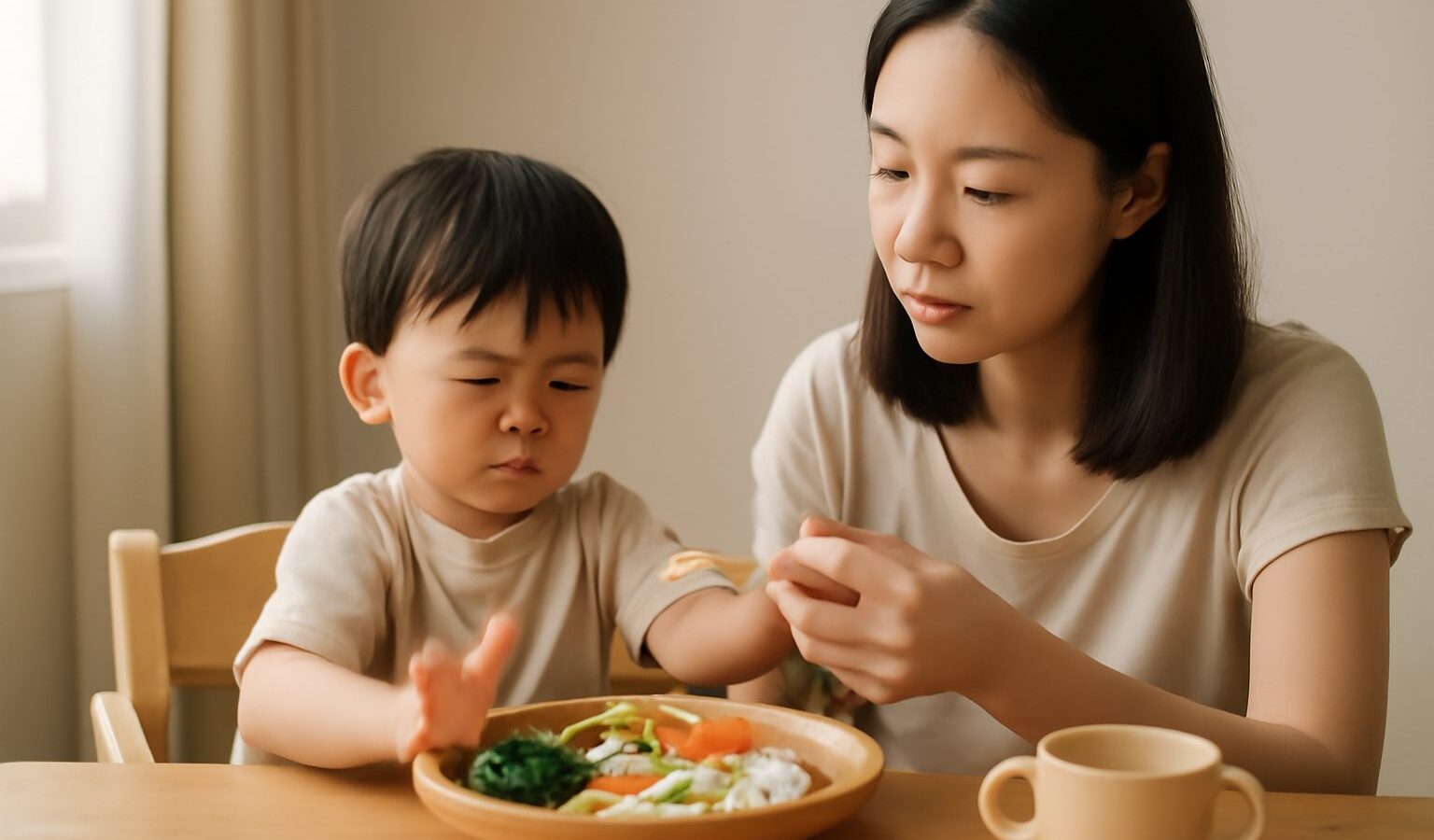
If your one meal-loving baby has turned into a toddler who pushes away the plate, folds their arms, and lives on rice and one type of biscuit, you are far from alone. Fussy eating toddlers Singapore parents worry about are incredibly common, and in most cases this is a normal stage rather than a sign that something is wrong. Toddlers are learning to say no, they grow more slowly than babies do, and new foods can feel genuinely strange to them. This guide offers calm, practical ways to make mealtimes gentler for everyone, plus clear signs that it is worth speaking to a doctor.
Why Toddlers Suddenly Become Picky
Somewhere between one and three years old, many children become far choosier about food, and there are good reasons for it. Growth slows dramatically after the first year, so a toddler simply needs less food than their appetite once demanded. At the same time, they are discovering that they have opinions and that saying no gets a big reaction. Food becomes one of the few things a small person can fully control.
There is also a natural wariness of unfamiliar foods, sometimes called food neophobia, which peaks in the toddler years. It once helped keep curious little humans from eating something harmful, and today it shows up as suspicion of anything green or anything that touches something else on the plate. Textures, smells, and even the shape of a cut carrot can all trigger a firm refusal. Knowing this is developmental, and not a reflection of your cooking or parenting, takes a lot of the sting out of it.
Setting Up Calmer Mealtimes at Home
You cannot make a toddler eat, but you can shape the whole environment around the meal so that eating feels safe and low pressure. A helpful idea from feeding experts is the division of responsibility: you decide what food is offered, and when and where, while your child decides whether to eat and how much. Holding that line protects both of you from daily battles.
Small, steady routines matter more than any single meal. Try these gentle habits:
- Offer meals and snacks at roughly the same times so hunger has a chance to build. Grazing all day on milk or snacks is a common appetite-killer in Singapore homes where food is always within reach.
- Serve one item you know your child usually accepts alongside the new or less-loved food, so the plate never feels threatening.
- Keep portions tiny. A toddler-sized serving is much smaller than adults expect, and a heaped plate can feel overwhelming.
- Eat together where you can. Toddlers learn by copying, and seeing you, grandparents, or the helper enjoy the same food matters.
- Let them get messy. Squishing, licking, and sniffing are all part of getting comfortable with a new food.
Avoid turning dessert into a reward or vegetables into a punishment, as this quietly teaches children that the treat is the prize and the healthy food is the price.
What to Try, and What to Skip
When you are tired and worried, it is tempting to bargain, bribe, or spoon food in while your toddler is distracted by a screen. These often work once and backfire later. The table below sorts common responses into approaches worth trying and ones that tend to make fussy eating harder over time.
| Situation | Gentle approach to try | Better to skip |
|---|---|---|
| Child refuses a new food | Offer it again another day, no comment, alongside a liked food | Forcing “just one bite” or a standoff |
| Child eats very little at a meal | Trust their appetite, end the meal calmly | Chasing them around with a spoon |
| Child only wants one favourite food | Keep offering variety in small amounts | Cooking a separate special meal every time |
| Mealtime turns into a battle | Stay warm and neutral, remove pressure | Bribing with sweets or screen time |
| Child throws or plays with food | Calmly end the meal, try again next time | Big reactions, telling off, or begging |
Repeated, pressure-free exposure is the real workhorse here. A child may need to see a food many times before they will try it, so keep gently reoffering without making a fuss. Cooking or shopping together, growing a pot of herbs on an HDB windowsill, or letting them help wash vegetables can also make food feel friendly rather than forced.
Keeping It in Perspective
On the hard days, remember that toddlers are surprisingly good at balancing their intake across a week rather than a single meal. One day of near fasting followed by a big-eating day is common and usually fine. Look at the overall picture over several days instead of scoring each plate.
It also helps to protect your own patience. Feeding a small child is one of the most repetitive, emotionally loaded jobs of early parenting, and it is normal to feel rejected when your careful cooking is refused. Share the load with your partner, grandparents, or helper, swap the stressful meals when you can, and celebrate the small wins, such as a lick of a new food or a calmer table. Fussy eating almost always eases with time as children mature and widen their tastes.
When to Speak to a Doctor
Most fussy eating is a normal phase, but some signs mean it is worth getting professional advice rather than waiting it out. This article is general information and not medical advice, so please check with a doctor about your own child. Speak to a GP, paediatrician, or a dietitian, or visit KKH or a polyclinic, if:
- Your child is losing weight, or not gaining weight and growing as expected.
- Their diet is extremely restricted, for example only a handful of foods, or they refuse whole food groups for a long time.
- You are genuinely worried about their growth, energy, or nutrition.
- Eating triggers gagging, choking, coughing, or pain, which can point to an underlying issue.
- Refusal comes with other worries such as poor weight, tiredness, or developmental concerns.
Never force-feed or pressure a child to finish, as this tends to increase anxiety around food and can be unsafe. If you are unsure, a doctor can check growth and reassure you or guide next steps. Trust your instincts: you know your child best, and asking for help early is always a sensible move.
Explore more
Mealtimes rarely happen in isolation, so it can help to read alongside our guide to toddler-friendly meals and snacks for practical ideas the whole family can share. If refusals often boil over into bigger emotions, our advice on managing toddler meltdowns and on building a toddler daily routine can help you keep the day calm and predictable.