

Few things alarm a parent like hearing a thud, thud, thud from the cot at bedtime and finding your child rhythmically knocking their head against the headboard. Toddler head banging and body rocking look worrying, but in most children they are a passing habit that fades on its own. Knowing why it happens, how to keep your child safe and which signs deserve a closer look will help you respond calmly.
This article is general information, not medical advice. If you are concerned about your child, speak to your family doctor, a polyclinic or a paediatrician.
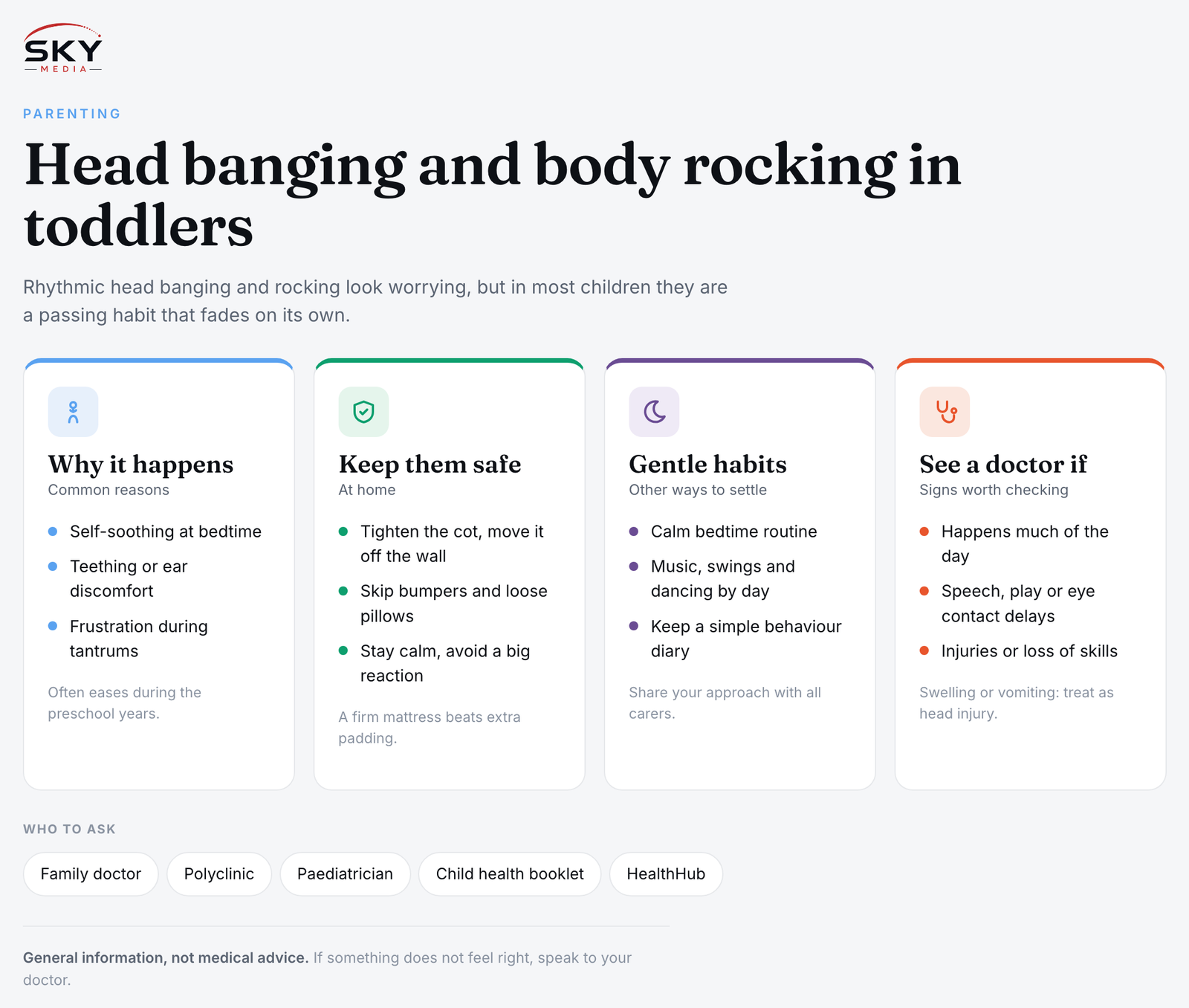
Why Toddlers Bang Their Heads or Rock Their Bodies
Rhythmic movements are surprisingly common in babies and toddlers. They often begin somewhere in the second half of the first year and tend to ease off during the preschool years. Children may rock on hands and knees, sway while sitting, roll their heads from side to side or bang their heads against a mattress, cot rail, wall or floor.
Common reasons include:
- Self-soothing. The steady rhythm is calming, a bit like being rocked in your arms. Many children do it while falling asleep or when they wake in the night.
- Sensory enjoyment. Some toddlers simply like the feeling of movement and pressure.
- Discomfort. A child who is teething or has an ear infection may rock or bang their head, possibly as a distraction from pain.
- Frustration and big feelings. Toddlers have strong emotions and limited words. Banging their head during a tantrum can be a way of releasing frustration.
- Attention. If the behaviour reliably brings a parent running, a child may learn that it works, even without meaning to.
In a typically developing child, these habits usually happen at predictable times, such as bedtime, naps or moments of upset, and the child is otherwise happy, playful and meeting milestones.
Keeping Your Child Safe
Most children who bang their heads do not hurt themselves seriously, because they tend to stop before it becomes painful. Still, a few practical steps reduce the risk of bumps and help everyone sleep better.
- Check the cot. Make sure it is sturdy, the screws are tight and it is not moving across the floor with the rocking. Move it slightly away from the wall if it knocks against it, which also reduces noise for neighbours in HDB flats.
- Skip the bumpers and pillows. Padded cot bumpers and loose pillows are not recommended for young children because of suffocation and entrapment risks. A firm mattress and a clear sleep space are safer than extra padding.
- Create a calm wind-down routine. A predictable bedtime routine with a bath, a story and quiet time can give your child other ways to settle.
- Offer rhythm in other ways. Music, rocking chairs, swings at the playground and dancing during the day may satisfy some of the need for movement.
- Stay calm and low-key. Gently move your child away from a hard surface if needed, but avoid a big reaction or scolding. Heavy attention can reinforce the habit.
- Look for discomfort. If the banging is new and your child is also fussy, pulling at an ear or teething, a check with the doctor may help.
If your child does knock hard and you see swelling, vomiting, unusual drowsiness or a change in behaviour, treat it as a head injury. Our guide on what to do when your child bumps their head explains which signs need urgent care.
Typical Habit or Something to Check?
The table below gives a rough guide. It is not a diagnostic tool, and any worry you have is a good enough reason to see a doctor.
| More typical of a passing habit | Worth raising with a doctor |
|---|---|
| Happens mainly at bedtime, naps or during tantrums | Happens through much of the day, stopping play or learning |
| Child is otherwise happy, social and meeting milestones | Delays in speech, play, eye contact or responding to name |
| No injuries beyond the odd red mark | Bruises, cuts, swelling or repeated injuries |
| Gradually reduces as the child grows | Continues strongly beyond the preschool years or gets worse |
| Child can be distracted with other activities | Child seems unaware of surroundings or cannot be redirected |
| Started around the usual age and stayed stable | Child loses skills they previously had |
When to Check for Development Concerns
In some children, repetitive movements are one part of a wider picture. Head banging or rocking on its own is not a sign of a developmental condition, but it is worth looking at alongside other signs.
Speak to your doctor if you notice:
- Communication concerns, such as few words for age, not pointing to show you things, or not responding to their name.
- Social differences, such as limited eye contact, little interest in shared play, or seeming to prefer to be alone most of the time.
- Other repetitive behaviours, such as hand flapping, lining up toys intensely or great distress at small changes in routine.
- Loss of skills the child already had, at any age.
- Sleep problems that are severe, such as very frequent waking with prolonged rocking that leaves the child exhausted.
- Hearing or vision concerns, since a child who cannot hear or see well may seek more sensory input.
In Singapore, routine developmental checks are part of your child’s regular health visits, and milestones are recorded in the child health booklet, which you can also view on HealthHub. Bring up any concerns at these visits, or book an appointment with your family doctor, polyclinic or paediatrician. If further assessment is needed, the doctor can refer you to a child development service at a public hospital. Early checks are reassuring when all is well and helpful when support is needed.
Practical Tips for Parents
- Keep a simple diary. Note when the behaviour happens, how long it lasts and what came before it. Patterns often become obvious and are useful to show the doctor.
- Name feelings. During tantrums, simple words like “You are angry” help toddlers learn other ways to express themselves over time.
- Watch screen time and sleep. An overtired child is more likely to rock or bang at bedtime. Consistent sleep times help.
- Share information with carers. Let grandparents, helpers and infant care staff know how you respond so the approach is consistent.
- Be patient. Most children grow out of the habit gradually, and reacting calmly helps it fade sooner.
Other Normal but Worrying Toddler Habits
Toddler development is full of things that look odd but are usually harmless, from walking on tiptoes to curved legs. If you are working through a list of worries, our guides to toe walking in toddlers and bow legs and knock knees in young children explain what is typical and when to check.
Trust your instincts. You know your child best, and a short conversation with a doctor is always worthwhile if something does not feel right.
Frequently Asked Questions
At what age does toddler head banging usually stop? Rhythmic movements often begin in the second half of the first year and tend to ease off during the preschool years. Most children grow out of them gradually. Persistent or worsening banging beyond the preschool years is worth raising with a doctor.
Are cot bumpers or pillows a good idea to cushion a head-banging toddler? No. Padded bumpers and loose pillows are not recommended for young children because of suffocation and entrapment risks. A firm mattress, a clear sleep space and a sturdy cot moved slightly from the wall are safer choices.
Could ear infections or teething be behind sudden head banging? They can. A child who is teething or has an ear infection may rock or bang their head, possibly as a distraction from pain. If the banging is new and your child is fussy or pulling at an ear, see the doctor.
Should I react or ignore my toddler when they bang their head in a tantrum? Stay calm and low-key. Gently move your child away from a hard surface if needed, but avoid scolding or a big reaction, since heavy attention can reinforce the habit. Naming feelings, such as you are angry, helps them learn other outlets.
Where can I get a child’s development checked in Singapore if I am worried? Routine developmental checks are part of regular health visits, and milestones are recorded in the child health booklet, also viewable on HealthHub. Raise concerns there or with a family doctor, polyclinic or paediatrician, who can refer to a child development service.
Further reading: Breath-Holding Spells in Toddlers: Scary but Usually Harmless