
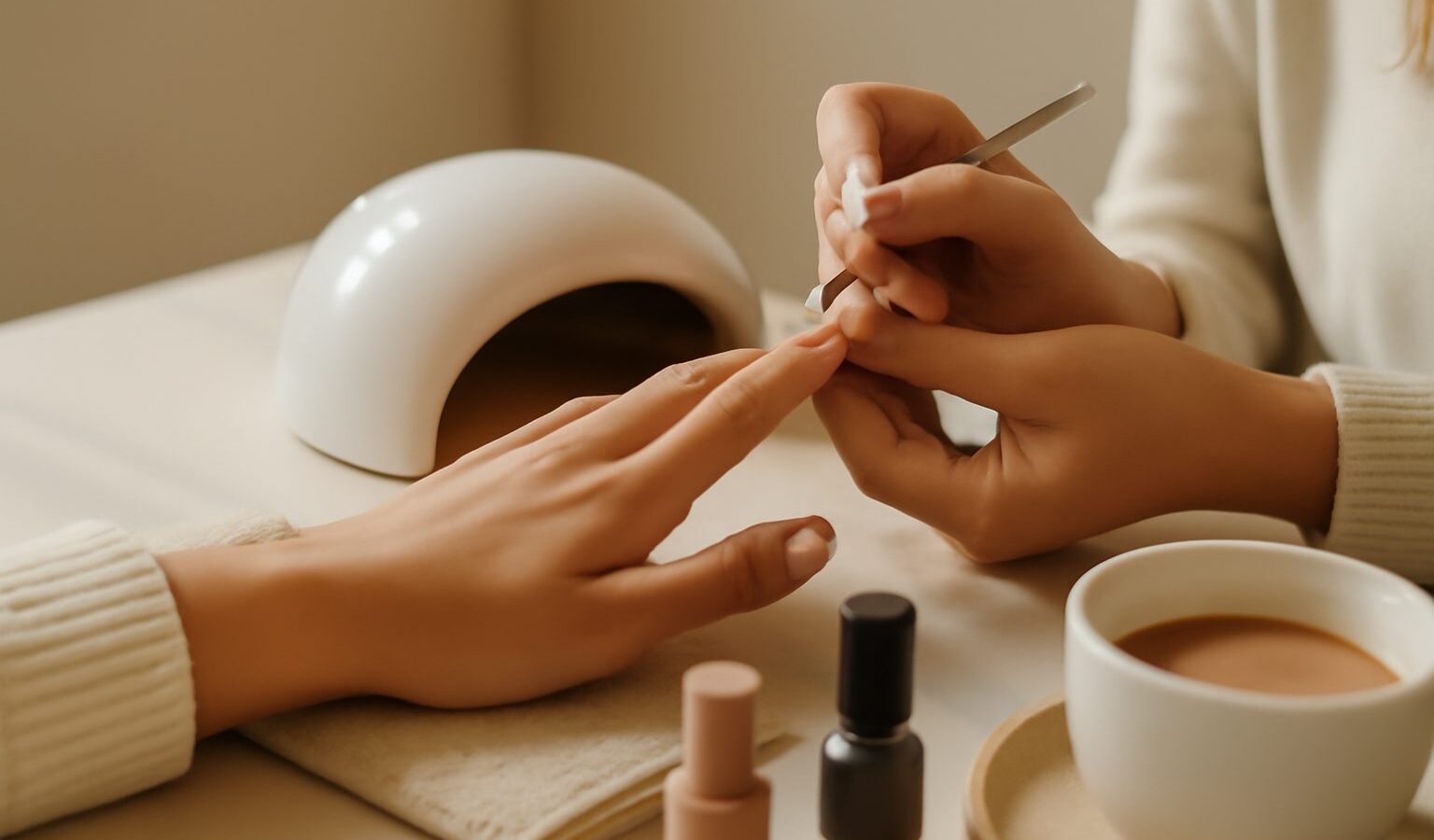
If you have scrolled through salon menus lately, you have probably seen builder gel and BIAB everywhere, and builder gel nails singapore clients keep asking what the fuss is about. The short version is that these are thicker, stronger gels designed to add structure and protection to the natural nail, sitting somewhere between ordinary gel polish and hard acrylics. They have become popular with people whose nails bend, peel or struggle to grow, because a builder layer gives them a sturdy overlay to grow under. This guide explains what these products actually are, how they are applied and removed, and how to keep your natural nails healthy while you enjoy them.
What Builder Gel and BIAB Actually Are
Builder gel is a thick, self levelling gel that cures under a lamp to form a strong, flexible layer over the nail. Because it is more substantial than standard gel polish, it can reinforce weak nails, add a little length, and hold a manicure for weeks without chipping. BIAB stands for builder in a bottle, and it is essentially a builder gel packaged in a polish style bottle with a brush, which makes it easier to apply in thin, controlled coats. The two terms often get used interchangeably, and for most wearers the practical difference is small: BIAB tends to be slightly softer and easier to soak off, while some pot based builder gels are firmer.
The appeal is structure without the bulk of acrylics. A builder overlay is applied over your own nail to protect it, so your natural nail grows out underneath while the gel guards against snapping and peeling. Many people use it as a strengthening overlay rather than for dramatic length. It suits anyone who wants a durable, natural looking finish and is tired of gel polish that lifts within days.
It is worth being clear that builder gel is not a cure for weak nails on its own. It is a protective shell. Your nails still need good care underneath, and the health of the nail comes from how you treat it over time, not from the coating alone.
Application and Removal Basics
Application usually follows a familiar pattern. The technician gently preps the nail surface, applies a base, then paints on one or more thin layers of builder gel, curing each under a lamp. The gel is shaped to reinforce the stress area near the base of the nail, then finished with colour or a clear top coat. A good application uses thin, even coats rather than one thick blob, because thin layers cure properly and are far kinder to the nail.
Removal is where care matters most, and it mirrors safe gel removal. Builder gel and BIAB are soaked off with acetone, not peeled or ripped. Because the layer is thicker than ordinary polish, it needs more filing of the top surface first and a longer soak, often fifteen to twenty minutes or more. Firmer hard builder gels sometimes need careful filing down by a professional rather than a full soak. Whatever you do, never pick or lever the gel off. Peeling takes layers of your natural nail with it and undoes the very strengthening you were paying for.
Every few weeks the gel grows out from the base and needs attention. This is where infills come in.
| Term | What it means | Typical timing |
|---|---|---|
| Full set | A fresh application over the whole nail | The starting appointment |
| Infill | Filling the regrowth gap near the cuticle | Every two to three weeks |
| Soak-off | Removing the gel with acetone | When you want a break or a reset |
| Rebalance | Reshaping and topping up the structure | As the technician advises |
Infills, Soak-Offs and Seeing a Professional
Because builder gel is durable, you do not remove and reapply it every time. Instead, a technician does an infill, filing back the grown out edge and adding fresh gel to blend the gap near the cuticle. This keeps the overlay strong and neat without stripping it off each visit, and it is gentler on the nail than repeated full removals. After several rounds of infills, or when you want a clean reset, the whole overlay is soaked off and started again.
For most people, a salon is the sensible place for builder gel, especially for removal and infills. The products are thicker and less forgiving than ordinary polish, and a trained technician can file safely, judge the right thickness, and spot any problems early. If you do wear it, resist the temptation to trim or file a lifting edge yourself in a hurry, and book in for proper maintenance instead.
Keeping Your Nails Healthy
A protective overlay only helps if the nail beneath stays well. Give your nails occasional breaks between sets so they can rehydrate, and keep the skin and cuticles moisturised with oil, which our air-conditioned offices tend to dry out. Prolonged, unbroken wear combined with rough removal is what weakens nails over time, so the aim is gentle removal and the odd rest, not gel forever.
Pay attention to how your nails and skin feel. Builder gel should never be painful. If you feel heat, pinching or soreness during curing or wear, tell your technician. Watch for signs of a reaction too. If the skin around the nail becomes red, itchy, swollen or sore, or if a nail lifts and the area looks or feels infected with pus or throbbing, stop and see a doctor rather than covering it with more gel. An allergy to gel products can develop over time, so new persistent irritation is worth taking seriously.
Used sensibly, builder gel and BIAB are a genuinely useful way to protect nails that struggle to grow, giving you weeks of durable, natural looking wear. Keep the coats thin, the removal gentle, and the nails underneath cared for, and you get the strength without the damage.
Explore more
Gel vs Acrylic Nails in Singapore
Nail Health and Care in Singapore
Cuticle Care and Healthy Nails
Strengthening Weak and Peeling Nails