
Gel polish is loved for good reason: it stays glossy for weeks and shrugs off daily wear. The trouble comes at the other end, because removing gel polish at home singapore nail fans often rush, and rushing is exactly what damages the nail. The single biggest mistake is peeling or picking the gel off, which pulls away thin layers of the nail plate along with it and leaves your nails weak, rough and sore. The good news is that a careful soak-off at home is genuinely doable. This guide walks through the safe method step by step, and flags when it is wiser to see a professional.
The Soak-Off Method, Step by Step
The safe way to remove gel is to break down the coating with acetone rather than force it off. You will need pure acetone, cotton wool pads, aluminium foil cut into small squares, a nail file, a buffer, an orange stick or cuticle pusher, and a nourishing oil for afterwards. Set aside twenty to thirty minutes and do not try to hurry it.
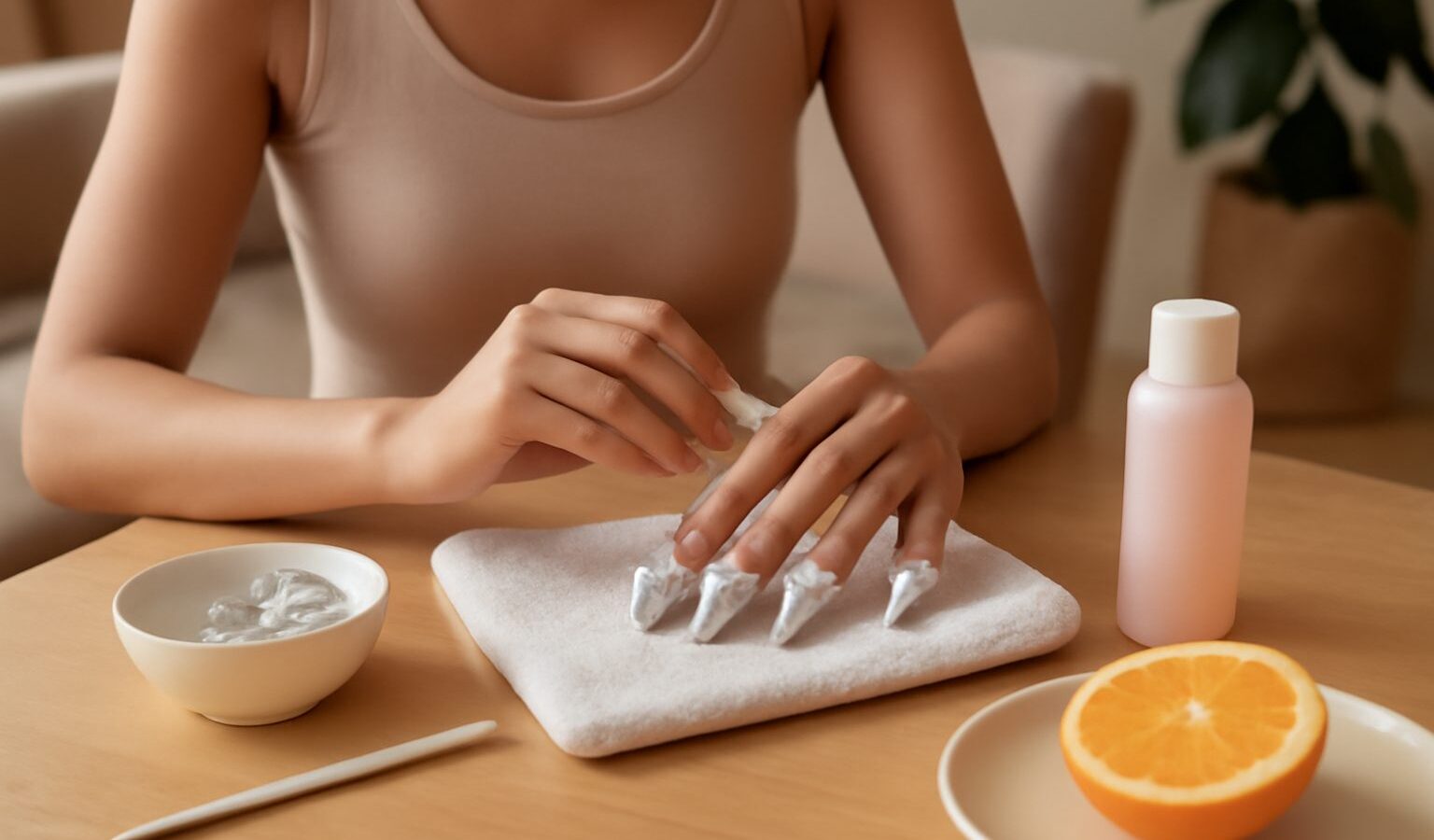
Start by gently filing the shiny top coat off each nail. You are only breaking the seal so the acetone can get in, not filing down to the colour, so a few light passes are enough. Next, soak a small piece of cotton wool in acetone, press it onto the nail, and wrap the fingertip in foil to hold it in place and stop the acetone evaporating. Repeat on every nail. If your skin is sensitive, dab a little oil or balm around the nail first to protect the surrounding skin from drying out.
Now comes the hard part: waiting. Leave the wraps on for around ten to fifteen minutes. Acetone is slow, and this is where patience pays off. When you unwrap the first nail, the gel should look lifted, wrinkled or flaky. Using an orange stick or cuticle pusher, gently nudge the softened gel away from the base towards the tip. It should slide off with almost no pressure. If any spots are still stuck, do not scrape hard. Re-wrap that nail and give it another five minutes. Forcing a stubborn patch is how the nail plate gets torn, so always return to soaking rather than digging.
Once all the gel is off, lightly buff any remaining shine or residue, wash your hands to remove the acetone, and move straight to aftercare.
Why You Must Never Peel or Force It
It is worth being blunt about this, because peeling is so tempting when a corner lifts. The top of your nail is made of many fine layers. Gel bonds tightly to that surface, so when you peel the polish you take the topmost layers of nail with it. The result is thin, bendy, white patched nails that feel rough and split easily. Do it repeatedly and the damage builds up faster than the nail can grow out, leaving you in a cycle of weak nails that never quite recover.
Scraping hard with a metal tool causes the same harm from a different angle. Any time removal starts to feel like effort, that is your cue to stop, soak longer and let the acetone do the work. Gel that is properly softened lifts with the gentlest push. If it does not, it is not ready.
Heat and humidity are not your friend here either. In our climate, oils and moisture on the skin can affect how gel bonds and lifts, and a hot, sticky day tempts you to peel a lifting edge while you are out. Carry it home and remove it properly instead.
Here is a simple guide to how long to soak, so you are not guessing.
| Situation | What to do | Roughly how long |
|---|---|---|
| Standard gel colour | Soak in acetone under foil | 10 to 15 minutes |
| Gel still stuck after unwrapping | Re-wrap, do not scrape | Another 5 minutes |
| Thicker builder gel or hard gel | File more of the top, soak longer | 15 to 20 minutes plus |
| Any sharp pain or lifting skin | Stop and reassess | See a professional |
Aftercare and Giving Nails a Break
Acetone is very drying, so your nails and the skin around them will feel parched right after removal. This is the moment for care. Massage in a cuticle oil or a rich hand cream, and keep reapplying oil over the next few days. Where you can, leave your nails bare for a while before the next gel set. A short breather lets the nail rehydrate and helps it stay strong over the long run. If your nails already feel thin or peeling, a gentle strengthening base or a course of oil and patience does more good than another immediate coat of gel.
Try not to treat gel as a permanent fixture. Prolonged, back to back sets with rough removal are what weaken nails over time, not the occasional manicure. Spacing sets out, removing them gently, and keeping the nail and cuticle moisturised keeps your natural nails in far better shape.
When to See a Professional
Some situations are better handled by a trained technician. If your gel is a thicker hard gel or builder gel, if a set has lifted badly, or if you simply find the soak-off fiddly, a salon can remove it safely and check the state of your nails. Go to a professional too if a nail is already split, torn or damaged, so it can be tidied rather than made worse at home.
Watch the skin around the nail as well. If it becomes red, swollen, painful or looks infected, or if you notice pus or persistent throbbing, stop fussing with it and see a doctor. Repeated irritation from acetone or from picking can also cause dryness and cracking that needs proper attention rather than another home fix.
Done patiently, a home soak-off is safe, cheap and gentle on your nails. Break the seal, soak, wait, and let the gel lift on its own, then feed the nails with oil afterwards. The whole thing rewards a slow hand, and your nails will thank you for resisting the urge to peel.
Explore more
Nail Health and Care in Singapore
Gel vs Acrylic Nails in Singapore
Strengthening Weak and Peeling Nails
An At-Home Manicure Guide