
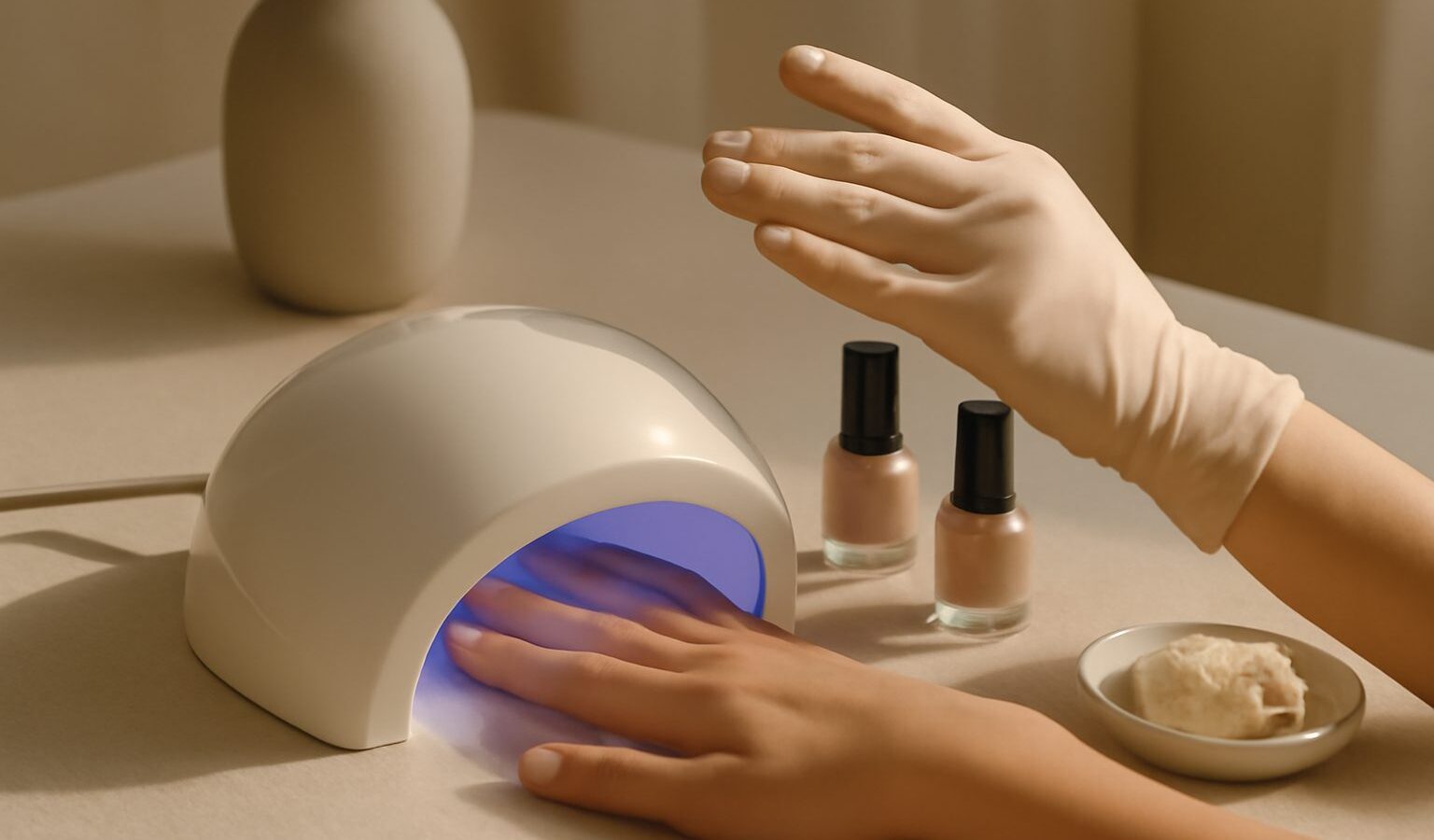
Gel manicures owe their glossy, long-lasting finish to one small piece of kit: the curing lamp that hardens the gel under UV light. If you do your own gels at home or top up regularly at a salon, it is fair to wonder what that repeated light exposure means for your hands. The good news is that a sensible, balanced view of nail lamp uv safety singapore gel users can act on does not require panic, just a few easy habits that reduce exposure while you enjoy the manicure you like.
Let us keep this in proportion. Nail lamps, whether older UV bulbs or newer LED lamps, both emit UV light to cure gel, and the exposure is brief and localised to the small area of skin around the nails. It is very different from lying in the sun or a tanning bed. Still, since our skin cares about cumulative UV over the years, and Singapore already gives our hands plenty of everyday sun, taking simple precautions is a reasonable, low-effort choice.

How Nail Lamps Work And Why UV Comes Up
Gel polish stays liquid until UV light triggers it to set, or cure. That is the whole point of the lamp. LED lamps cure faster and are now common, but they still work by emitting UV, just at a slightly different range and speed than the older tube-style UV lamps. So both types involve some UV, and the practical questions are the same for either.
The skin most exposed during curing is the back of the hands and around the nails, since that is what sits under the lamp for those short bursts. Over many sessions, some people prefer to limit that exposure, in the same spirit as wearing sunscreen day to day. Your nails themselves are not really the concern here; the conversation is about the skin on your hands.
Simple, Practical Ways To Reduce Exposure
The reassuring part is that protecting your hands is genuinely easy and cheap. You do not have to give up gels to be sensible about it.
Practical options include:
- Apply a broad-spectrum sunscreen to the backs of your hands before a gel session, and let it absorb before you start. This is the same protection you would give your hands anyway in our sunny climate.
- Wear fingerless UV-protective gloves designed for manicures. They cover the back of the hand while leaving your nails exposed for curing, and are an easy one-off buy.
- Keep sessions efficient. There is no need to cure longer than the gel requires, so follow the recommended curing time rather than leaving hands under the lamp extra.
- Space out your gel manicures if you do them very frequently, giving your nails and skin regular breaks.
Sunscreen on the hands is a good habit regardless of gels, since our hands catch a lot of daily UV while driving, walking, and going about the day. If you want to get sun protection right more broadly, our guide to sunscreen and sun protection is worth a read.
None of this means gels are something to fear. Millions of people enjoy them, and the point is simply that a couple of small steps let you keep enjoying them with less UV on your skin. Think of it as tidy risk management, not a warning to stop.
Caring For Nails Around Gel Manicures
UV exposure is one piece; the health of your nails and the skin around them is another. Gels involve filing, curing, and removal, and repeated cycles can leave nails feeling thin or dry if you do not care for them in between. Keep cuticles moisturised, use a nourishing oil, and give your natural nails some love. Our guides to nail health and care and cuticle care and healthy nails cover this well.
Removal deserves special care. Picking or peeling gel off takes layers of your natural nail with it, which is a common cause of weak, flaky nails. Soak off gently and properly instead, as explained in safely removing gel polish at home, or have it done professionally.
Finally, listen to your skin. If you notice anything that worries you on the skin of your hands, such as persistent redness, a sore that does not heal, a new or changing spot or mole, unusual dryness or irritation that will not settle, or any lasting change, do see a doctor. This article is general grooming information, not medical advice, and a doctor is the right person to assess any skin concern on your hands. Anyone who has been advised to be extra careful with UV, or who takes medication that increases sun sensitivity, should mention it to their doctor and lean towards the protective options above.
Put simply, gel manicures and nail lamps are a normal part of many people’s routines, and you can enjoy them while being sensible about UV. Pop on some sunscreen or UV gloves, keep curing times to what the gel needs, care for your nails between sets, and check in with a doctor about any skin change on your hands. That balance lets you keep the manicures you love with quiet peace of mind.
Frequently Asked Questions
Are LED nail lamps safer than UV nail lamps? Not necessarily. LED lamps cure faster and are now common, but they still work by emitting UV, just at a slightly different range and speed. The same practical precautions apply to both, so do not treat LED as exposure-free.
Do I need UV gloves or is sunscreen enough for gel nails? Either works, and some people use both. Broad-spectrum sunscreen on the backs of the hands, left to absorb before you start, is cheap and easy. Fingerless UV-protective gloves cover the back of the hand while leaving nails exposed for curing.
How often can I get gel manicures without harming my nails? There is no fixed number, but spacing sessions out if you do them very frequently gives your nails and skin regular breaks. Care between sets matters too, with cuticle oil and moisturiser. Gentle soak-off removal protects the nail more than frequency alone.
Should I leave my hands under the lamp longer for a harder cure? No, follow the recommended curing time for the gel rather than adding extra. Longer exposure only adds UV to your skin without benefit. If your gel stays sticky or soft, check the product instructions and lamp compatibility instead.
Which skin changes on my hands mean I should see a doctor? See a doctor for persistent redness, a sore that does not heal, a new or changing spot or mole, or unusual dryness or irritation that will not settle. If you have been advised to be extra careful with UV or take medication that increases sun sensitivity, tell your doctor.
Further reading: Dip Powder Nails Explained