

A herb spiral is one of the cleverest small-space garden designs around. By coiling a raised bed upward into a spiral, you pack a surprising number of herbs into a footprint barely wider than a bicycle wheel, while creating several growing conditions in one compact structure. A herb spiral singapore gardeners build has to work with our heat and heavy rain rather than the cool climates the idea came from, but the principle adapts beautifully to the tropics.
This guide explains how a spiral creates microclimates, how to build one, which materials suit our weather, and how to plant it for a steady kitchen harvest.
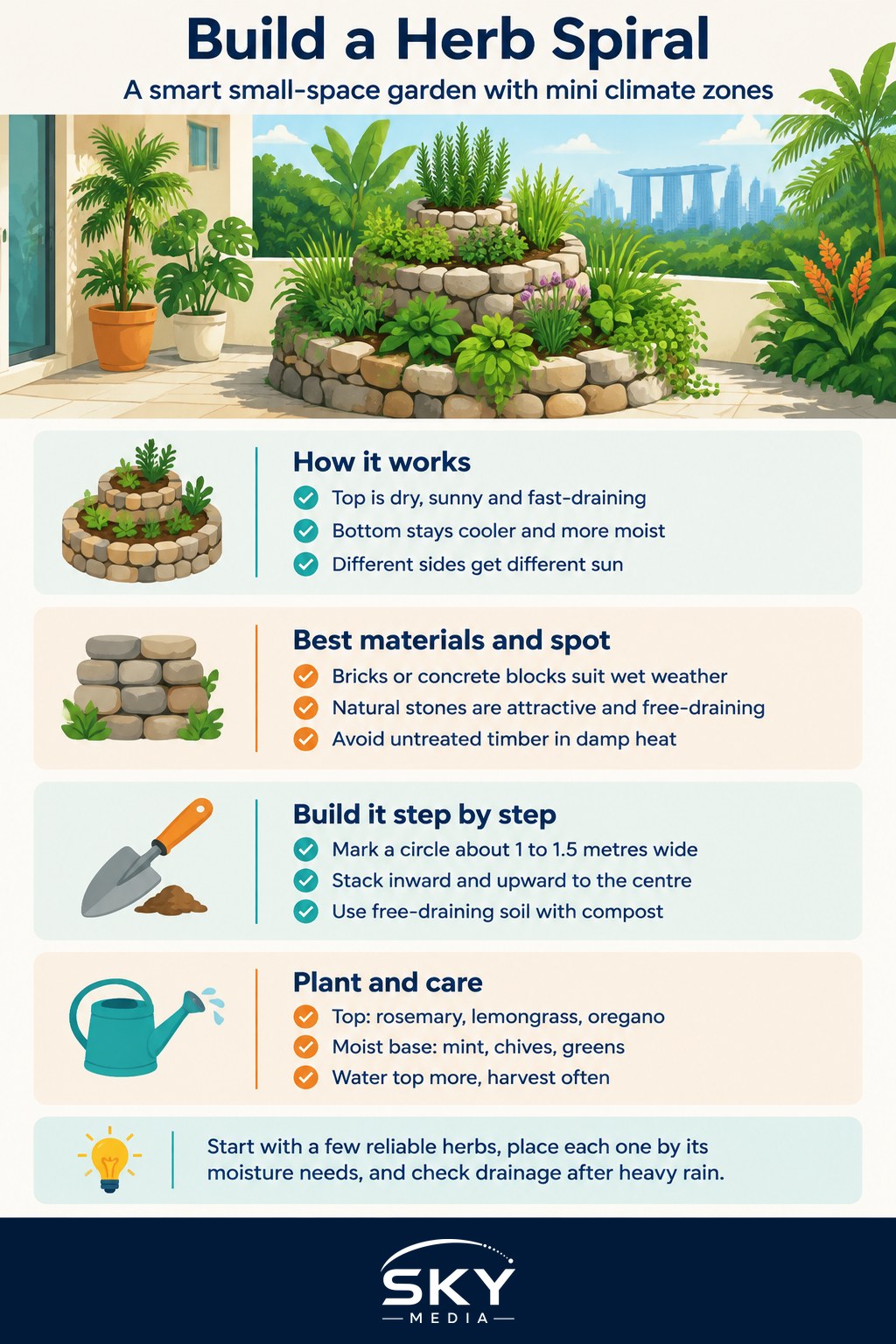
How a Herb Spiral Works
Imagine a low mound of soil that winds upward in a spiral, held in place by a wall of stones or bricks. Because the bed rises and turns, different parts of it experience different conditions. The top is higher, drier and drains fast, while the base stays cooler and holds more moisture. One side catches more sun through the day; the other sits in partial shade.
These varied pockets are called microclimates, and they are the whole point of a herb spiral singapore cooks will love. Instead of forcing every herb into the same bed, you place each plant where it will be happiest: dry-loving herbs near the top, thirsty ones at the shaded, moist base. In a small footprint, you create the range of conditions a flat bed simply cannot offer.
Choosing Materials and a Spot
A spiral is usually built from a retaining wall of stacked material coiling upward, filled with soil. Good choices for our climate include:
- Bricks or concrete blocks, sturdy, cheap and long-lasting in the rain.
- Natural stones or rocks, attractive and free-draining.
- Recycled pavers or broken slabs, an easy way to reuse leftover materials.
Avoid untreated timber, which rots quickly in our damp heat, unless you accept replacing it in time. Reusing materials is very much in the spirit of the design, so leftover bricks from a renovation, stones from a landscaping job, or broken pavers destined for the skip all make excellent walls. The gaps between rough stones also give small creatures and roots somewhere to shelter, adding a little life to the structure.
Site your spiral where it gets good sun for most of the day, since the design relies on one side being sunnier than the other. A corner of a community garden plot, a landed garden, or a generous ground-floor patch all work. For balconies where a full spiral is impractical, you can mimic the idea with tiered pots at different heights, keeping the same top-dry, bottom-moist logic.
Building Your Herb Spiral
You do not need any special skills, just a free afternoon and some patience.
- Mark a circle on the ground about one to one and a half metres across.
- Lay your bricks or stones in a spiral, starting from the outer edge and coiling inward and upward so the centre is highest.
- As you build the wall up, fill behind it with a free-draining soil mix. In our rainfall, drainage is critical, so blend in coarse sand or fine gravel and add compost for fertility.
- Build the centre up to roughly waist height, tapering down to ground level at the outer end of the spiral.
- Water the whole structure well and let the soil settle for a day or two before planting.
The finished spiral should shed heavy rain from the top while the base catches and holds the runoff, giving you that natural gradient from dry to moist.
Planting for Microclimates
Now for the rewarding part. Match each herb to the pocket that suits it, remembering that most herbs here still want plenty of sun.
| Zone | Conditions | Suggested herbs |
|---|---|---|
| Top | Dry, sunny, fast draining | Rosemary, lemongrass, oregano |
| Sunny side | Warm, moderate moisture | Thai basil, chilli, curry leaf |
| Shaded side | Cooler, more moisture | Mint, laksa leaf, parsley in cooler months |
| Base | Moist, some shade | Mint, chives, water-loving greens |
Give spreading herbs like mint the moist base, where their thirst is met and their roaming roots are easier to contain against the wall. Keep drought-tolerant herbs at the top so they never sit wet. Leave a little room between plants, as herbs grow fast in our warmth and will soon fill the gaps.
Think about how you will reach each herb, too. Place the herbs you pick most often, such as basil and chilli, where you can snip them without stretching over the whole bed. You can also tuck a few edible flowers or companion plants like marigold around the edges, which add colour and help draw in the pollinators and helpful insects that keep pests in check. A spiral that looks good and works hard is far more likely to stay part of your routine.
Caring for Your Spiral
A herb spiral is efficient to maintain because everything sits within arm’s reach. Water more often at the top, which dries fastest, and less at the moist base. Check drainage after heavy storms, and top up soil and compost as the bed settles over the months.
Harvest regularly to keep herbs bushy, and replace any plant that fades with a fresh cutting suited to that zone. Watch for slugs and snails hiding in the cool crevices of the wall, and clear away decaying leaves that invite pests.
Built once and planted thoughtfully, a herb spiral singapore households can enjoy for years turns a small patch of ground into a productive, good-looking feature that keeps the kitchen stocked with fresh flavour. Start with a handful of reliable herbs, learn how your spiral’s zones behave, and expand your planting from there.