
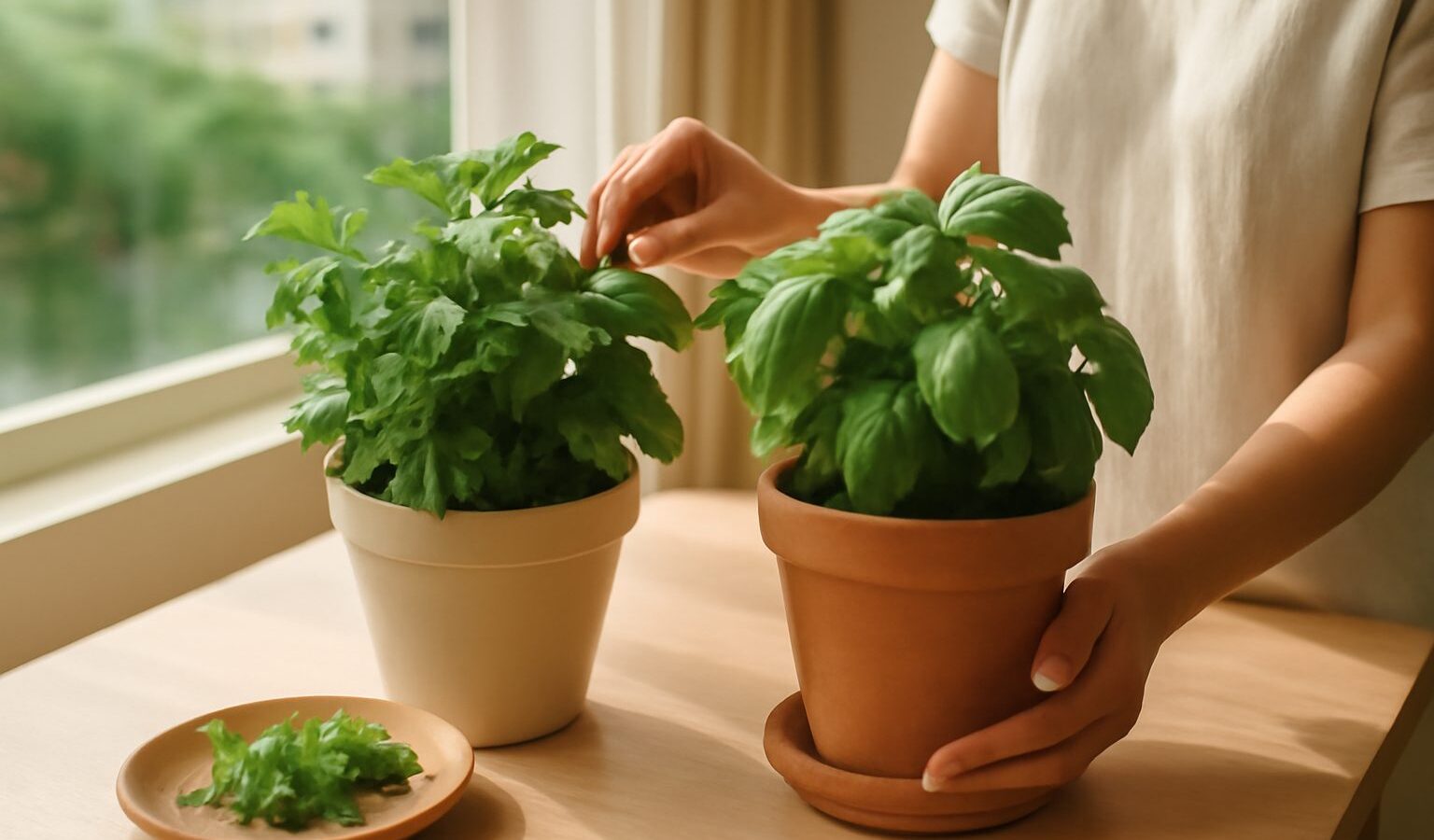
There is nothing quite like tearing a few fresh leaves from your own pot for a cup of tea or a bowl of noodles. Growing mint and basil is one of the easiest, most satisfying ways to start an edible balcony in Singapore, and both herbs reward even a nervous beginner quickly. They ask for little more than a sunny or bright corner, a well-watered pot and regular picking to keep them bushy. This guide covers where to place them, how to water and feed in our heat, how to take cuttings for free plants, and how to harvest and wash your leaves safely for the kitchen.
Two Herbs With Different Habits
Mint and basil are both fast, leafy, kitchen-friendly herbs, but they grow in quite different ways, and knowing this from the start saves a lot of frustration. Mint is a vigorous, spreading plant that throws out runners and will happily fill, then escape, any pot you give it. Basil grows upright as a leafy bush, flowering readily in our warmth and slowing down once it does. One wants to be contained, the other wants to be kept picked and prevented from flowering too soon.
Both are tender, soft-leaved plants that suit our climate well, since neither has to survive a cold winter here. That constant warmth means you can grow them almost year-round, though the strongest sun and heaviest monsoon rain both call for a little shelter. Treat them as quick, generous crops rather than long-lived shrubs, and you will always have fresh leaves within reach.
Light, Pots and Soil on a Balcony
Basil loves sun and grows most flavourful with several hours of bright light a day, so a sunny balcony rail or a bright, airy corridor spot suits it well. In the fiercest afternoon glare, a little shade stops the leaves scorching and the pot drying out too fast. Mint is more forgiving and actually prefers bright shade to full, baking sun, making it a great choice for a spot that gets good light but not harsh midday heat. Both struggle in a dim indoor corner, growing pale and leggy, so give them the brightest, most airy place you can.
Because mint spreads aggressively by runners, always grow it in its own pot rather than sharing a planter, or it will smother everything beside it. A medium pot with drainage holes is plenty for either herb. Fill with a quality potting mix that holds some moisture yet drains freely; a little compost mixed in feeds early growth. Good drainage matters in our downpours, since neither herb wants to sit in a waterlogged pot after heavy rain.
Watering, Feeding and Keeping Them Bushy
Both herbs like their mix kept evenly moist, and in Singapore heat that often means watering daily, especially for basil in full sun. Check the top of the mix with a finger and water thoroughly when it begins to dry, letting the excess drain away. Never leave a saucer sitting full of water: tip it out after watering and after rain, because standing water breeds Aedes mosquitoes. Empty any standing water at least weekly, keep water stores covered, and follow current NParks and NEA guidance to keep mosquitoes from breeding on your balcony.
Feed lightly but regularly, since leafy herbs picked often are always regrowing. A balanced liquid fertiliser at half the labelled strength every couple of weeks keeps the leaves lush and green without forcing soft, flavourless growth. The real secret to bushy plants, though, is picking. Pinch out the growing tips of basil regularly, and it branches into a fuller bush; snip mint back hard and it resprouts thicker. For basil especially, remove any flower buds as they form, because once it flowers the leaves turn bitter and growth slows.
Mint and Basil Compared
Both belong in a beginner’s herb collection, but they suit slightly different spots and habits. Use the table to place each one well.
| Feature | Mint | Basil |
|---|---|---|
| Growth habit | Spreading runners, wants its own pot | Upright leafy bush |
| Light preference | Bright shade to gentle sun | Several hours of bright sun |
| Main task | Contain it and cut it back hard | Pinch tips, remove flower buds |
| Ease from cuttings | Very easy, roots fast in water | Easy, roots in water or moist mix |
| Typical use | Teas, drinks, salads, garnishes | Pastas, stir-fries, sauces, salads |
Making More Plants From Cuttings
One of the joys of these herbs is how freely they multiply, so you rarely need to buy a second plant. Both root readily from cuttings. Snip a healthy stem several centimetres long, strip the lower leaves, and either sit it in a glass of water or push it into moist potting mix. In our warmth, mint roots in water within days and basil follows soon after, giving you free plants to pot up or share.
If you root cuttings in water, change the water every day or two and never let it stagnate, both to keep the cutting healthy and to deny mosquitoes a place to breed. Once a good tuft of roots has formed, pot the cutting into fresh mix, keep it shaded and moist for a week while it settles, then move it back into the light. A single vigorous mint or basil plant can quickly become several, filling a corner of the balcony at no cost.
Harvesting and Using Your Herbs Safely
Pick little and often from the moment the plant is established, always taking from the top and outer stems so growth stays bushy. Regular harvesting is not just for the kitchen; it is what keeps both herbs productive. In practice, the more you use them, the better they grow.
Because these are edibles, keep a few safety habits. Grow from known culinary mint and basil plants or cuttings, so you are certain what you are eating, and never eat a plant you cannot positively identify. It is the leaves and soft stems that are the edible part here, so wash them well under running water before use to remove any soil, dust or unseen pests, and prepare them fresh. Basil bruises easily, so tear the leaves by hand near serving time rather than chopping early. On a high floor, keep pots secured against wind, mind runoff onto neighbours below, and follow your HDB, town council or MCST rules for balconies and shared corridors. For any pests, start gently by rinsing the leaves or picking bugs off by hand, and if you ever use a product, follow its label exactly and keep it away from the parts you plan to eat.
Explore more
Once your herb pots are thriving, keep expanding your edible balcony with our guides to growing ginger and turmeric in Singapore and growing microgreens at home, both fast and beginner-friendly. For another fragrant staple that loves our heat, try growing lemongrass at home in Singapore next.