
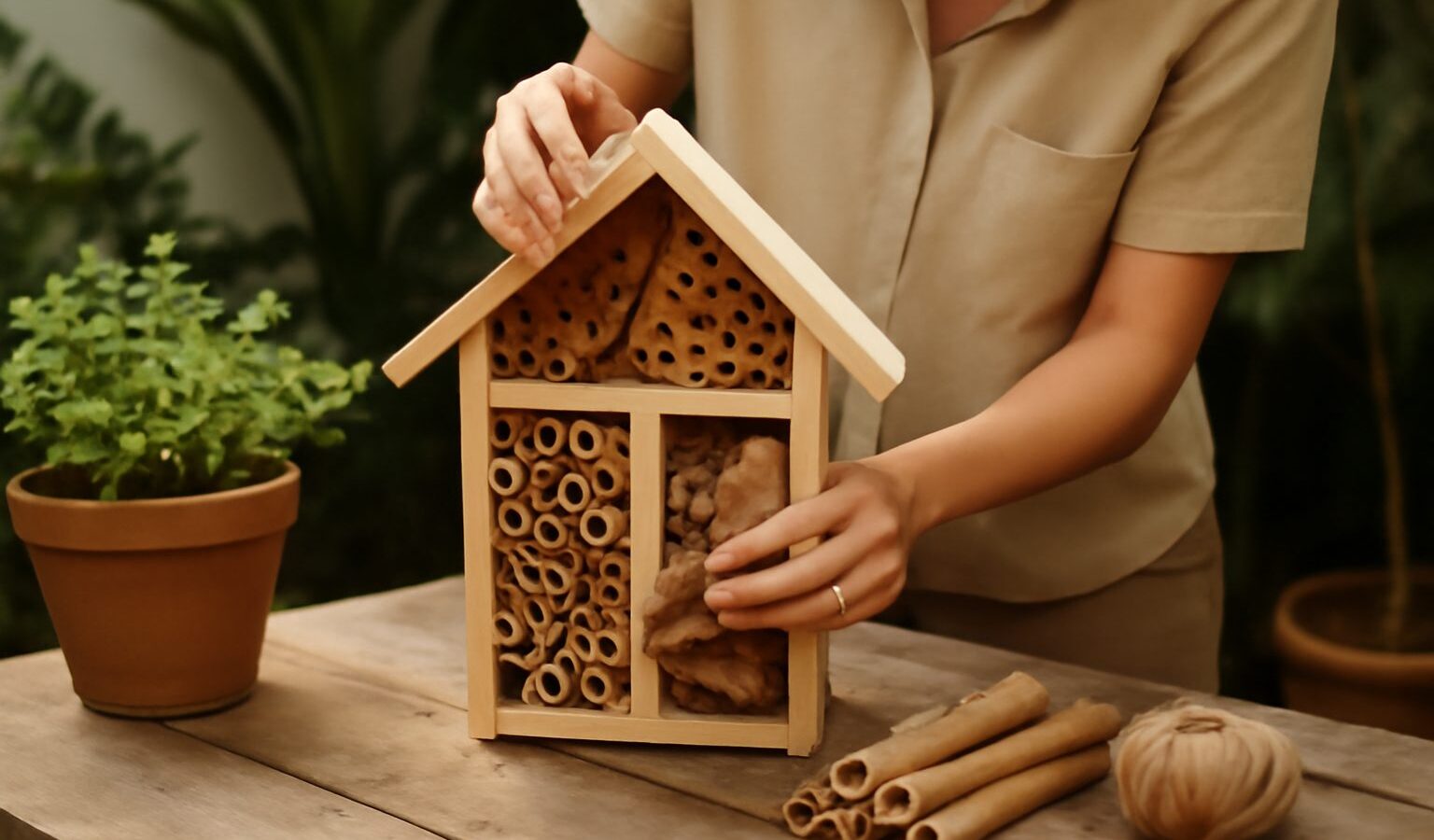
An insect hotel is a small structure filled with natural materials that gives helpful bugs a place to shelter, rest, and lay eggs. Building an insect hotel in Singapore is a lovely weekend project that suits balconies, corridors, and small gardens, and it invites the good insects that pollinate your flowers and keep pests in check. It is also a wonderful thing to make with children. In our warm, wet climate a few simple design choices keep the hotel useful and, most importantly, keep it from becoming a mosquito trap.
What an Insect Hotel Does
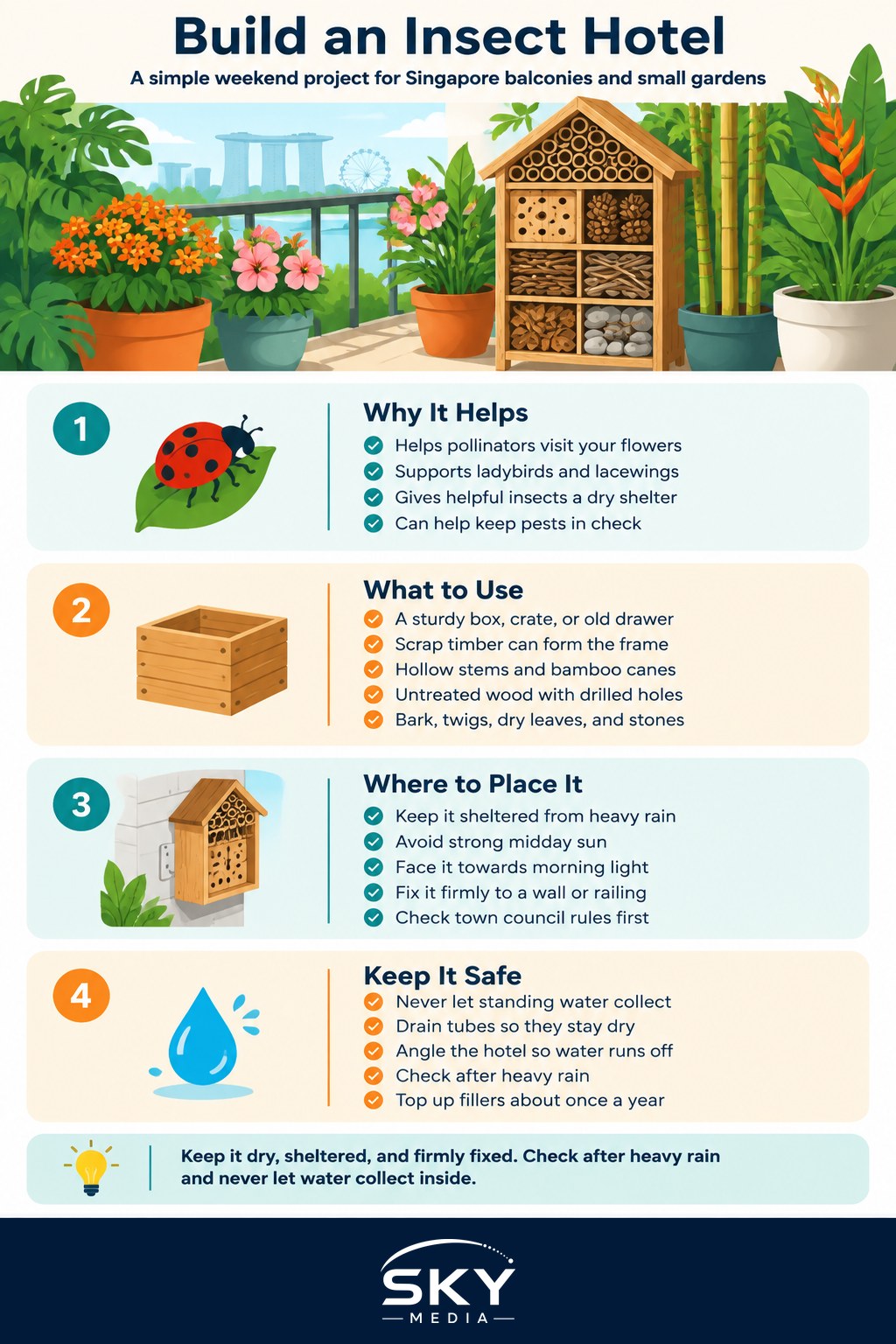
A garden works best when it has a mix of life, and many insects are firmly on the gardener’s side. Solitary bees and other pollinators move pollen between flowers so your fruiting plants set fruit. Predators such as ladybirds and lacewings hunt aphids and other soft pests. Giving these useful insects a dry, sheltered nook encourages them to stay near your plants rather than move on. If you would like to understand the wider picture first, our guides on attracting beneficial insects to your garden and attracting bees and pollinators explain which visitors you are trying to welcome and why they matter.
An insect hotel is really just a collection of small hidey-holes. Different insects like different textures and cavity sizes, so a variety of materials in one structure attracts a wider range of guests.
Materials and How to Build It
You do not need to buy anything special. A sturdy wooden box or crate, an old drawer, or a frame of scrap timber makes a fine outer shell. The key is a roof or overhang that keeps rain off the inside, since a soggy hotel is no good to anyone. Fill the frame with a mix of natural materials packed snugly so they do not fall out.
- Hollow stems and bamboo canes cut to short lengths, laid horizontally, for solitary bees.
- Blocks of untreated wood with holes drilled part way in, in a few different widths.
- Bark, twigs, and dry leaves bundled together for beetles and other crawlers.
- Small stones or broken clay pot pieces tucked into a corner for ground-dwellers.
Keep the ends of tubes clean and the openings facing outwards. A steps to follow:
- Build or find a shallow, sturdy frame with a back and a rain-shielding top.
- Sort your natural fillers into small bundles and pockets.
- Pack each section firmly so nothing shifts in the wind.
- Fix the hotel in place before it gets too heavy to move.
Placing It Safely in the Tropics
Where you put the hotel matters as much as how you build it. Mount it somewhere sheltered from the heaviest rain and out of the strongest midday sun, ideally facing where morning light can warm it. Fix it firmly to a wall, railing, or post so it cannot fall, which is especially important along HDB corridors and common areas where nothing should overhang or drop. Check your town council’s rules before you put anything up, and see our guide on corridor gardening and HDB rules if you garden in shared space.
The single biggest tropical caution is water. An insect hotel must never hold standing water, because any little pocket that collects rain becomes an Aedes mosquito breeding site, and that is a serious dengue risk here. Make sure tubes drain or stay dry, angle the whole structure so water runs off rather than pooling, and check after heavy rain that no cup or hollow is holding water. Empty and dry anything that traps moisture. Keeping the hotel dry protects your household as well as your guests.
A Small Project With Big Rewards
Once your hotel is up, be patient. It can take weeks for the first insects to move in, and you may not always see who is home. Resist the urge to disturb it, top up or replace fillers once a year, and let nature do the rest. Building an insect hotel is a gentle, hands-on way to bring more life to a small tropical garden, support your pollinators, and keep pest numbers down naturally. With a rainproof design and no standing water anywhere, it is a safe and rewarding addition to any Singapore green space.
Frequently Asked Questions
How long before insects move into a new insect hotel? It can take weeks for the first guests to arrive, and you may not always see who is home. Be patient and resist the urge to disturb it, then top up or replace the fillers once a year.
Which insects will an insect hotel attract? Solitary bees and other pollinators help your fruiting plants set fruit, while predators such as ladybirds and lacewings hunt aphids and other soft pests. Mixed materials attract a wider range of guests.
Can I put an insect hotel along my HDB corridor? Only with care. Nothing should overhang or drop, so fix it firmly to a wall or railing, and check your town council’s rules before putting anything up in shared space.
How do I stop an insect hotel becoming a mosquito breeding spot? Never let it hold standing water. Make sure tubes drain or stay dry, angle the structure so rain runs off, and check after heavy rain that no cup or hollow is holding water.
What should I avoid using to build an insect hotel? Avoid anything that traps rain or soaks through, so use a roof or overhang to keep the inside dry. Choose untreated wood, and pack materials snugly so they do not fall out in the wind.