
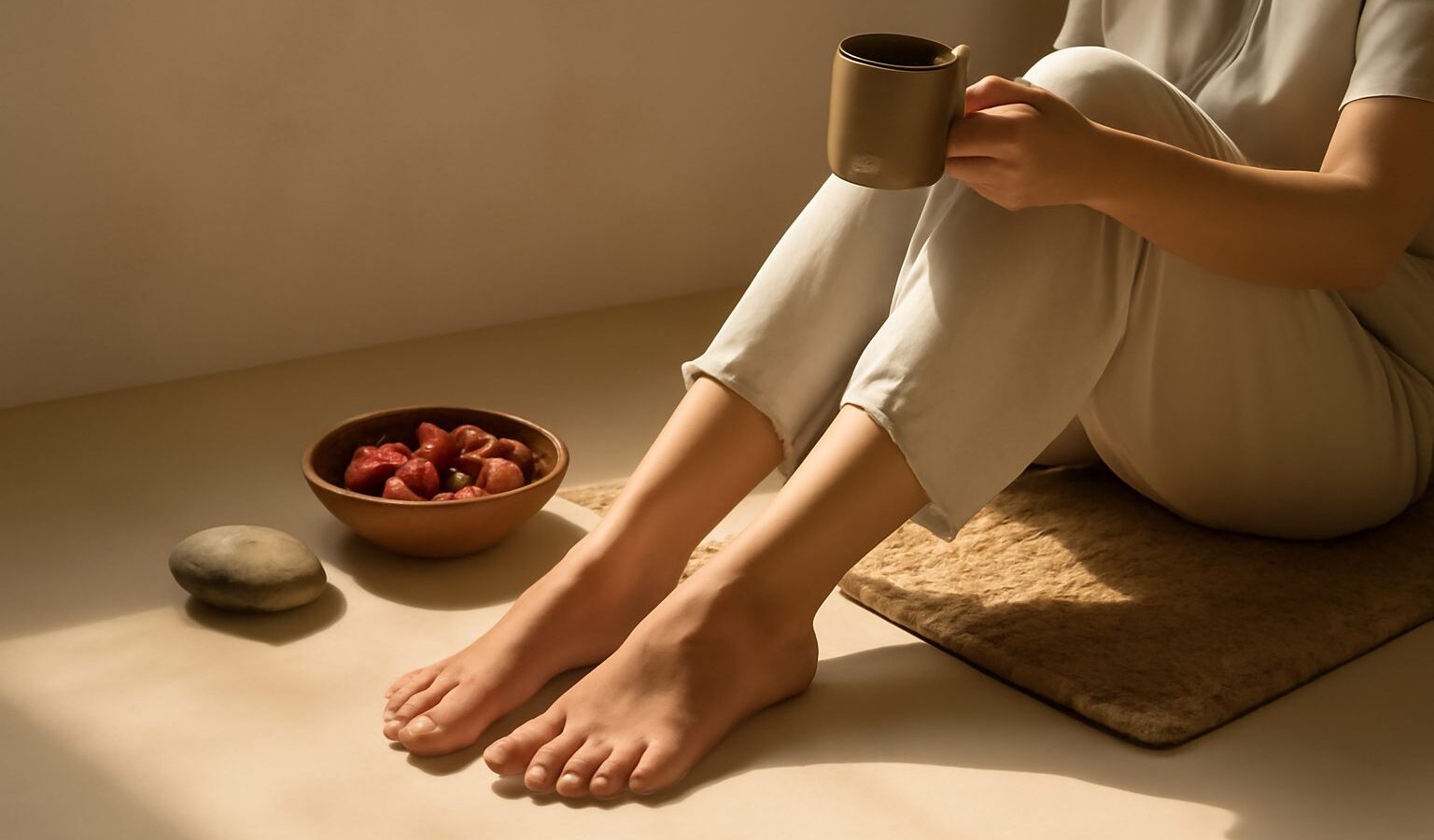
Every so often a wellness idea comes along that is charmingly simple: take off your shoes and stand on the grass. Grounding, also called earthing, is exactly that, the practice of putting your bare skin in direct contact with the natural ground, whether that is soil, grass, sand, or the sea. Fans describe it as a way to feel calmer and more connected, and it has picked up a devoted following. If you are curious about grounding wellness in Singapore, this guide takes an honest, feet-on-the-ground look at what earthing is, what the evidence actually supports, and how to enjoy it sensibly in our climate without overselling it.
What Grounding Actually Means
At its most basic, grounding just means making direct physical contact between your body and the earth’s surface. In practice that usually means walking barefoot on grass or sand, standing on natural ground, or sitting or lying somewhere your skin touches the earth. Some people extend the idea indoors with special mats and sheets, though the simplest version needs nothing at all.
The theory that enthusiasts put forward is that the earth carries a subtle electrical charge, and that direct contact lets your body exchange with it in a way that supposedly reduces inflammation and stress. That is the claim, and it is where a careful, honest guide has to slow down.
The truth is that the scientific evidence for those specific physiological claims is limited and far from settled. There have been some small studies, but they are generally modest in size and quality, and the big promises you sometimes read online run well ahead of what has actually been demonstrated. So it is only fair to say clearly that grounding is a relaxation and self-care practice, not a medical treatment, and it is not a proven cure for any condition. If something is genuinely troubling your health, that is a matter for a doctor, not a barefoot walk.
That said, there is a gentler and much safer way to think about it, which brings us to why so many people still enjoy it.
Why People Enjoy It Anyway
Strip away the bolder claims and you are left with something quite reasonable. Grounding usually means going outside, slowing down, feeling a natural texture underfoot, and paying attention to the present moment. Those are pleasant, calming things in their own right, regardless of any theory about electrical charge.
Think about what a barefoot walk on grass actually involves:
- Time outdoors, away from screens and the usual indoor bustle.
- A gentle sensory experience, the cool grass or warm sand against your skin.
- A natural invitation to slow your breathing and notice your surroundings.
- A small, mindful pause in a busy day.
Seen this way, grounding overlaps neatly with practices we already know help many people feel calmer, such as spending time in nature and being present. If that appeals, our guide to mindfulness and meditation explores the attention side of it, and it slots easily into a wider approach like managing stress and relaxation. The comfort is real even if the more dramatic claims are not proven, and there is nothing wrong with enjoying it on those honest terms.
Trying It Sensibly in Singapore
We are lucky to have plenty of green space, from neighbourhood parks to grassy fields and beaches, which makes grounding easy to try here. A few practical pointers help you enjoy it safely.
- Choose your spot with care. Clean grass, a park lawn, or a beach is ideal, and it is worth checking the ground for anything sharp before you go barefoot.
- Mind the heat. Sand, concrete, and even some paths get genuinely hot under our strong sun, so an early morning or late afternoon is far more comfortable.
- Watch your feet if you have any reason to. Anyone with reduced sensation in the feet, diabetes, or circulation issues should be more cautious about going barefoot outdoors, since a small cut can be easy to miss, and it is sensible to keep footwear on and to see a doctor for any foot problem.
- Keep the sun in mind. Time outside means sun exposure, so the usual protection applies, especially in the middle of the day.
- Pair it with a routine. A short barefoot moment can be a lovely start to the day, fitting naturally into building a morning wellness routine.
Start small. A few minutes standing or walking on grass is plenty, and you can build from there if you enjoy it. There is no need for special equipment or a rigid schedule.
A grounded wrap-up, if you will forgive the pun. Earthing is a simple, pleasant way to get outside, slow down, and enjoy a bit of nature, and the calm it brings is genuine even though the bolder health claims are not well supported. Treat it as relaxation rather than medicine, watch your feet and the heat, and see a doctor for any health concern rather than expecting a barefoot walk to solve it.