
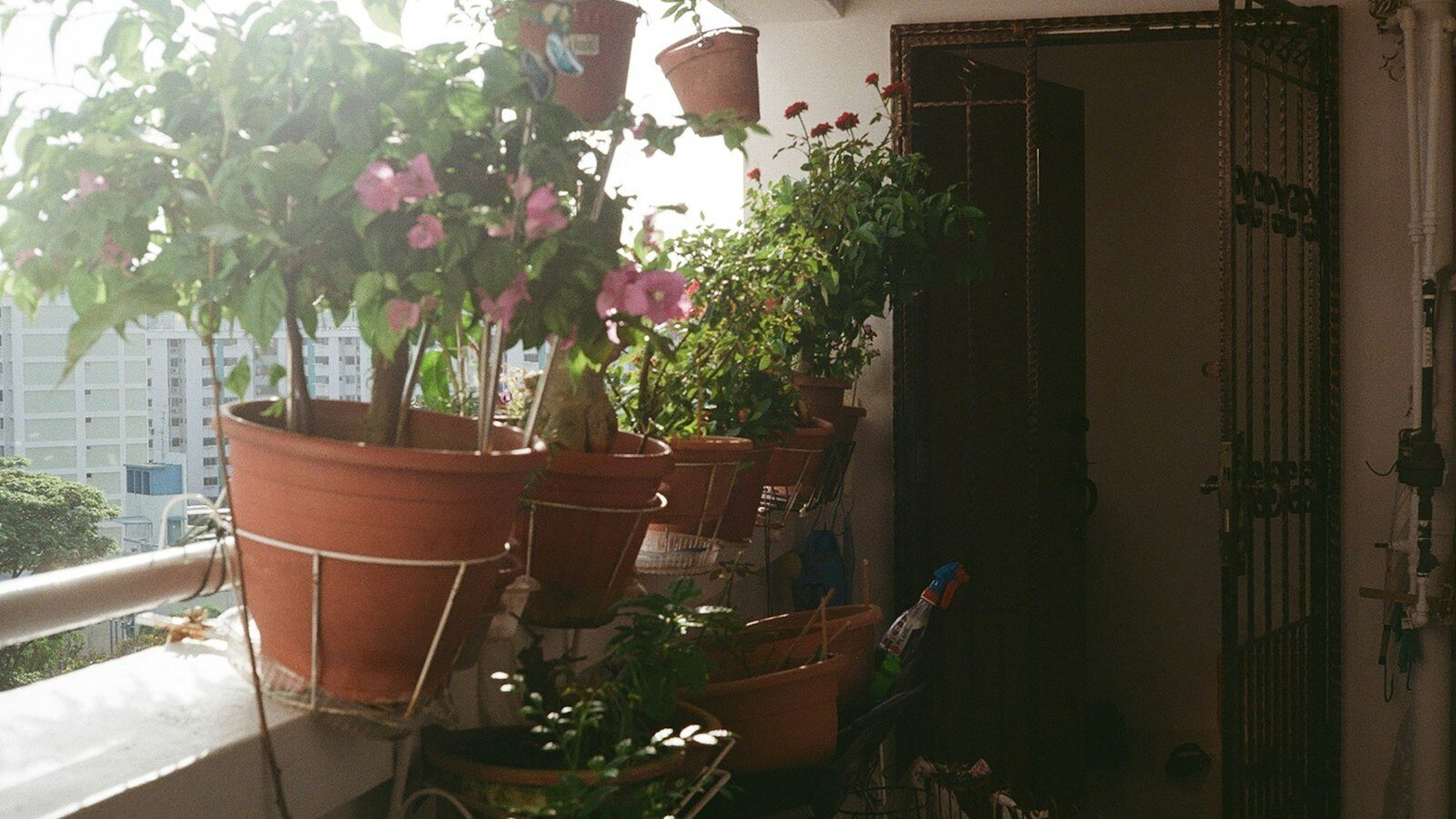
You do not need a plot of land to grow in Singapore. Container gardening in Singapore is the practical answer for flats, where a few pots on a balcony, a sunny ledge, or a bright corner can give you herbs, greens, flowers, and foliage all year round. Pots are portable, forgiving, and easy to start with, so you can chase the light, protect plants from a downpour, and pack the whole garden up if you move. This guide covers the pots, the mix, the plants, and the care that keeps a small container garden thriving in our heat.
Why Container Gardening Works So Well Here
Growing in pots gives you control, which is exactly what our climate demands. You choose the soil, so you avoid poor ground and heavy clay. You can move a pot into more sun or out of a lashing monsoon shower. And you can garden absolutely anywhere there is light, which for most of us means a balcony, a service yard, a windowsill, or a bright spot indoors.
Containers also lower the barrier to starting. There is no digging, no big commitment, and if one plant sulks you simply move or replace that single pot. For renters and HDB households, that flexibility is the whole point. Start with one or two pots you can keep alive, then add more as your confidence grows.
The trade-off is that pots dry out faster and hold less nutrient than open ground, so watering and feeding matter more. The good news is that both are easy to manage once you understand your containers.
Choosing the Right Pots for a Small Space
The container itself shapes how often you water and how well plants root. The single most important feature is drainage: every pot needs holes so water can escape, because roots sitting in waterlogged mix will rot in our humidity. Here is how common materials compare so you can match the pot to the plant and the spot.
| Pot type | Weight | Water retention | Best for |
|---|---|---|---|
| Plastic | Light | Holds moisture well | Balconies, hanging pots, thirsty herbs and greens |
| Terracotta or clay | Heavy | Dries out fast, breathes | Succulents, cacti, plants that hate wet feet |
| Glazed ceramic | Heavy | Moderate | Feature plants, indoor display |
| Fabric grow bags | Very light | Drains and breathes freely | Vegetables, deep-rooted edibles, rooftops |
| Self-watering pots | Medium | Reservoir keeps mix moist | Busy people, plants needing steady water |
Size matters as much as material. Bigger pots hold more soil, dry out slower, and give roots room, so do not crowd a large plant into a tiny container. For a small space, a few generous pots usually outperform many little ones that need watering twice a day. Match the pot to the plant: a deep pot for tomatoes or chilli, a shallow one for succulents.
The Easiest Plants to Grow in Containers
Start with plants that suit our heat and forgive a beginner. Group them by what you want out of the garden.
- Herbs you will actually use: mint, laksa leaf, basil, chives, and pandan all do well in pots and love the warmth.
- Leafy greens: kangkong, xiao bai cai, and lettuce grow fast in a bright spot with steady water.
- Fruiting edibles for sun: chilli, cherry tomatoes, and lady’s fingers reward a sunny balcony and a deep pot.
- Tough foliage: snake plant, ZZ plant, pothos, and aglaonema thrive on neglect and suit shadier corners.
- Flowers for colour: torenia, vincas, and portulaca bring bright colour where the sun is strong.
Pick two or three to begin with rather than filling the balcony at once. One healthy pot of mint or a single productive chilli plant is a real win, and it teaches you your space before you scale up.
Watering, Feeding and Staying Mosquito-Safe
Pots in Singapore dry out quickly, so check the top few centimetres of mix daily in hot weather and water when it feels dry rather than on a fixed schedule. Water until it runs from the drainage holes, which tells you the whole root ball is wet. A free-draining potting mix, not garden soil, keeps roots healthy and stops the surface hardening into a water-trapping crust.
This is where the most important safety point comes in, and it is genuinely critical here. The saucers and trays under your pots, and the reservoirs in self-watering containers, collect run-off, and any standing water becomes a breeding site for Aedes mosquitoes, which spread dengue. Never let water stagnate. Tip out saucers and trays after watering and check them at least twice a week, empty and refresh any reservoir, and avoid compacted, hardened soil that holds water on top. Follow NEA’s anti-mosquito advice and do the weekly check of every container, saucer, and tray, and if you travel, ask someone to empty them or remove the saucers entirely. A container garden should never cost your block a mosquito problem.
Because frequent watering flushes out nutrients, pots need feeding. Use a slow-release or diluted liquid fertiliser strictly to the label, keep it away from children and pets, and prefer eco-friendly or organic options where you can. Refresh or top up the potting mix each year to keep it open and healthy.
What You Need to Start and Where to Buy
Your starter kit is short: a few pots with drainage holes, a bag of quality potting mix, your chosen plants or seeds, a watering can, and a basic fertiliser. That is enough to grow real food and greenery on a balcony.
On cost, think in bands rather than fixed prices, and always check current rates at the shop:
- Budget: upcycled containers with holes drilled in, a small bag of mix, and cuttings or seeds.
- Mid: a set of plastic or fabric pots, good potting mix, and nursery seedlings.
- Premium: self-watering planters and larger glazed pots for feature plants.
For everything you need, the nurseries at Sungei Tengah and around Thomson, Far East Flora, community nurseries, and IKEA stock pots, planters, and potting mix, while online marketplaces are handy for grow bags and self-watering pots. NParks and the Community in Bloom programme are great for inspiration and local growing tips. Start with a couple of pots, keep the saucers empty, and let a small container garden grow with you.
Explore more
Container gardening is the backbone of small-space growing, so read it alongside our balcony gardening guide and how to garden in an HDB flat. To get the pots and watering right, see how to choose pots and planters and how to water plants in Singapore’s heat, and if you want to grow upwards too, try vertical gardening and green walls.