
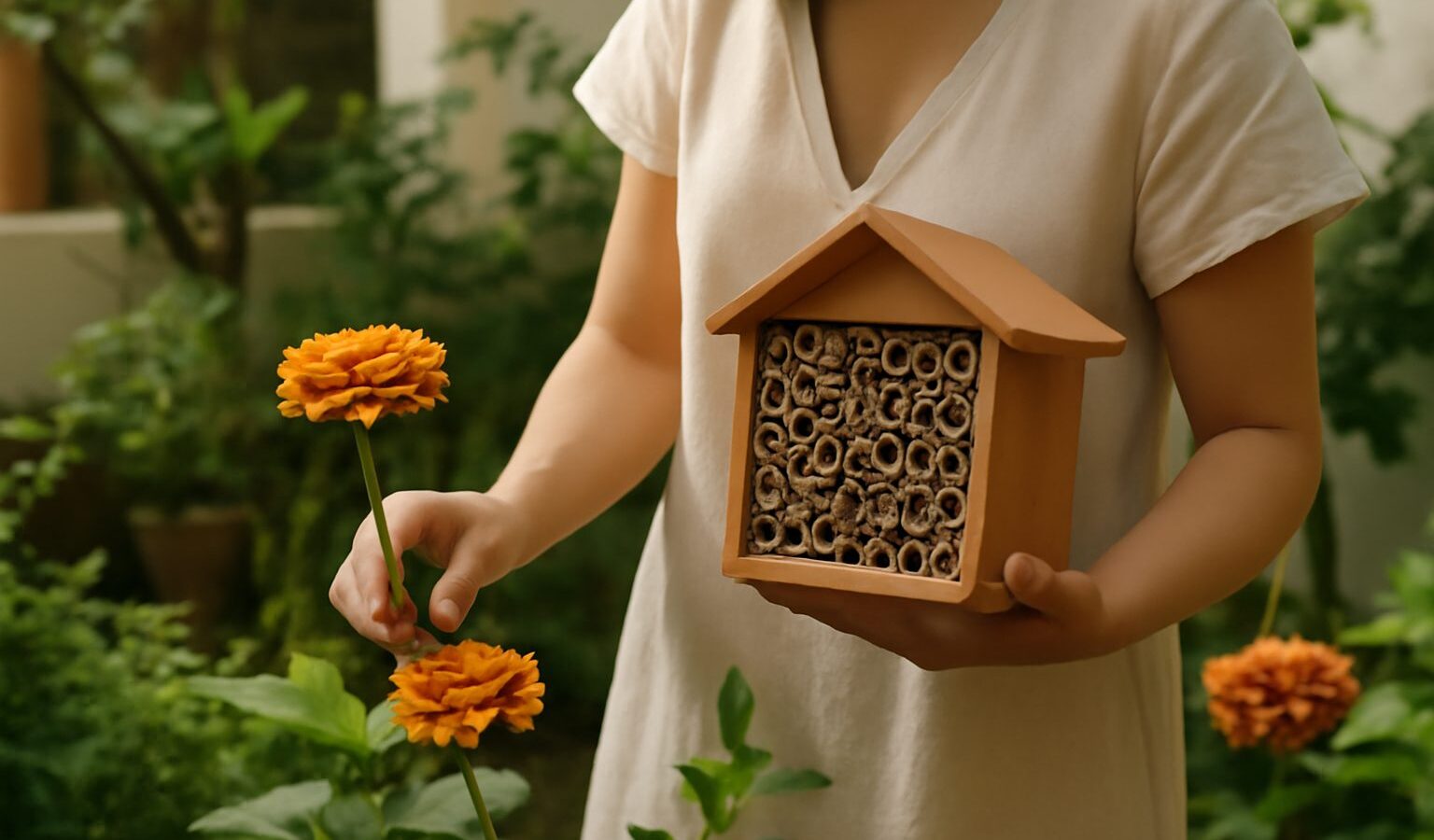
Not every insect in your garden is a pest. In fact, some of the busiest visitors are quietly working for you, eating aphids, pollinating flowers and keeping the whole small ecosystem in balance. Learning to attract beneficial insects in Singapore is one of the smartest, most sustainable things a gardener can do, because a garden full of helpful bugs largely controls its own pests, with far less spraying from you. Our warm, humid climate keeps insects active all year, so a balcony or corridor garden can become a lively little food web surprisingly fast. This guide explains who the helpers are and how to make them want to stay.
Meet the helpful insects
Beneficial insects fall into two broad camps, and it helps to know both. The first are the predators and parasites, the natural pest controllers. Ladybirds, or ladybugs, are the famous ones, and both the adults and their spiky larvae devour aphids in great numbers. Lacewings are delicate green insects whose larvae are such enthusiastic aphid eaters that they are nicknamed aphid lions. Hoverflies look a little like small bees or wasps but hover neatly in place, and their larvae also feast on aphids while the adults pollinate. Predatory spiders, tiny parasitic wasps and certain beetles round out the clean-up crew. When these are present, an aphid outbreak often fades on its own.
The second camp are the pollinators, chiefly bees, butterflies and again those useful hoverflies. They are essential if you grow anything that fruits, from chillies to passionfruit, because without pollination many flowers never set fruit. Encouraging them lifts your harvests and fills the garden with movement and colour. If you would like to focus on this group, attracting bees and pollinators in Singapore goes deeper, and how to attract butterflies and birds to your garden covers the showier visitors and the plants they love.
It is worth naming the trade-off honestly. A garden that welcomes beneficial insects will never be perfectly pest-free, because predators need some prey to stick around. A few aphids are the price of a resident ladybird population. Once you accept that a little pest activity is normal and even useful, gardening becomes far less stressful, and you reach for the spray bottle far less often.
Making your garden a welcoming home
The single most important step is to go easy on pesticides. Broad sprays do not tell the difference between a pest and a ladybird, and they often kill the helpers faster than the pests, which then bounce back with nothing left to check them. If you must treat a problem, spot-treat only the affected plant, use gentle options like neem strictly as directed, spray in the evening when pollinators are not active, and never douse open flowers. Treat spraying as a last resort rather than a routine, and always keep any spray away from children, pets and food. For a lighter-touch approach to pests, making natural pest sprays with neem in Singapore explains safe, targeted use.
Next, give the helpers food and shelter. Adult beneficial insects, even the predatory ones, often feed on nectar and pollen, so a steady supply of flowers keeps them around between pest meals. Small, flat or clustered flowers suit them well, and herbs left to bloom, such as coriander, dill, basil and mint, are magnets for hoverflies and tiny wasps. Plant a variety so something is always flowering, since our climate lets you keep blooms going year-round. A shallow dish of water with a few pebbles for landing gives insects a safe drink, and a patch of undisturbed leaf litter or a small log offers shelter. Even a compact balcony can host a herb pot, a flowering plant and a water dish, which is enough to get started.
Finally, think in terms of a whole habitat rather than individual plants. Diversity is the goal, because a mix of flowers, herbs and foliage supports a mix of insects, and that variety is what keeps everything in balance. Building a wildlife-friendly space also invites birds and other allies, and creating a wildlife-friendly balcony in Singapore shows how to do it in a small footprint. Give it a season. As word gets around the insect world that your garden has food, water and no poison, the helpers arrive, settle in, and quietly do the pest control for you.