
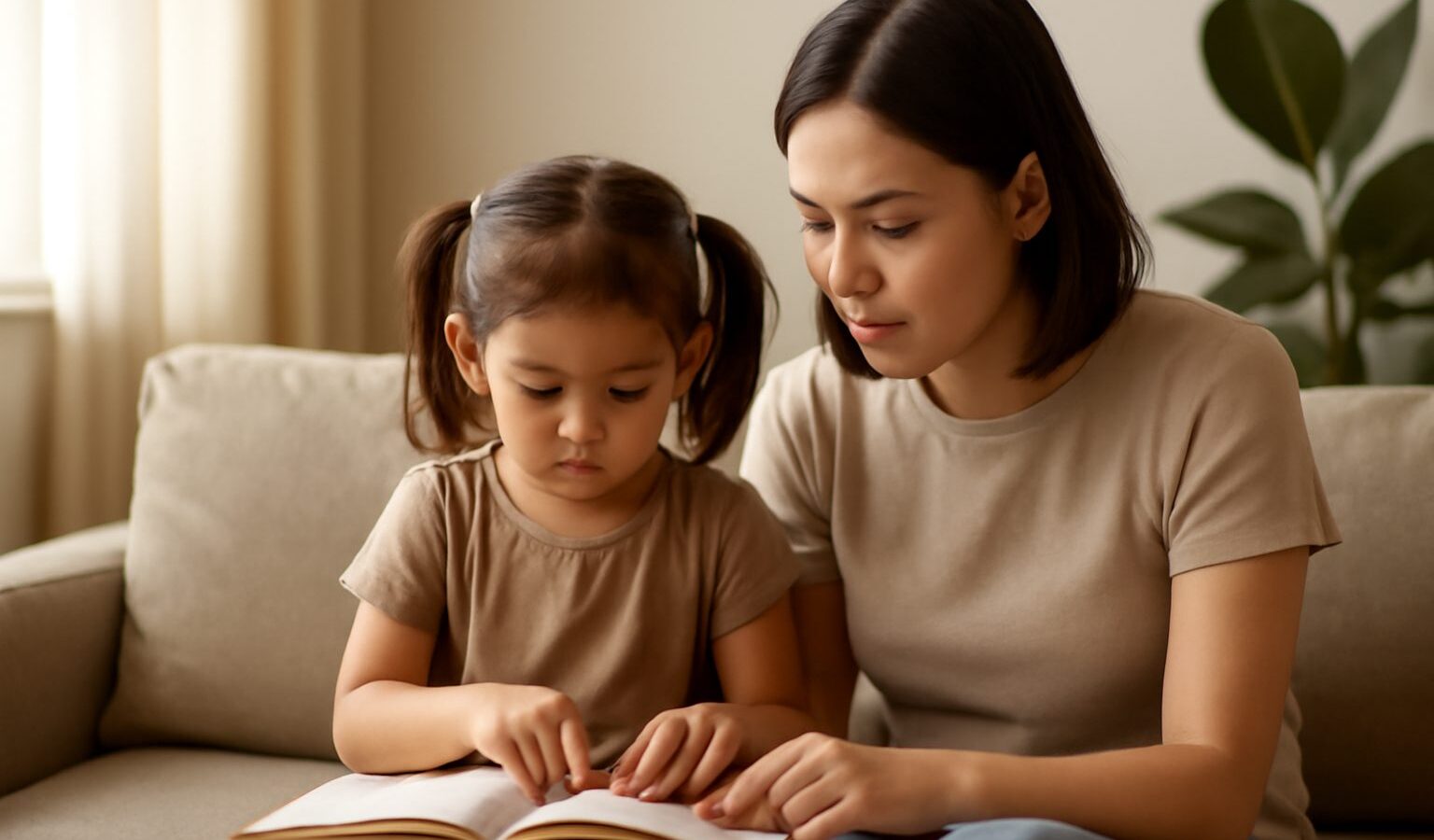
Teaching kids to read is one of the most rewarding things you can do as a parent, and it does not require flashcards, drills, or a strict schedule. Children learn to read best when it feels warm, playful, and part of everyday life. In Singapore, where many homes are bilingual, you are often laying the groundwork for reading in both English and a mother tongue, which is a real gift rather than a burden.
There is no single starting age and no race to win. Some children pick up letters early, others take their time, and both are perfectly normal. The ideas below are simple ways to build early reading gently, at your child’s own pace.
Start With Sounds, Not Just Letters
Long before children read words, they play with sounds. This is the foundation that phonics builds on, and you can nurture it in ordinary moments without any special materials.
Try weaving sound play into your day:
- Sing nursery rhymes and songs, which train the ear for rhythm and rhyme.
- Play “I spy something that starts with the /b/ sound” while waiting for the bus.
- Clap out the syllables in your child’s name or in dinner foods.
- Point out words that rhyme in the books you read together.
When your child is ready for letters, focus on the sounds they make rather than only their names. Knowing that the letter makes a “sss” sound helps far more with reading than reciting the alphabet. Keep it light and short. A few minutes of playful sound work most days does more than a long, formal lesson that leaves everyone frustrated. Local schools introduce phonics too, so what you do at home simply gives your child a gentle head start and a positive feeling about letters.
Read Together Every Day
Reading aloud to your child is the single most powerful habit for early reading, and it stays valuable long after they can read alone. When you read together, your child hears how stories flow, meets new words, and links books with closeness and comfort.
Make it easy and enjoyable:
- Keep it short and regular. A book or two at bedtime beats a long session once a week.
- Run your finger under the words now and then, so your child sees that print moves left to right.
- Pause to ask what might happen next, or how a character feels.
- Read favourites again and again. Repetition is how young children learn, even when you are bored of the story.
Let your child “read” back to you from memory or by describing the pictures. This is real reading behaviour, not cheating, and it builds confidence. As they start to recognise words, take turns, with you reading a line and your child reading a word they know. The mood matters more than the method, so keep it cosy and free of pressure. A child who associates books with warmth will want to keep going.
Build a Library and Reading Habit
Children read more when books are easy to reach and when reading is simply something your family does. You do not need to buy an expensive collection. Singapore’s public libraries make it easy to keep a fresh, varied supply of books at almost no cost.
A few habits help reading stick:
- Visit a nearby library regularly and let your child choose their own books, even if the choices seem odd.
- Keep a basket of books somewhere your child plays, so picking one up is effortless.
- Let your child see you reading, whether it is a novel, the news, or a recipe. Children copy what they see.
- Follow their interests. A child mad about trains or dinosaurs will happily read about them.
Choice is powerful. A book your child picked, even a simple one below their level, is one they are far more likely to enjoy and finish. Enjoyment is the whole point at this stage, because a child who likes reading will read more, and reading more is what makes a strong reader over time. Try not to turn every book into a quiz. Sometimes a story is just a story.
Grow English and Mother Tongue Together
Many Singapore families raise children in more than one language, and reading can support both. Learning to read in two languages is entirely manageable for young children, and skills in one often help the other. A child who understands that print carries meaning grasps that idea whichever language they are reading.
Keep both languages alive and positive:
- Read storybooks in your mother tongue as well as in English, borrowing from the library’s collections.
- Do not worry if progress is faster in one language than the other. This is normal and usually evens out.
- Use songs, rhymes, and everyday talk in both languages, since spoken familiarity supports reading.
- Let each language have its own comfortable moments, such as English at bedtime and mother tongue with grandparents.
Here is a simple way to think about reading with a young child versus one who is starting to read independently, across languages:
| Focus | Younger child (pre-reading) | Beginning reader |
|---|---|---|
| Your main role | Read aloud and play with sounds | Listen, take turns, and encourage |
| Books to choose | Picture books, rhymes, and songs | Simple, familiar texts they can attempt |
| Both languages | Talk and sing in each, read aloud in both | Short easy reads in each, without rushing |
| What “good” looks like | Enjoying books and joining in | Trying, guessing, and staying keen |
| Biggest pitfall | Making it feel like a lesson | Correcting every small mistake |
Above all, protect your child’s love of books. Early reading is a long, gentle journey, and warmth matters more than speed. This is everyday encouragement rather than formal instruction, and if you ever feel your child is struggling in a way that worries you, a quiet word with their teacher is a sensible next step. Keep reading together, follow their curiosity, and let confidence grow at its own pace.
Explore more
Reading habits sit alongside other early foundations, so you may like our guide to building early maths skills in kids and to building good study habits in children. As formal learning nears, preparing your child for Primary One helps you turn these gentle habits into a confident start at school.
Related across Sky Media: Teaching Your Children About Money in Singapore · Teaching Kids Good Manners And Everyday Etiquette