

Screening is one of the quieter, less dramatic parts of looking after your health, but it can be one of the most valuable. Thinking about cancer screening seniors singapore residents may consider is worthwhile, because finding a problem early, before it causes symptoms, often gives more and better options. This guide explains what screening is, why it can help, and how to have a good conversation with your doctor about what is right for you. It is general information only, not medical advice, and not a way to self-diagnose. Your doctor is the right person to advise on your personal situation.
What cancer screening is, and why it can help
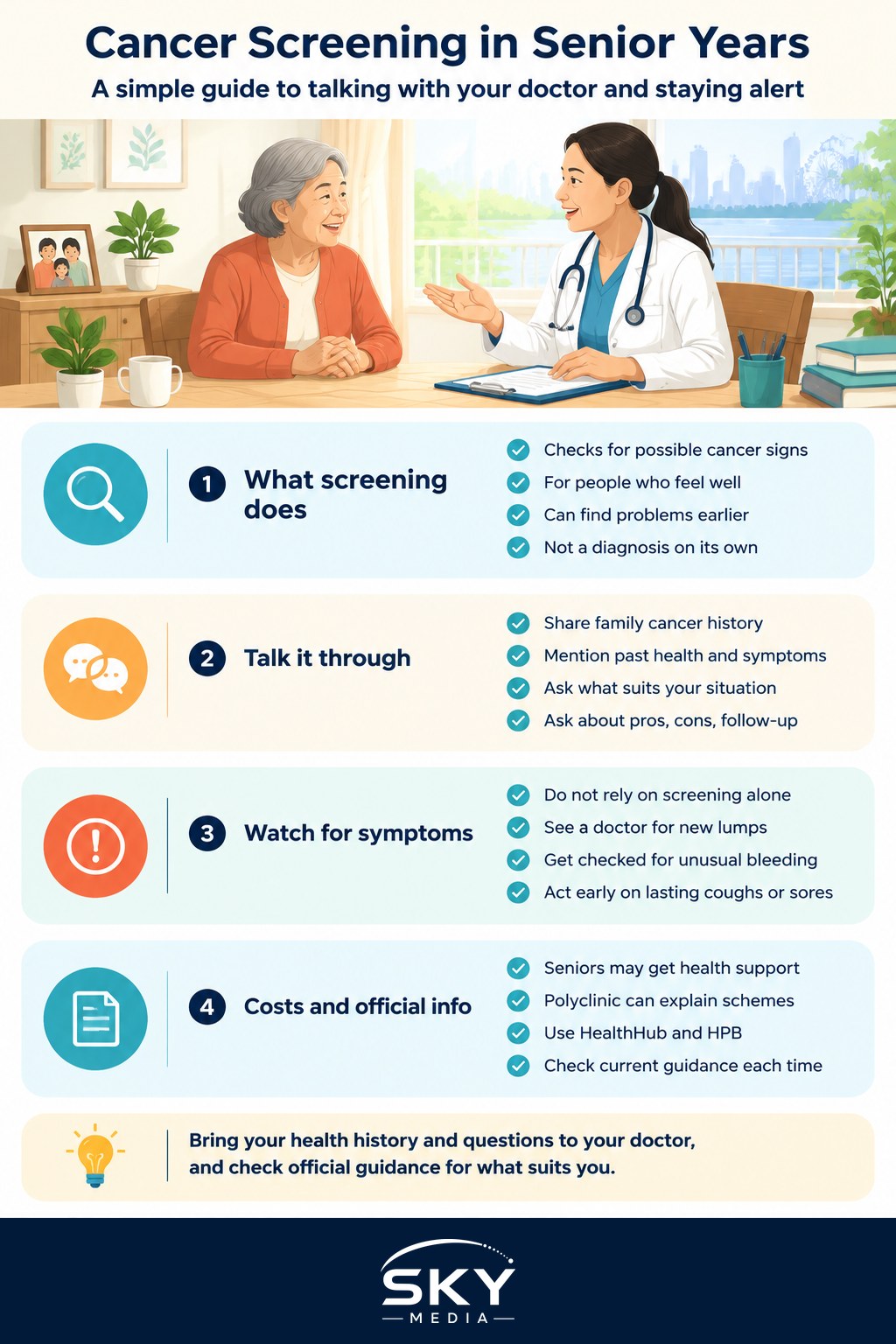
Screening means checking for signs of a possible cancer in people who feel well and have no symptoms. The idea is that some cancers can be picked up earlier this way, when they may be easier to treat. Screening is not a diagnosis on its own. A screening result that looks unusual usually leads to further checks to find out what is really going on, and many such follow-ups turn out to be nothing serious.
It is important to be balanced here. Screening has real benefits, but it is not perfect, and it is not equally suitable for everyone. Whether a particular screening is right for you depends on your age, your personal and family health history, your overall health, and your own preferences. This is precisely why the decision should be made together with your doctor, rather than based on a general rule or something a friend did.
How to talk to your doctor about screening
The most useful thing this article can do is encourage a good conversation with a health professional. You do not need to memorise medical details. You just need to raise the topic and share the right information.
- Bring your history. Tell your doctor about any family history of cancer, your past health, and any symptoms, even ones you think are minor.
- Ask what is suitable for you. Ask which screenings, if any, your doctor recommends for someone in your situation, and why.
- Ask about the pros and cons. It is fair to ask what a screening can and cannot tell you, what happens if something is found, and what the follow-up involves.
- Keep it regular. Screening is not a one-off. Ask your doctor how it fits into your ongoing care and when to think about it again.
Deliberately, this guide does not state specific ages or intervals as facts, because recommendations depend on your circumstances and on official guidance that can change. Please let your doctor and the official sources advise you on the timing and type of screening. You can also read our general overview of health screening for seniors as a starting point for that conversation.
Watch for symptoms too, and do not rely on screening alone
Screening is for people without symptoms, so it does not replace paying attention to your body. If you notice something new or persistent, such as an unusual lump, unexplained weight loss, bleeding that is not normal for you, a lasting change in bowel or bladder habits, a cough or hoarseness that does not settle, or a sore that will not heal, do not wait for your next screening. See a doctor promptly to have it checked. Most of the time such symptoms have an innocent explanation, but getting them looked at early is always the wiser choice.
Staying generally healthy supports your wellbeing and can make follow-up easier if it is ever needed. Habits such as eating well, staying active, and keeping ongoing conditions in check all help. See eating well in your senior years and managing chronic conditions in older age for practical, everyday guidance suited to life in Singapore.
Cost, access, and where to find official information
Cost and access should not be a barrier to sensible health care. Singapore has various schemes and subsidies that help seniors with health costs, and your polyclinic or doctor can explain what applies to you. Reading up on healthcare costs in retirement may help you plan and worry less about the money side.
For trusted, up-to-date information on cancer screening, look to HealthHub, HPB, and your polyclinic or doctor. Official recommendations are reviewed over time, so always check the current guidance rather than relying on older advice or on general articles like this one. If in doubt about what applies to you, ask a health professional directly.
A gentle, practical wrap-up
Cancer screening will not be right for everyone in exactly the same way, but for many seniors it is a sensible part of staying well, precisely because it can catch problems early. You do not need to figure it all out alone. Bring your history to your doctor, ask what suits your situation, stay alert to new symptoms, and lean on HealthHub, HPB, and your polyclinic for the official details. A short, honest conversation with your doctor is the best next step, and it is one that could make a real difference to your health in the years ahead.
Frequently Asked Questions
Is a screening test the same as a cancer diagnosis? No. Screening checks people without symptoms for signs of a possible cancer. An unusual result usually leads to further checks, and many follow-ups turn out to be nothing serious. A diagnosis is made by a doctor after those further checks.
Do I still need screening if I feel perfectly healthy? Screening is meant for people who feel well, since it aims to find problems before symptoms appear. Whether a particular test suits you depends on your age, family history and health, so talk it through with your doctor.
Should I stop screening when I reach a certain age? There is no single answer. Suitability depends on your overall health, history and preferences, and official guidance is reviewed over time. Ask your doctor whether it is still right for you and check the latest advice on HealthHub.
Which symptoms should not wait for my next screening? See a doctor promptly for an unusual lump, unexplained weight loss, abnormal bleeding, a lasting change in bowel or bladder habits, a cough or hoarseness that will not settle, or a sore that will not heal. Most have innocent causes, but early checking is wiser.
Can I get help with the cost of health checks as a senior? Singapore has various schemes and subsidies for seniors, and your polyclinic or doctor can explain what applies to you. Check current details with the official bodies, since schemes and eligibility can change.
Official sources: Health Promotion Board
Further reading: Colorectal Cancer Screening and the FIT Test