
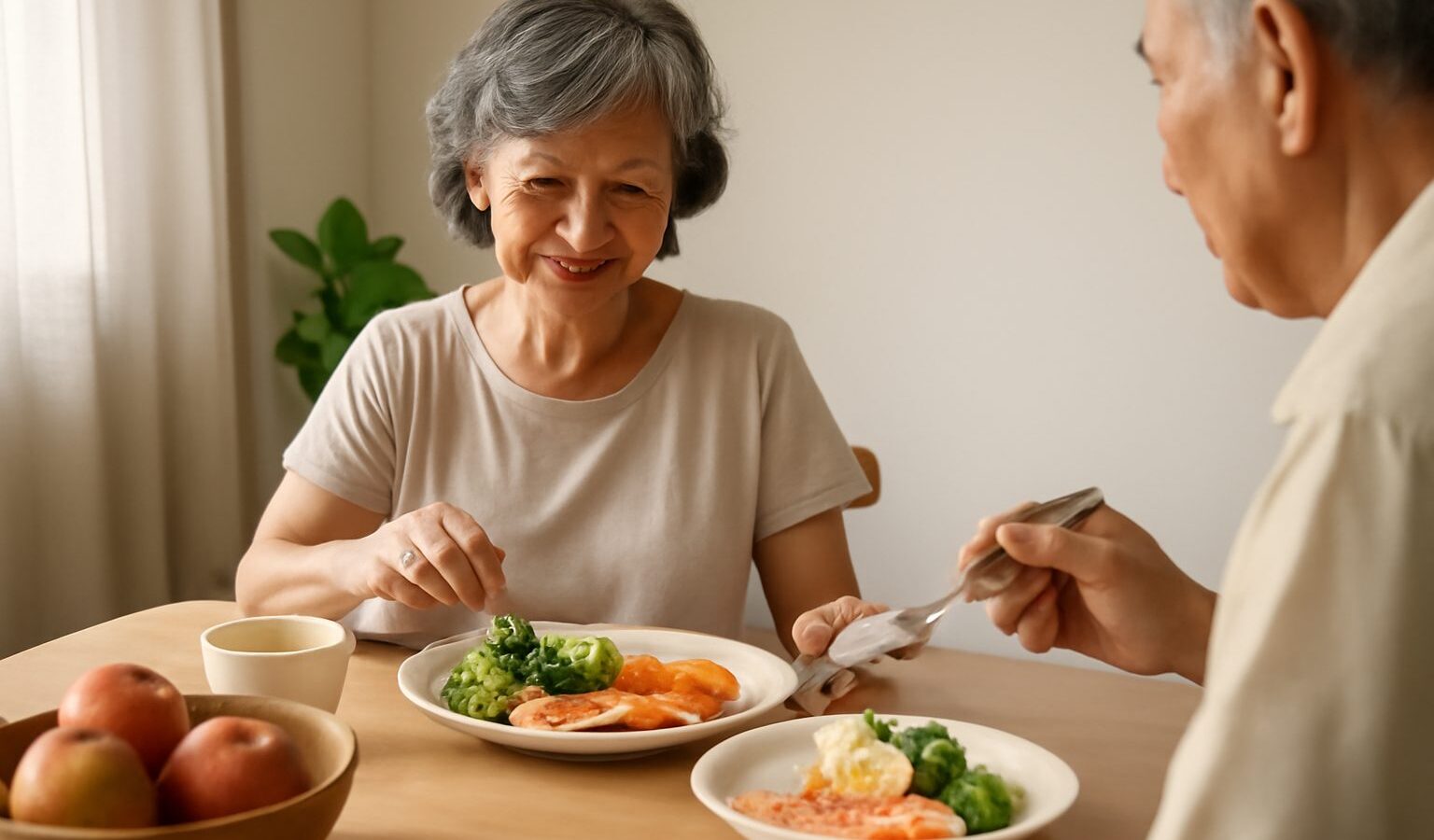
What is on your plate does a quiet, powerful job in later life. Good food supports your muscles, bones, energy and mood, and it helps keep chronic conditions steady. The encouraging news is that eating well does not mean expensive supplements or a complicated diet. Sound senior nutrition Singapore families can rely on is mostly about small, consistent choices: enough protein, some colour on the plate, plenty of water, and a few smart swaps at the hawker centre or the kitchen table.
This guide is general information to help you and the people who cook for you eat with a little more intention. It is not medical advice. If you have diabetes, high blood pressure, kidney concerns, difficulty swallowing, or any condition that affects your diet, speak with your doctor or a dietitian, who can tailor advice to your situation.
Why Eating Changes As We Age
Appetite often shrinks with age. Taste and smell can fade, medicines may dull hunger, and moving less means the body asks for less food. That is understandable, but eating too little quietly chips away at muscle and strength, which raises the risk of falls and makes recovery from illness slower.
Bodies also become less efficient at using what they take in, so the quality of each meal matters more than the quantity. Dental problems, dry mouth or trouble swallowing can make certain foods hard to manage, and some older adults simply lose interest in cooking or eating alone. Recognising these shifts is the first step. Once you know why eating has become harder, you can adjust the food, the texture and the setting rather than just eating less of everything.
The Building Blocks Of A Good Senior Plate
A few priorities do most of the work. You do not need to count every gram; you need to make sure these appear regularly.
- Protein to preserve muscle. Muscle naturally declines with age, and protein at each meal helps slow that loss. Fish, eggs, tofu and other soy foods, chicken, lean pork, dhal and beans are all everyday sources. Spreading protein across breakfast, lunch and dinner works better than saving it all for one meal.
- Calcium and vitamin D for bones. Bones thin with age, so calcium foods such as milk, yoghurt, calcium-set tofu, ikan bilis and dark leafy greens matter. Vitamin D, which helps the body use calcium, comes partly from safe sun exposure. Ask your doctor whether a supplement is right for you rather than assuming.
- Fibre for digestion. Wholegrains like brown rice and oats, fruit, vegetables and beans keep digestion regular and help with cholesterol and blood sugar. Increase fibre gradually and drink more water alongside it.
- Hydration. The sense of thirst weakens with age, so many older adults drink too little without realising. Water, soup, and unsweetened drinks all count. Keep a cup within easy reach as a gentle reminder.
Matching Nutrition Needs To Local Food
You can meet almost every need with familiar Singapore food. The table below pairs a common nutrition goal with a local idea, whether you eat at home or at a hawker centre. Treat portion sizes and any condition-specific limits as something to confirm with a doctor or dietitian.
| Nutrition need | Why it matters | Local food idea |
|---|---|---|
| Protein | Preserves muscle and strength | Steamed fish, tofu, soft-boiled eggs, dhal, yong tau foo |
| Calcium and vitamin D | Supports bone strength | Milk or yoghurt, calcium-set tauhu, ikan bilis, chye sim |
| Fibre | Aids digestion and blood sugar | Brown rice, oats, fruit, sweet potato, vegetable dishes |
| Hydration | Prevents fatigue and constipation | Plain water, barley (less sugar), clear soups |
| Lower salt | Eases blood pressure | Ask for less salt or gravy, choose soup over fried |
| Lower sugar | Helps blood sugar control | Kopi or teh siu dai or kosong, fresh fruit for dessert |
Eating With A Chronic Condition
Many older Singaporeans live well with diabetes, high blood pressure, high cholesterol or kidney conditions, and diet is part of keeping them steady. The general direction is gentle rather than extreme: a little less salt, a little less added sugar, more vegetables and wholegrains, and sensible portions.
For blood pressure, going easy on salt, sauces and gravies helps. For blood sugar, watching sweet drinks and refined starches, and pairing carbohydrates with protein and vegetables, tends to steady the rise after meals. Kidney conditions can require specific limits on certain nutrients, which is exactly why personalised guidance matters. None of this means giving up the foods you love; it means adjusting how often and how much. Your doctor, or a dietitian who can review your medicines and test results, is the right person to set your particular targets.
Practical Ways To Enjoy Food Again
When appetite is low or cooking feels like too much, the setting and the small habits matter as much as the ingredients.
- Eat little and often. If big meals feel heavy, try smaller plates with a nourishing snack in between, such as yoghurt, a hard-boiled egg, wholemeal bread or a handful of nuts.
- Make food easy to manage. If chewing or swallowing is hard, choose softer options like porridge, steamed fish, tofu, minced meat, soups and well-cooked vegetables. Persistent swallowing trouble should be checked by a doctor.
- Add flavour without adding salt. Ginger, garlic, spring onion, lime and herbs lift a dish so you do not miss the extra sauce.
- Eat with others when you can. Meals taste better in company. Active Ageing Centres and community meals are a good way to eat and connect at once.
Eating well on a budget is very possible. Home-cooked one-pot dishes, eggs, tofu, seasonal vegetables and cheaper fish stretch a food budget while still delivering protein and fibre. At the hawker centre, the healthier order is usually the steamed, soup-based or vegetable-rich one, with less gravy and a drink that is siu dai or kosong. Small choices, repeated daily, add up to real nourishment.
Explore more
Good food works best alongside movement and steady health management. See our guide on staying fit and active as a senior in Singapore to protect the muscle that protein helps build. If you live with a long-term condition, read managing chronic conditions in older age in Singapore for a fuller picture of keeping well day to day.
Related across Sky Media: Nutrition Basics: A Beginner’s Guide to Eating Well · Eating Well While Breastfeeding